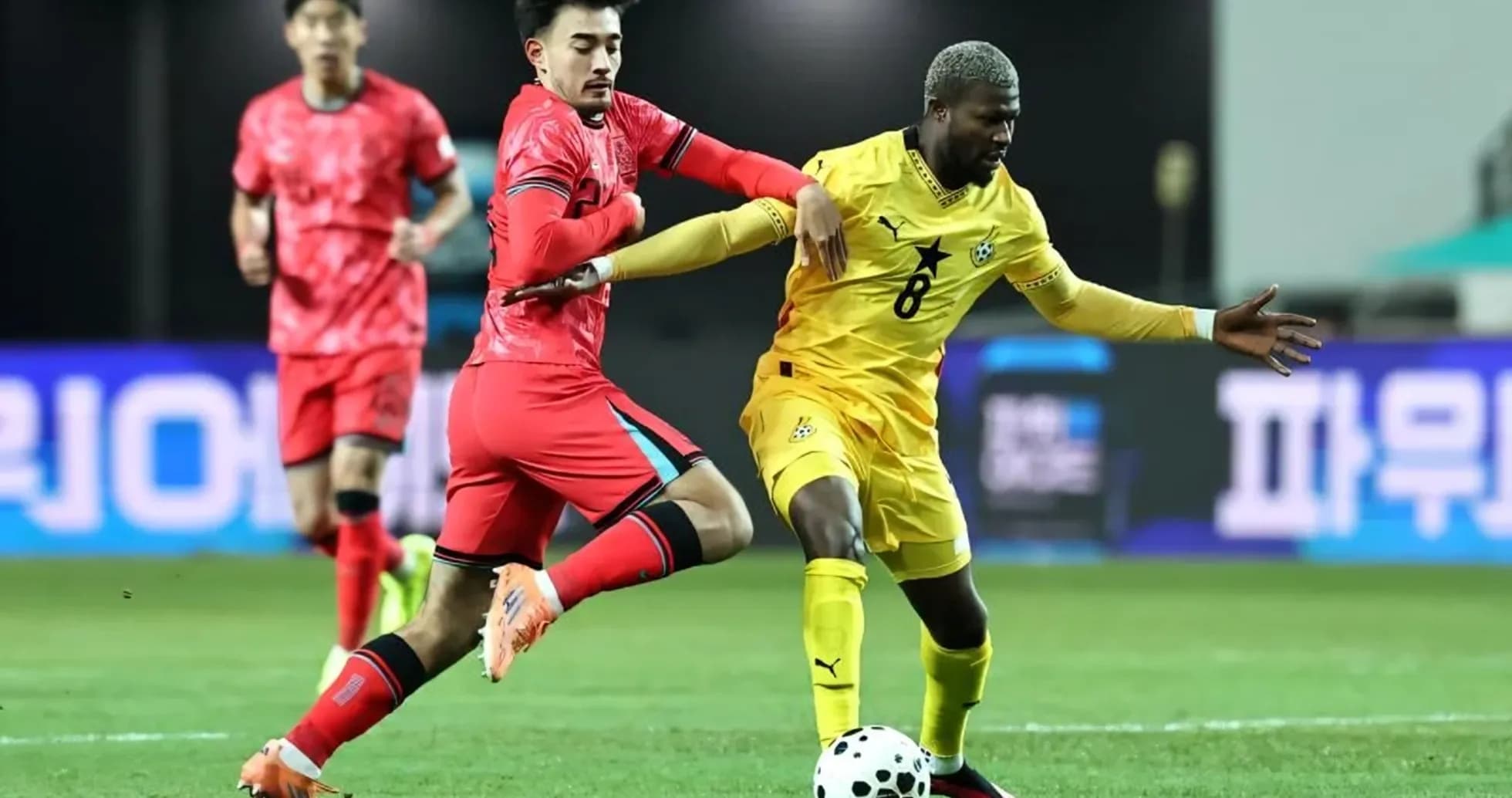
Jens Castrop's Aggressive Play Style Under Scrutiny Ahead of World Cup
Jens Castrop has never been one to tiptoe into a tackle. Now he insists he won’t crash into the World Cup the same way.
The Korean German midfielder, likely bound for this summer’s FIFA World Cup with Korea, is under the spotlight not for a wonder goal or a defence-splitting pass, but for a red card that has ended his club season early and raised questions about his discipline on the biggest stage.
A fiery style under scrutiny
Castrop, born to a Korean mother and a German father, has collected five caps for Hong Myung-bo’s national team since last fall and is widely expected to be named in Korea’s World Cup squad on May 16. For him, that call would be the gateway to a lifelong dream: stepping into football’s showpiece tournament wearing the colors of his mother’s homeland.
Yet as that dream edges closer, his reputation has taken a hit in Germany.
Playing for Borussia Monchengladbach in the Bundesliga, Castrop was shown a direct red card at the weekend for a hard tackle on VfL Wolfsburg’s Sael Kumbedi. It was his second straight-dismissal of the season. The league followed up with a three-match suspension. With Monchengladbach having only three fixtures left, his campaign is over.
The numbers paint a clear picture of a player who lives on the edge. Last season, in Germany’s second division, he picked up 11 yellow cards in 25 matches, tied for the third-highest total in the league. This season, the aggression has already twice tipped over into red.
Castrop, though, is not backing away from who he is on the pitch.
“I don’t really think that it’s an issue,” he said in a video conference from Germany with Korean journalists on Wednesday evening. “Of course, it’s my play style. I’m an aggressive player; I like to win the ball. I like to give 100 percent in the drills.”
Two reds, one clear regret
His first direct red of the season came on Oct. 25 against Bayern Munich. That one, he admits, was on him. He was “too late” with the tackle and called it “my mistake.”
The second, on Kumbedi, is a different story in his mind.
“I think we can all agree that the second red card that I got in the last match was not a red card, just a regular yellow one. Nobody got injured. It wasn’t a bad foul,” he said. “I think I had my emotions under control. We needed that one point, and in the 92nd minute, I would not let my opponent cross free without pressure or without me trying to hold him back. So that’s why I tackled him, and I think it was the right decision, even though I got the red card.”
The stakes were high, the clock was dying, and he chose commitment over caution. The officials chose red over yellow. The debate will rumble on, but the outcome is fixed: suspension, and an early end to his Bundesliga season.
A promise for the biggest stage
The World Cup, of course, is a different arena. One rush of blood there can wreck a nation’s plans in a heartbeat, and Castrop knows it.
“I know that it can be very stupid to get a red card in an important game at the World Cup,” he said. “So this is something that will not happen.”
That is the balance he now has to strike: keeping the steel and bite that make him valuable, without crossing the line that could cost Korea dearly. The same aggression that wins duels in midfield can also leave a team a man down when it matters most.
There may be a twist, though, in how his suspension affects his summer. With those three matches wiped off his schedule, Castrop suddenly has extra time to heal.
He has been managing nagging problems in his feet, back and knees, the sort of aches that accumulate over a long campaign. If Hong Myung-bo does include him in the World Cup squad, this enforced break could turn into an unlikely advantage, a chance to arrive fresher than most.
Playing for his mother’s country
For Castrop, the emotional pull of this World Cup runs deep. This is not just another tournament; it is a chance to represent the country of his mother’s birth on the grandest stage.
“I think the World Cup is the biggest tournament in world football, so it always is the dream for every player to participate in the World Cup. So if I get called up, I will be very honored and proud to play my first World Cup,” he said. “Of course, I have big expectations. I want Korea to be as successful as possible. I want to help the team, and I want to play a good World Cup on this big stage. I have big dreams and big hopes for this World Cup.”
The ambition is clear. He doesn’t just want to be there; he wants to influence it.
Yet even as he talks about his own role, he keeps circling back to the collective.
“But first of all, the most important part is that our players stay in good condition,” Castrop said. “We have to face some difficulties, and we need to stay strong and stick together as a team if we want to be successful. So this is the No. 1 priority.”
Aggression, discipline, fitness, unity. Those are the threads running through Castrop’s story as the World Cup looms. The next question is simple and ruthless: can he turn that promise into performances without seeing red when Korea can least afford it?