Fiorentina vs Genoa: Tactical Analysis of Serie A's Goalless Draw
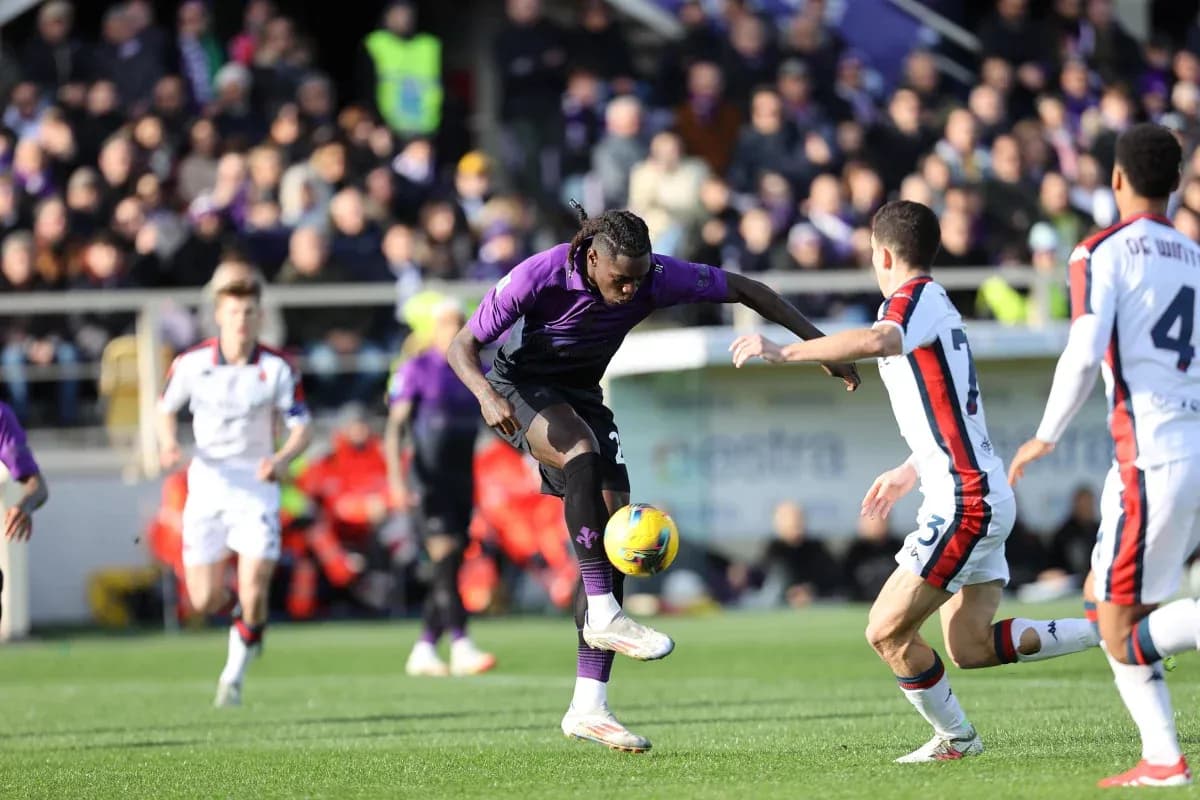
Stadio Artemio Franchi felt oddly suspended in time for this one. On the board it will live as a goalless 0–0 between Fiorentina and Genoa in Serie A’s Regular Season - 36, but beneath the surface it was a meeting between two mid-table sides whose seasonal identities were written all over the tactical shapes and selection choices.
Heading into this game, Fiorentina sat 15th on 38 points, their goal difference at -11 (38 scored, 49 conceded) across 36 matches. The numbers told of a team permanently on the edge of control: 8 wins, 14 draws, 14 defeats overall, with a perfectly balanced home return of 20 goals for and 20 against from 18 outings. Genoa, 14th with 41 points and a goal difference of -8 (40 for, 48 against), arrived as a marginally more robust version of the same story: 10 wins, 11 draws, 15 losses overall, and a slightly sharper away attack with 19 goals scored on their travels against 24 conceded.
I. The Big Picture – Shapes, context, and seasonal DNA
The tactical boards told their own tale. Paolo Vanoli went to his most trusted template, a 4-3-3 that mirrors Fiorentina’s season-long preference: they have used that shape in 13 league matches, more than any other system. D. de Gea anchored the back line behind a defence of Dodo, M. Pongračić, L. Ranieri and R. Gosens. In front of them, R. Mandragora, N. Fagioli and C. Ndour formed a three-man engine room, leaving a youthful, mobile front line of F. Parisi, R. Braschi and M. Solomon.
Across from them, Daniele De Rossi’s Genoa stepped out in a 3-4-2-1, one of the systems that has defined their season alongside the 3-5-2. J. Bijlow stood behind a back three of A. Marcandalli, L. Ostigard and N. Zatterstrom, with a flexible four across midfield: M. E. Ellertsson and Aarón Martín as wing-backs, Amorim and M. Frendrup inside. Ahead, J. Ekhator and Vitinha floated off the line in support of central striker L. Colombo.
The match finished 0–0, but that outcome sat comfortably within the statistical tendencies. Fiorentina’s home goals-for average of 1.1 and home goals-against average of 1.1 suggest low-scoring, finely balanced nights in Florence. Genoa’s away profile—1.1 goals scored and 1.3 conceded on their travels—points to similar margins. This was always more likely to be about structure than chaos.
II. Tactical Voids – Absences and disciplinary shadows
The absentees list framed the contest before a ball was kicked. For Fiorentina, M. Kean’s calf injury removed their most reliable finisher. In total this campaign, Kean has scored 8 league goals and added 1 assist, making him the club’s standout attacking reference. Without him, Vanoli had to trust a more collective, less proven front three, and the bench option of A. Guðmundsson as a later-game wildcard rather than a guaranteed starter.
T. Lamptey’s knee injury also denied Fiorentina a dynamic, overlapping option on the flank. In a 4-3-3 that often relies on full-backs to provide width and overloads, that absence nudged more creative burden onto Dodo and Gosens, both tasked with stretching Genoa’s compact 3-4-2-1.
Genoa’s own creative void was arguably even more pronounced. T. Baldanzi’s thigh injury, the inactivity of M. Cornet and S. Otoa, and the muscle problem for Junior Messias stripped De Rossi of several players capable of breaking lines between midfield and attack. B. Norton-Cuffy’s thigh injury further reduced the depth in wide areas, placing a heavier load on Aarón Martín and M. E. Ellertsson to carry the ball and supply the front line.
From a disciplinary standpoint, there were clear warning lights on both sides. Fiorentina’s season data shows a pronounced late-game spike in yellow cards: 25.00% of their cautions arrive between 76-90 minutes, with an additional 15.00% between 91-105. More ominously, all of their red cards in Serie A have come in the 76-90 range, a 100.00% concentration in that late window. Genoa, meanwhile, spread their yellows more evenly but have shown a propensity for red cards early and in the restart phases, with dismissals in 0-15, 46-60 and 91-105.
Even without a specific card log for this fixture, the season-long pattern underlined the risk baked into the personalities on the pitch. M. Pongračić, Serie A’s leading yellow-card collector with 11 cautions, and L. Ranieri, on 8 yellows, formed the heart of Fiorentina’s defence; for Genoa, R. Malinovskyi’s 10 yellows lurked on the bench as a potentially combustible substitute option.
III. Key Matchups – Hunter vs Shield, Engine Room
The “Hunter vs Shield” narrative was re-written by Kean’s absence. Fiorentina’s top scorer never made it to the grass, leaving the goalscoring responsibility to a front line with far fewer league numbers behind them. Genoa’s defensive shield, which on their travels has conceded 24 goals in 18 matches, could therefore afford a more aggressive posture in stepping into midfield, especially with Ostigard’s aerial dominance and Marcandalli’s front-foot defending.
On the other side, Genoa’s attack has been modest but steady: 40 goals overall, split 21 at home and 19 away. Without Baldanzi and Messias, the onus fell on Vitinha and Ekhator to turn half-spaces into danger. They faced a Fiorentina back four that, at home, has allowed only 20 goals in 18 matches—a defensive record more solid than their league position suggests.
The “Engine Room” battle was perhaps the most tactically intriguing zone. Mandragora’s positional discipline and left-footed range, combined with Fagioli’s passing angles and Ndour’s vertical running, tried to unpick a Genoa midfield where Frendrup’s work rate, Amorim’s balance and Aarón Martín’s dual role as creator and defender set the tone.
Aarón Martín, in particular, arrived as one of Serie A’s most productive full-backs: 5 assists in total, with 60 key passes and 714 total passes at 78% accuracy. He has also blocked 11 shots this season, underlining his two-way importance. Fiorentina’s wide forwards knew that beating Genoa’s left flank meant not just outplaying a wing-back, but solving one of the league’s more complete wide defenders.
Behind them, Fiorentina’s central pairing brought contrasting profiles. Pongračić’s 23 blocked shots this season highlight his willingness to step into the line of fire, while Ranieri’s 34 tackles and 24 interceptions mark him out as the more anticipatory defender. Together, they formed a shield that had to deal with Colombo’s movement and the late-arriving runs of Genoa’s second line.
IV. Statistical Prognosis – xG, margins, and what this 0–0 says
Even without explicit xG values, the statistical scaffolding around this fixture points toward a low-variance, low-scoring contest. Both teams average 1.1 goals for per match overall. Fiorentina’s home defensive average of 1.1 goals conceded and Genoa’s away defensive average of 1.3 suggest that clear chances were always likely to be rationed rather than plentiful.
Fiorentina’s 9 clean sheets in total (6 at home) and Genoa’s 9 (5 away) further support the notion of two teams that, for all their mid-table inconsistency, can organise themselves effectively in their own third. Add in the absence of Kean and several of Genoa’s more imaginative pieces, and the 0–0 final score feels less like a surprise and more like the logical intersection of personnel and probability.
Following this result, both sides remain tethered to the same identity that brought them here: Fiorentina as a structurally capable but goal-shy home side, Genoa as a compact, three-at-the-back unit that grinds out results on their travels. The tactical preview for any future meeting between these squads will hinge on a single question: can either coach reintroduce enough individual attacking quality—Kean returning, Baldanzi fit, Messias available—to tilt these finely balanced numbers away from stalemate and towards a decisive edge in xG and, finally, on the scoreboard?