Fiorentina Shocks Juventus with 2-0 Victory at Allianz Stadium
Under the grey Turin sky, Allianz Stadium watched a narrative twist it did not expect. Juventus, Europa League‑bound and usually imperious at home, were picked apart 2‑0 by a Fiorentina side that arrived from 15th place carrying more scars than swagger. Following this result, the table still underlines the gap in class over the season – Juventus on 68 points in 6th, Fiorentina on 41 in 15th – but for 90 minutes the hierarchy inverted.
I. The big picture – structures and seasonal DNA
Luciano Spalletti set Juventus up in a 4‑2‑3‑1, one of the shapes he has used less frequently than his preferred back three but still familiar. M. Di Gregorio anchored the side behind a back four of P. Kalulu, Bremer, L. Kelly and A. Cambiaso. In front, M. Locatelli and T. Koopmeiners formed the double pivot, with an attacking band of F. Conceicao, W. McKennie and Kenan Yildiz behind D. Vlahovic.
Heading into this game, Juventus had built their season on balance and control. Overall they had scored 59 goals and conceded 32, for a goal difference of +27, with a particularly strong record at home: 35 goals for and 16 against in 19 matches, averaging 1.8 goals for and 0.8 against at Allianz Stadium. Six different formations used over the season spoke of tactical flexibility, but the defensive platform was constant – 16 clean sheets in total, split evenly between home and away.
Paolo Vanoli’s Fiorentina arrived in a 4‑3‑3 that aligned with their seasonal identity. D. de Gea was shielded by a back four of Dodo, M. Pongracic, L. Ranieri and R. Gosens. The midfield triangle of C. Ndour, N. Fagioli and M. Brescianini supported a front line of F. Parisi, R. Piccoli and M. Solomon.
Fiorentina’s campaign had been a grind: overall 40 goals for and 49 against, a goal difference of -9. On their travels, they had been fragile, conceding 29 goals in 19 away games, an average of 1.5 per match. Yet they retained a certain punch: 20 away goals at an average of 1.1, and 10 clean sheets overall hinted at a team capable of shutting games down when the structure held.
II. Tactical voids and discipline – where the squads were stretched
The only officially listed absentee was a curious one: M. Kean, unavailable for Fiorentina with a calf injury. His presence on their books for this fixture underlined how much Vanoli might have welcomed an extra direct runner in transition, but in his absence the responsibility fell squarely on R. Piccoli and the wide forwards to stretch Juventus.
Juventus, on paper, were close to full strength. Yet there was a different kind of void: emotional and disciplinary. Over the season, Locatelli had taken on the role of enforcer in midfield, but his 9 yellow cards in Serie A and 54 fouls committed showed how often Juventus walked the disciplinary tightrope in that zone. Cambiaso, too, carried the memory of a red card this campaign, while McKennie arrived with 5 yellows and 42 fouls committed.
Collectively, Juventus’ yellow card timing profile revealed a growing edge as matches wore on. Heading into this game, 22.00% of their yellows came between 61‑75 minutes and 20.00% between 76‑90, a late‑game spike that usually coincided with protecting leads or chasing results. Their two red cards this season had been split between 31‑45 and 76‑90, underlining that emotional management in key phases was not always secure.
Fiorentina’s discipline was even more volatile late on. An eye‑catching 25.30% of their yellows arrived between 76‑90 minutes, with another 15.66% in added time (91‑105). Red cards were even more concentrated: 66.67% of their dismissals came in that 76‑90 window. Vanoli’s side often finished games on the edge, sometimes over it. That they navigated this trip to Turin without implosion was a tactical victory in itself.
III. Key matchups – Hunter vs Shield, and the engine room
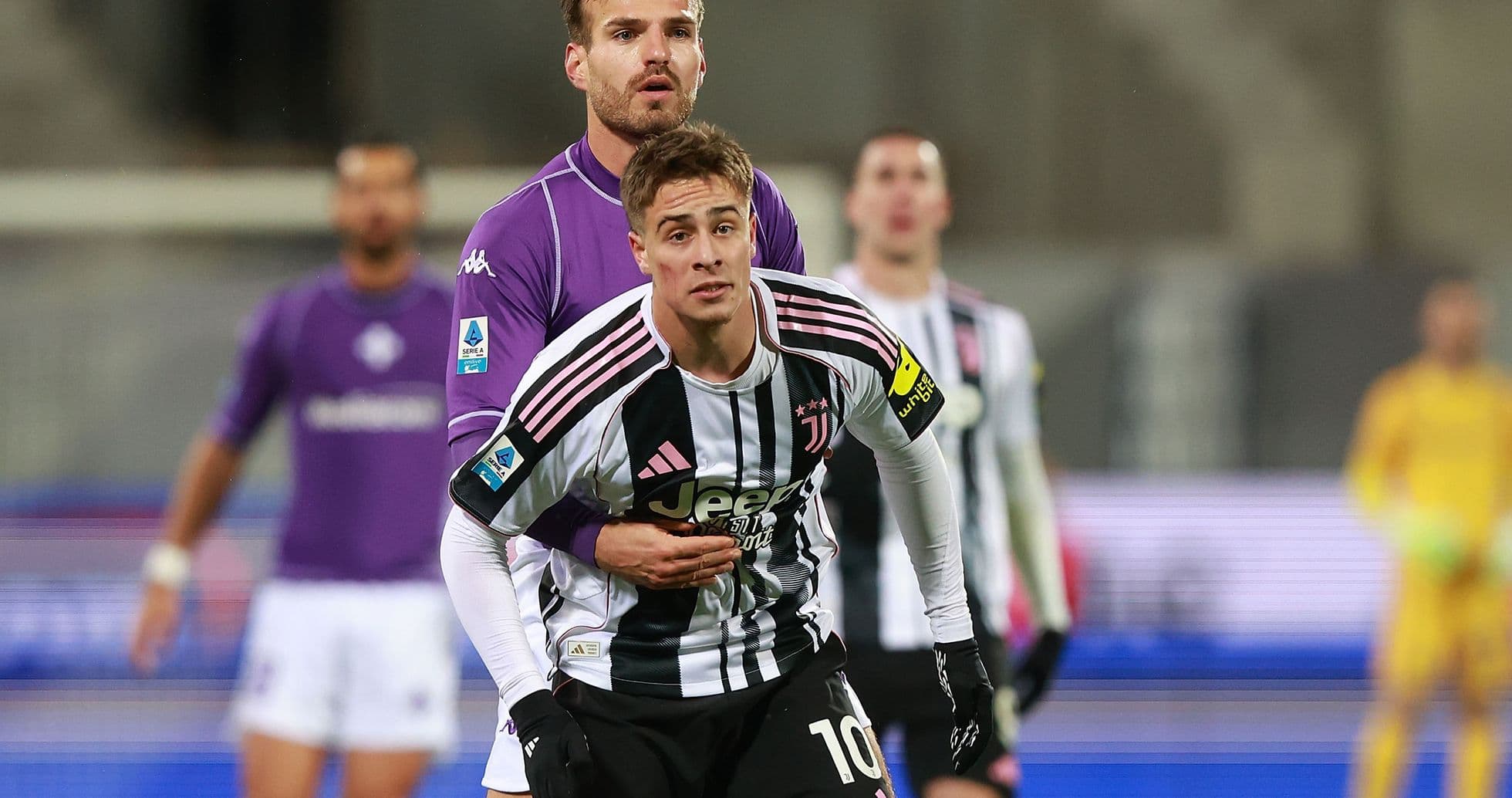
The marquee duel was Kenan Yildiz against Fiorentina’s central shield, anchored by Marin Pongracic. Yildiz has been Juventus’ breakout star: 10 league goals and 6 assists, with 64 shots (40 on target), 76 key passes and 149 dribble attempts, 78 of them successful. Operating nominally from the left but drifting inside as a classic half‑space playmaker, he has become both creator and finisher.
Pongracic, by contrast, embodies Fiorentina’s last line of resistance. In 34 appearances he has made 32 tackles, 26 successful blocks and 35 interceptions, winning 118 of 242 duels. His 12 yellow cards, however, speak to the cost of such front‑foot aggression. The question in Turin was whether he could step out to meet Yildiz between the lines without leaving space for Vlahovic, or whether Fiorentina would sink deeper and accept pressure.
In this match, the Shield won. Fiorentina’s 4‑3‑3 compacted the central lane, with Brescianini and Ndour pinching in to crowd Yildiz’s pockets. Pongracic timed his interventions, blocking access into Vlahovic and limiting Juventus’ ability to combine centrally. When Yildiz did receive, he was often facing two or three purple shirts, his usual dribbling rhythm stifled.
The second decisive battleground was the engine room: Locatelli and Koopmeiners versus Fagioli and Brescianini. Locatelli’s season numbers – 2720 passes at 88% accuracy, 46 key passes, 99 tackles, 23 blocks and 38 interceptions – frame him as Juventus’ metronome and destroyer in one. Yet he also carried a subtle trauma into this game: one missed penalty in Serie A, the only blemish on a season otherwise defined by control.
Fagioli and Brescianini, less heralded, offered Fiorentina balance. They pressed selectively, cutting off vertical lanes into McKennie and Vlahovic, and forced Juventus to circulate wide to Cambiaso and Kalulu. As the home side’s double pivot was drawn sideways, Fiorentina’s front three found space to spring transitions into the channels behind the full‑backs.
IV. Statistical prognosis – how the numbers explain the upset
On paper, everything pointed to a Juventus win. Heading into this game, they had lost only 2 of 19 at home, scoring 1.8 and conceding 0.8 on average, with 8 home clean sheets. Fiorentina, by contrast, had lost 8 of 19 away, conceding 1.5 goals per match and keeping just 4 clean sheets.
Yet the deeper patterns hinted at vulnerability. Juventus had failed to score in 4 home games this season; Fiorentina had failed to score in 7 away, but when they did find the net, they often did so in bursts. Their biggest away win, 1‑4, showed they could punish open games. And while Juventus’ penalty record in Serie A was perfect (2 scored from 2, 100.00%), the psychological memory of Locatelli’s miss in the broader season context and Yildiz’s one missed spot‑kick in the league’s top‑scorer data underlined that their key creators were not immune to pressure.
Following this result, the xG story you would expect is of a Fiorentina side maximising few but clear chances, and a Juventus team accumulating sterile volume. The visitors’ defensive solidity on the day mirrored the best of their season – a compact 4‑3‑3, with Pongracic and Ranieri stepping out at the right moments, Gosens and Dodo locking the wide lanes, and De Gea commanding his box.
Juventus’ structural choice – a back four rather than the more familiar back three used in 23 league matches – left them a little more exposed in transition and a little less dominant in the half‑spaces where Yildiz usually thrives. The Hunter was crowded out, the Shield stood firm, and in the engine room Fiorentina’s less glamorous pair tilted the contest.
In a campaign where numbers painted Juventus as the more complete side, this 0‑2 at Allianz Stadium is a reminder that tactical alignment on the day can overturn an entire season’s worth of trends. Fiorentina arrived with a negative goal difference and fragile away record; they left Turin with a clean sheet, a statement win, and a performance that finally matched the latent potential hidden in their statistics.