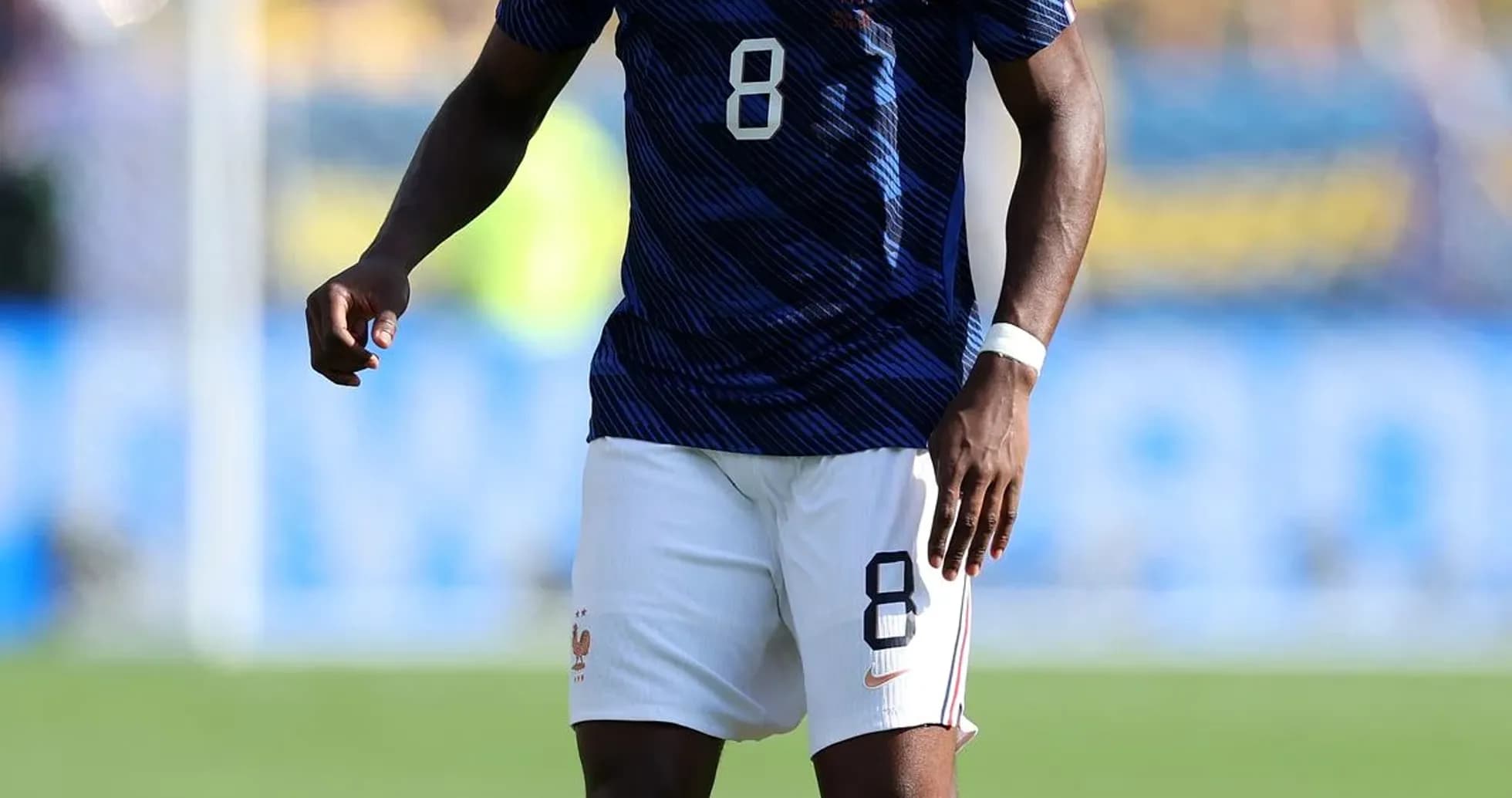
France Faces Tchouameni Dilemma Ahead of Morocco Clash
Aurelien Tchouameni’s World Cup has been stuck on pause. France now have 24 hours to decide whether to hit play.
The Real Madrid midfielder damaged his groin in training after the round-of-32 win over Sweden and watched from the stands as France ground past Paraguay 1-0 in the last 16. That narrow, nervy win in Philadelphia, settled by Kylian Mbappe’s second-half penalty, pushed Les Bleus into a quarter-final with Morocco in Boston – and dragged Tchouameni’s fitness to the top of Didier Deschamps’ agenda.
For now, there are more questions than answers.
“I don’t have all the information yet,” Deschamps admitted on Wednesday when pressed on his vice-captain’s condition. “Aurelien is better, but I left early this morning. He’s the only one who needs to be seen, but he’s doing better. He might participate in the training session today. All other players are available.”
That “might” hangs over France’s preparations. Tchouameni, poised to sign a new contract at the Bernabeu, is central to the way Deschamps likes his side to control big knockout games. His absence against Paraguay forced a reshuffle; it also revealed a solution.
Kone steps up, midfield puzzle remains
With Tchouameni sidelined, Deschamps turned to Roma’s Manu Kone to sit alongside Adrien Rabiot in the pivot. It was hardly a gentle introduction. The last-16 tie became a scrap, full of niggle and tension, but Kone held his ground and helped France edge through.
If the medical team decide the risk on Tchouameni is too great, that pairing is ready-made to continue. Kone and Rabiot look set to anchor midfield again, a platform for France’s wealth of attacking talent and a shield for a defence that has quietly become one of the most settled units at the tournament.
Deschamps, never one to tinker for the sake of it, appears inclined to roll with the same starting XI that began the win over Paraguay. Continuity, not experimentation, is his instinct when the stakes rise.
A settled spine, a few battlegrounds
Mike Maignan will stay in goal, an unflustered presence behind a back line that has grown into the competition. Jules Kounde, Dayot Upamecano and William Saliba are now fixtures, the kind of reliable core Deschamps has built every successful France side upon.
Higher up the pitch, there is no debate. Ousmane Dembele and Michael Olise are locked in either side of Mbappe, whose penalty against Paraguay dragged France through a game that never quite caught fire. Their pace and one‑v‑one threat give this team a different edge, especially against opponents prepared to sit deep and suffer.
The only real churn in Deschamps’ line-up has come on the left. At left-back and left wing, the competition has been fierce, but Lucas Digne and Bradley Barcola have, for now, elbowed their way to the front. Both appear to have nudged ahead of Theo Hernandez and Desire Doue, giving France a more balanced look on that flank: Digne’s experience and delivery, Barcola’s direct running and willingness to track back.
It is a small tweak with big consequences. With Mbappe drifting inside and Olise stepping in off the right, that left corridor must function both as an outlet and as cover. Digne and Barcola have done enough to convince Deschamps they can handle it.
Yellow-card tightrope for France’s young guns
There is, however, a shadow over this quarter-final that has nothing to do with injuries.
France failed in their attempt to have Olise’s yellow card against Paraguay overturned. The booking stands. One more and he will miss the semi-finals, should Les Bleus get there. The same fate hangs over Kone and Barcola, both also on a caution.
At this expanded World Cup, cards are not wiped until after the quarter-finals for the second time, leaving several key players across the tournament walking a disciplinary tightrope. For France, it means three of their brightest young performers must play Morocco with the brakes off in intensity but on in discipline.
Deschamps has lived through enough tournaments to know how quickly a campaign can twist on a suspension or a muscle twinge. He will push Tchouameni as far as the medical reports allow, but he will not gamble recklessly.
France arrive in Boston as favourites, with a settled core, a captain in stride, and a bench full of high-end alternatives. The question now is simple: do they trust the formula that dragged them past Paraguay, or risk rushing back a midfield lynchpin for one more step towards the trophy?