France's World Cup Exit: A New Era Begins with Zidane
ARLINGTON, Texas — The end came without drama, without defiance, without even a proper fight.
France, the tournament’s great heavyweight, finally fell behind for the first time at this World Cup inside Jerry Jones’ vast Texas monument and never so much as threatened to get back up. Spain beat them 2-0. The scoreline flattered France.
It was not just the end of a campaign. It was the end of an era.
Didier Deschamps walks away after 14 years, 184 games, three major finals and a Nations League title, a World Cup winner as both player and coach, a man who came within one Randal Kolo Muani chance of joining the most exclusive coaching club of all: two-time world champions. Now he exits on the back of a performance so lifeless that many France supporters will feel more relief than regret.
For a squad this gifted, that is a brutal verdict.
A giant goes out with a whimper
France arrived in the United States as the most complete team in the field, from back to front. Losing to Spain is no disgrace; they are one of the few sides who can look them in the eye talent-wise. Losing like this, though — outplayed everywhere, out-thought in every department — is something else.
For 64 minutes, with the game still there to be seized, Les Bleus’ much-hyped front four produced 0.04 expected goals. That is not misfortune. That is a tactical failure. That is a plan that never even reached the starting blocks.
Luis de la Fuente has now beaten Deschamps three years in a row: Euro 2024, the 2025 Nations League thriller that ended 5-4 after Spain once led 5-1, and now a World Cup semifinal that felt, at times, like a training exercise in possession and movement. The Spanish coach has become Deschamps’ bald, bespectacled nemesis, exposing the same flaws again and again.
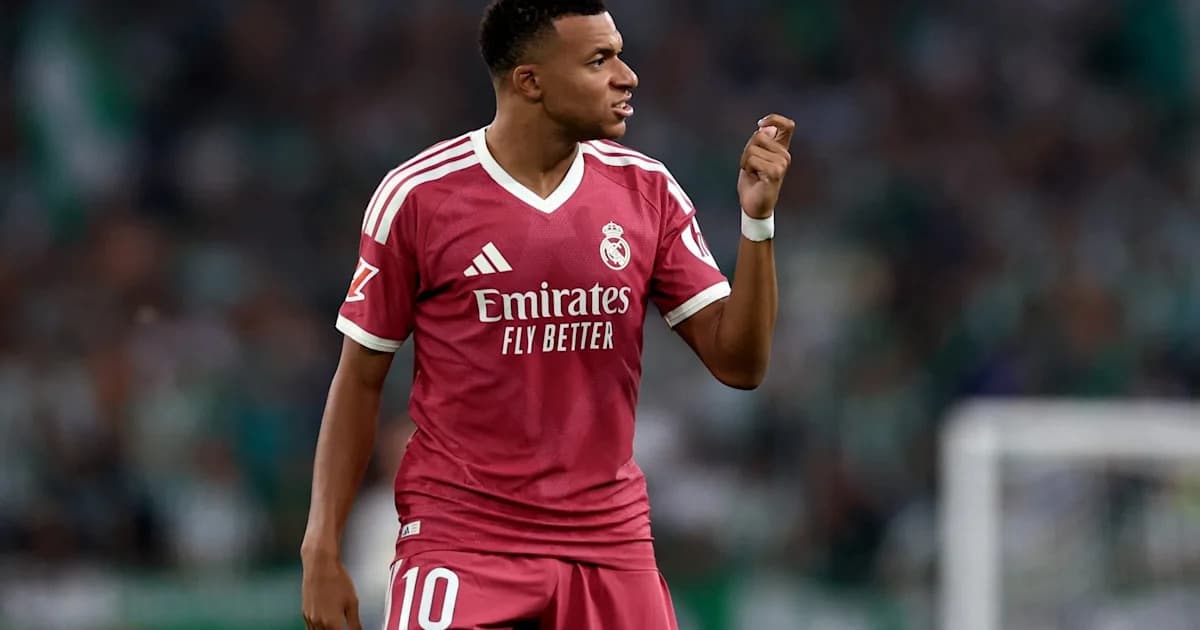
The pattern was obvious long before kickoff. Spain would have the ball, circulate it, drag opponents around, and probe for gaps. The question was how France would respond. Would Deschamps adjust, add a body in midfield, try to disrupt Spain’s rhythm with a coordinated press, or accept the numerical disadvantage Kylian Mbappé had already pointed out — two against three in the middle — and trust his stars to win their duels anyway?
He chose trust. Spain chose control. Only one choice paid off.
Deschamps’ great strength becomes his weakness
Deschamps has built a formidable international résumé by embracing a simple creed: keep the dressing room happy, keep the structure clear, and let superior talent decide the rest. It worked as a player in 1998 alongside Zinedine Zidane, Patrick Vieira and Thierry Henry. It worked as a coach in 2018 and almost again in 2022.
In a sport where goals are scarce and overcomplication can strangle creativity, that approach has logic. Many managers talk tactics; Deschamps talked balance, hierarchy, and trust. For a decade, that was enough.
But it relies on two non-negotiables for your best players: the ball and space. Spain denied France both.
With Spain monopolising possession and squeezing up aggressively, France’s attackers were starved. Michael Olise, so often electric, looked ordinary. Not because he had forgotten how to play, but because he had nothing to work with. Without room to run or touches in advanced areas, even elite forwards are reduced to shadows.
That is when a manager has to intervene, to change the angles, to tilt the pitch back in his team’s favour.
Deschamps never really did. His substitutions were straight from the manual: Manu Koné, a more progressive passer, on for Adrien Rabiot; Désiré Doué replacing the struggling Bradley Barcola. Logical moves, but hardly disruptive ones. They felt pre-programmed, like the first suggestion on predictive text. On a day when France needed something bold, they got something familiar.
His loyalty to certain players, Rabiot in particular, is another double-edged sword. It builds trust and continuity in good times. It calcifies into stubbornness when things go wrong. On Tuesday, it simply extended the suffering.
The irony is sharp. The same instincts that turned Deschamps into the most successful coach in France’s history — faith in his men, a refusal to overcomplicate, a belief in talent — ultimately left him exposed when he finally had his most lavish squad.
Enter Zidane, with questions attached
Now, all eyes turn to the man expected to replace him: Zinedine Zidane.
On paper, his credentials glitter. Three Champions League titles. Two LaLiga crowns. A legend at Real Madrid, where he managed egos, navigated crises and lifted trophies at a rate that would crush most coaches. But the paper also carries a few awkward lines: no job in five years, no title since 2020, and experience limited to a club that operates in its own galaxy.
The international game is a different craft. You do not see your players every day. You cannot solve problems by asking for a new signing. You work in short bursts, with limited training time, and live with your mistakes for months.
Zidane’s time at the Bernabéu did not feature elaborate tactical schemes. He trusted stars, managed moments, and set broad frameworks rather than complex blueprints. That sounds very familiar to what France have just had.
The temptation is to assume he will be Deschamps 2.0: another minimalist, another motivator who lets talent breathe. That is not inherently a criticism. Deschamps’ record is the envy of almost every federation on earth. But the World Cup semifinal in Arlington offers a clear warning sign: there are nights when you cannot simply send out your best XI, tell them to express themselves, and wait for quality to prevail.
Sometimes you need to sacrifice a little talent for a lot of balance. Sometimes you have to accept that the other side’s plan might suffocate your own unless you disrupt it. Sometimes less really is more.
Zidane knows this better than most. He won a World Cup with Stéphane Guivarc’h leading the line, a functional striker in a team of artists. Deschamps was there too. Both have lived the reality that collective structure can elevate or blunt individual brilliance.
The next France must be a team, not just a list of names
If Zidane was watching, the message from Texas could not have been clearer. When the technical gap between two elite sides is small, the team that functions better as a unit usually wins. Spain were a machine; France were a collection of pieces that never quite clicked into place.
Zidane will inherit one of the deepest pools of attacking talent the international game has ever seen. He will know these players, their strengths, their egos, their pressure. He has had years to study this team from a distance, to imagine what he would change and what he would keep.
Matching Deschamps’ achievements would already count as success. Surpassing them would take him into the realm of the mythical.
The question now is not whether France will have the players. They always do. It is whether their next great icon on the touchline can learn faster from nights like this than the last one ever did.