Genoa's Tactical Triumph Over AS Roma at Stadio Luigi Ferraris
Match context and tactical frame
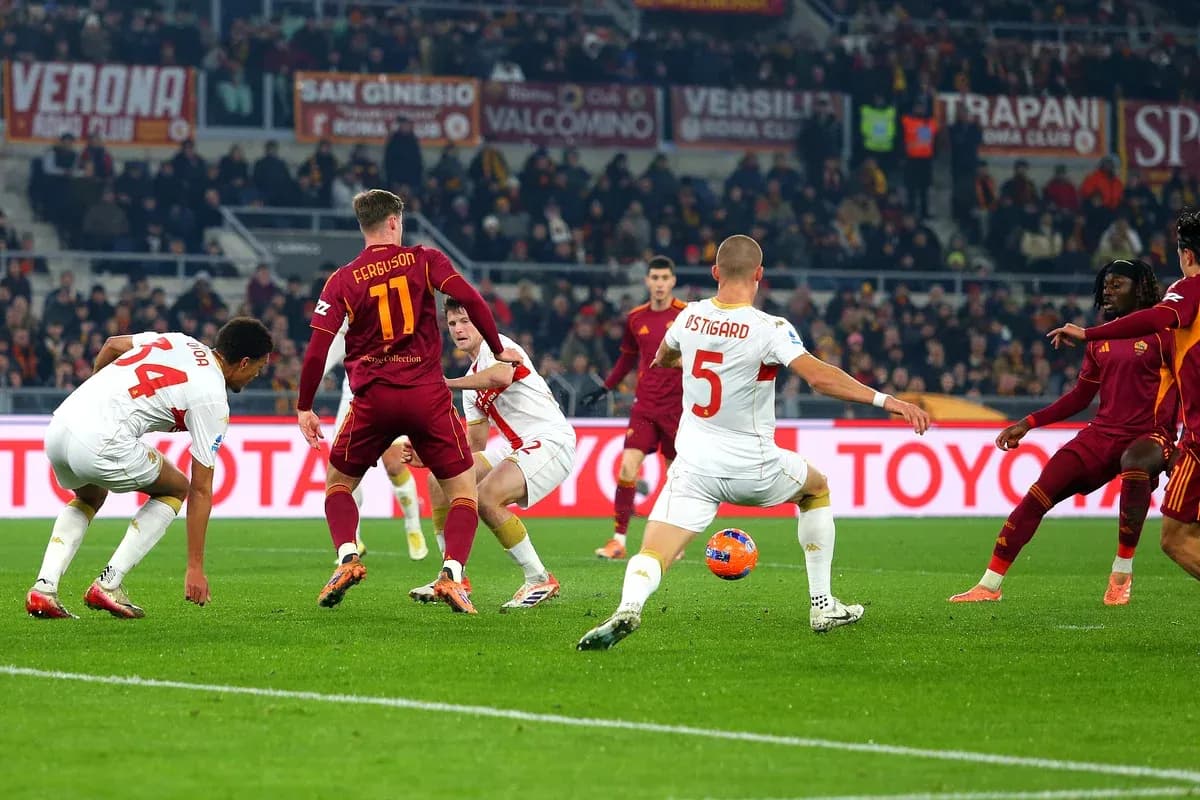
At Stadio Luigi Ferraris, Genoa edged a 2–1 home win over AS Roma in a Serie A fixture that finished after 90 minutes under referee Andrea Colombo. The result is a statement victory for 13th‑placed Genoa against a side sitting 5th, given AS Roma’s superior overall record of 51 points and a +17 goal difference compared to Genoa’s 30 points and -6 goal difference. Both teams lined up in a 3‑4‑2‑1, creating a like‑for‑like tactical battle in every line of the pitch.
Genoa squad analysis (overall and at home)
Genoa came in with an overall record of 7 wins, 9 draws and 12 defeats from 28 matches, scoring 34 and conceding 40 overall. At home they had been balanced but inconsistent, with 5 wins, 4 draws and 6 losses from 15 home matches, scoring 19 and conceding 19 at home. That defensive record at home (19 goals against in 15) hinted at solidity when they can control the rhythm.
The 3‑4‑2‑1 used here fits their season profile: Genoa have mostly alternated between 3‑5‑2 and back‑three variants overall, and they had already tried 3‑4‑2‑1 in 5 matches overall. J. Bijlow replaced N. Leali in goal; given Leali’s overall 20 appearances and one red card, this shift may have been partly about discipline and shot‑stopping security. The back three of A. Marcandalli, L. Ostigard and J. Vasquez protected the box, while the wide midfielders S. Sabelli and M. E. Ellertsson provided width and running.
In central areas, M. Frendrup and P. Masini were tasked with screening and linking. Up front, the trio of Junior Messias, C. Ekuban and J. Ekhator gave Genoa more mobility than pure penalty‑box presence, which suited a counter‑punching plan against a side that, overall, concedes only 21 goals in the league. Genoa’s 6 clean sheets overall and 4 clean sheets at home underline that their defensive structure can hold when the midfield works, and that resilience was crucial in seeing out a narrow win.
AS Roma squad analysis (overall and away)
AS Roma arrived with a strong overall profile: 16 wins, 3 draws and 9 losses from 28 matches, 38 goals scored and just 21 conceded overall. Defensively they are among the best in Serie A, allowing only 0.8 goals against on average overall, with 9 conceded at home and 12 away. Away from home they had 7 wins, 1 draw and 6 defeats, scoring 16 and conceding 12 away, numbers that show they can travel well but are not invulnerable.
Piero Gasperini Gian stayed loyal to his preferred 3‑4‑2‑1, a system AS Roma have used in 20 matches overall. M. Svilar started behind a back three of G. Mancini, E. Ndicka and Z. Celik. In midfield, D. Rensch and K. Tsimikas worked the flanks, with N. Pisilli and M. Kone inside. The attacking band of L. Pellegrini and L. Venturino behind D. Malen was designed to compensate for the absence of key attackers.
Crucially, AS Roma were without several influential forwards and creators: A. Dovbyk (groin), P. Dybala (knee), E. Ferguson (ankle), M. Soule (groin) and Wesley Franca (suspension). M. Soulé is not only AS Roma’s top scorer in the league with 6 goals overall but also a top assist provider with 4 assists overall and a 7.14 rating overall. Losing that dual threat forced AS Roma to lean more heavily on D. Malen’s movement and L. Pellegrini’s creativity, reducing their unpredictability in the final third.
Key matchup 1 – Goal threat vs defensive wall
With no Genoa player listed among the top scorers, the “star” finisher on the pitch by reputation belonged to AS Roma: M. Soulé, but he was absent. That shifted the burden to D. Malen against a Genoa defense that, while conceding 40 overall, has been tighter at home with 19 against in 15 matches. Genoa’s 4 clean sheets at home overall show that when they can compress space, they frustrate even stronger attacks. In this match, the home back three plus Bijlow effectively turned AS Roma’s statistical attacking edge (38 goals for overall, 1.4 goals per match overall) into a less decisive factor, limiting clear chances and allowing Genoa’s own forwards to win the margins.
Key matchup 2 – Creative vs disruptive (assists and red‑card profile)
With assist data available, the creative benchmark is again M. Soulé, whose 4 assists and 34 key passes overall make him AS Roma’s primary playmaker. His absence created a void in AS Roma’s chance creation, forcing L. Pellegrini to assume a heavier creative load without the same vertical dribbling and 1‑v‑1 threat Soulé offers (75 dribble attempts overall).
On the disruptive side, both clubs have notable red‑card risks. For Genoa, N. Leali has 1 red card overall; for AS Roma, Z. Çelik has 1 red card overall, along with 28 fouls committed overall. In this match, Çelik started on the right of the back three, and his aggressive defending had to be carefully managed against Genoa’s mobile front line. Genoa’s plan to pull him wide and isolate him against pace was a smart way to test that disciplinary edge without overcommitting numbers.
Key matchup 3 – The void: missing stars vs replacements
The most decisive structural factor was the absence of M. Soulé for AS Roma. His 6 goals and 4 assists overall, plus a 7.14 rating overall, mark him clearly as a key player in the league context. Replacements like L. Venturino and D. Malen offer movement and finishing, but none replicate Soulé’s volume of shots (31 overall), dribbles (75 attempts overall) and creative passing (34 key passes overall). Without him, AS Roma’s 1.4 goals‑for average overall and 1.1 goals‑for average away were always at risk of dropping, which played out here as they managed only one goal away from home.
For Genoa, the “void” was more subtle: the switch from N. Leali, who has conceded 25 goals in 20 appearances overall and received 1 red card overall, to J. Bijlow. While Bijlow’s season stats are not listed, the change signaled a desire for a calmer presence in goal. Combined with a disciplined back three, that adjustment helped Genoa manage pressure late on and protect their 2–1 lead.
Verdict – Statistical edge and where the match was won
On paper, AS Roma had the clear statistical edge in both attack and defense overall: more goals scored overall (38 vs 34), far fewer goals conceded overall (21 vs 40), and twice as many clean sheets overall (12 vs 6). Away from home, their 7 wins away and only 12 goals conceded away suggested they should control this type of fixture.
Yet Genoa leveraged home context and tactical detail. Their balanced home goals record (19 for, 19 against at home) and 4 clean sheets at home overall underpinned a game plan built on compact defending and rapid transitions. The absence of M. Soulé stripped AS Roma of their most efficient scorer‑creator, while the Genoa switch in goal and the use of a mirrored 3‑4‑2‑1 neutralized AS Roma’s structural advantages.
In the end, Genoa’s defensive organization and opportunistic finishing overturned the raw numbers, turning a matchup that favored AS Roma statistically into a 2–1 home win shaped by squad choices and key absences rather than season‑long metrics alone.