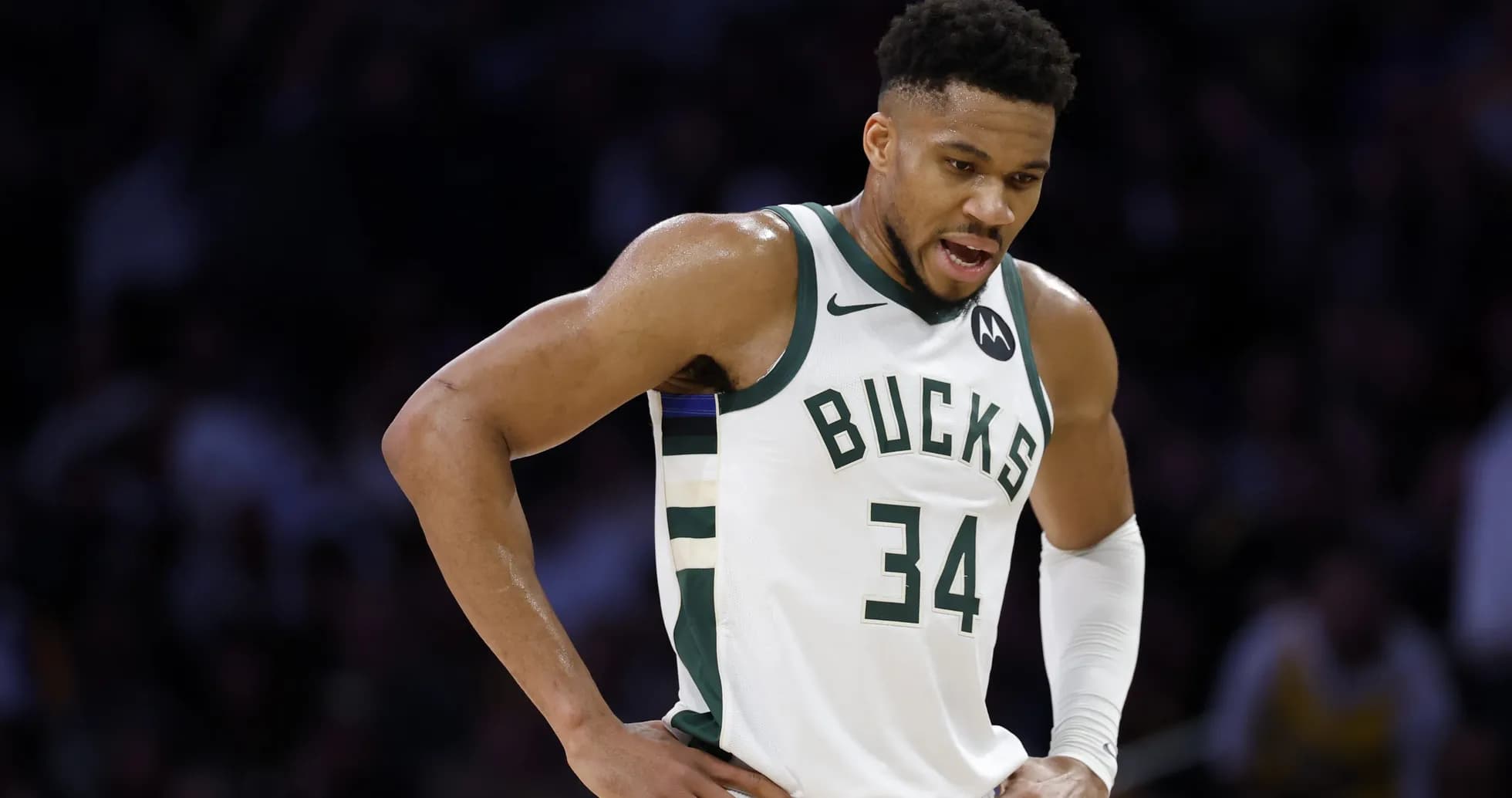
Giannis Antetokounmpo's Future with the Milwaukee Bucks: Extension or Trade?
The Milwaukee Bucks didn’t just open the 2025-26 season under pressure. They walked into it with a clock ticking over their franchise.
At the center of it all: Giannis Antetokounmpo, the two-time MVP who had already voiced “serious doubts and concerns” about the roster months before the February trade deadline, according to Shams Charania on ESPN. The message behind closed doors was even sharper. After a third straight first-round exit, Antetokounmpo signaled that both sides might have reached the end of the road.
Years of aggressive win-now moves had led them here. The trades for Jrue Holiday and Damian Lillard brought a championship and star power, but they also stripped Milwaukee of first-round picks and flexibility. When the playoff losses piled up, the bill came due.
One source told ESPN that Antetokounmpo tried to keep everything professional, staying “very up front with the team,” but warned that what once looked like it could be a “happy resolution” now threatened to become “a nasty breakup.”
Heat talks that shook the league
In late January, Antetokounmpo and his representatives sat down with ownership, including Jimmy Haslam and Wes Edens. The conversation wasn’t theoretical. It referenced a prior understanding: if the partnership stopped working, the franchise and its star would work together on a trade.
Once that door cracked open, the league rushed to push it wider.
The Minnesota Timberwolves called. The Golden State Warriors did too. Teams circled a rare chance to land a player who changes a franchise’s ceiling overnight. But one suitor stepped ahead of the pack.
Miami.
According to Charania, the Bucks “seriously considered” sending Antetokounmpo to the Miami Heat in a blockbuster that would have redrawn the NBA map days before the deadline. Miami’s package centered on Tyler Herro, rookie big man Kel’el Ware, additional players, and a stack of draft picks and swaps. Team sources told ESPN the Bucks didn’t just listen; they weighed the proposal and even flirted with pulling the trigger on February 4.
This wasn’t a fire sale. General manager Jon Horst and the front office set a towering price: elite young talent plus major draft capital. Around the league, Milwaukee floated names like Evan Mobley and VJ Edgecombe in other conversations, making it clear they wanted a haul worthy of a generational star.
The stance frustrated some suitors. Some clubs felt Milwaukee dragged its feet in responding. Others thought the price bordered on unrealistic. Yet the Heat talks advanced far enough to feel real, to force ownership to stare at a future without the player who transformed the franchise.
On the morning of February 5, Edens and the Bucks made their call. They informed Miami they would not move forward. Antetokounmpo stayed. The trade deadline passed. The blockbuster died.
A star who might not want to be there
Keeping Giannis didn’t fix the fracture. It just postponed the fallout.
Inside the organization, tension lingered. One team source told ESPN, “The crux of the issue is feeling Giannis doesn’t want to be here on any given day.” For a small-market franchise built entirely around one superstar, that sentence lands like an alarm siren.
Around the deadline, Antetokounmpo missed 15 games with a calf injury, a stretch that could have easily turned into an excuse to shut him down and pivot toward the future. He didn’t take that route. Once healthy, he aligned with Horst and head coach Doc Rivers on pushing for wins, not preservation.
The effort didn’t translate into clarity. Milwaukee stumbled through the rest of the season, wrestling with questions about identity, direction, and what exactly they were building around their cornerstone—if he even remained one.
Those doubts reached the bench as well.
Doc Rivers on uncertain ground
Doc Rivers arrived in Milwaukee to stabilize a contender, not to oversee a slow-motion unraveling. He now finds himself at the center of it.
Reports from Marc Stein describe “an anticipation” that Rivers and the franchise could head toward a separation or some form of restructuring after a disappointing campaign. On paper, Rivers’ résumé still glows—he was recently named to the 2026 Basketball Hall of Fame class. On the court, the fit has been less convincing.
He has guided the Bucks through a turbulent stretch defined by injuries, roster imbalance, and a star’s wavering commitment. The question hanging over the organization is no longer just whether Rivers is the right coach for Antetokounmpo, but whether there will even be an Antetokounmpo era left to coach.
Extension or exit
Wes Edens has stripped away any remaining ambiguity. The Bucks governor has made it clear: Giannis Antetokounmpo will either sign an extension or be traded.
The timing is brutal and precise. In October, Antetokounmpo becomes eligible for a four-year, $275 million extension—a figure that reflects his stature and the stakes. If he signs, Milwaukee locks in its superstar and can attempt another retool around him, even with limited draft capital.
If he doesn’t, the franchise faces the kind of decision that can define a decade.
For now, the choice to pass on Miami’s offer looms over everything. The Heat package is gone. The league has seen how close Milwaukee came to moving its franchise player. Trade interest will roar back in the offseason, but the dynamics will shift: fewer years left on his deal, more urgency, and perhaps less leverage.
The Bucks avoided a deadline earthquake. They may only have delayed it. The next move—extension or trade—won’t just shape Giannis Antetokounmpo’s future. It will decide what the Milwaukee Bucks are for the next generation: a franchise that held its nerve and rebuilt around a legend, or one that waited too long to accept that the partnership had already run its course.