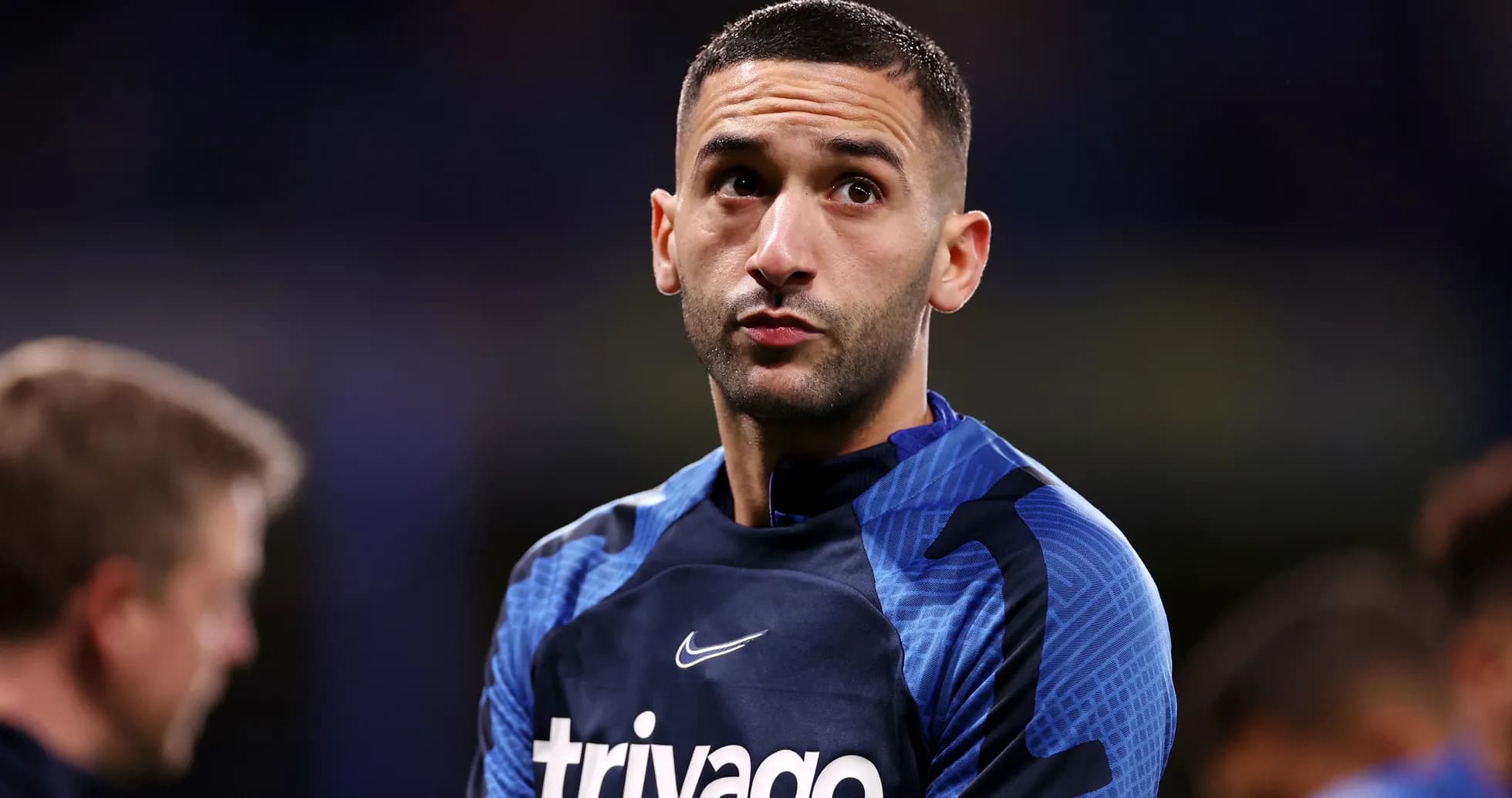
Hakim Ziyech vs Itamar Ben-Gvir: A Political Clash Beyond Football
Hakim Ziyech has never been shy on the pitch. This time, the confrontation is far from any stadium touchline.
The Moroccan international, now with Wydad Casablanca, has been drawn into a fierce public clash with Israel’s Minister of National Security, Itamar Ben-Gvir, after openly criticising Israel’s policies toward Palestinian prisoners and a controversial new death penalty bill.
An Instagram post that lit the fuse
The dispute ignited on social media.
As the Knesset debated legislation paving the way for the death penalty for those behind armed attacks, Ziyech posted a photo of Ben-Gvir on his official Instagram account. The image came with a pointed caption, challenging the legal and moral basis of such a law.
He wrote: “Will [Ben-Gvir] claim this time that the passing of the new law is merely self-defence?”
One line, aimed squarely at a minister at the heart of Israel’s hard-line security apparatus, was enough to turn a footballer’s feed into a political battleground.
Ben-Gvir hits back
Ben-Gvir did not let it pass.
The right-wing minister fired back with a fierce response, dismissing Ziyech and attacking his character rather than his argument.
“An anti-Semitic player cannot lecture the State of Israel on morality,” he said, in comments carried by local media.
Then came the warning, delivered in the uncompromising tone that has defined his tenure.
“From now on, Israel will no longer deal cautiously with its enemies… Since I took office, the prisons have changed, and God willing, we will apply the punishment to all militants.”
The exchange pushed Ziyech out of the usual realm of football discourse and straight into the centre of one of the region’s most combustible debates.
The law at the heart of the storm
This is not a random spat between a minister and a footballer. It is rooted in a law that has already rattled human rights groups across the world.
In late March, the Knesset approved a bill enabling the death penalty for perpetrators of armed attacks. Sixty-two MPs backed the legislation, a significant show of support for a measure long considered a red line in Israel’s legal system.
The reaction was immediate. International and Palestinian human rights organisations voiced deep concern over what this could mean for thousands of detainees in Israeli prisons, especially against a backdrop of reports of worsening living and health conditions in detention centres.
For Ziyech, who has often been vocal on social issues and is a symbol for many young Moroccans and North African fans, the law was a step too far. His post tapped into a wider anger over the treatment of Palestinian prisoners and the direction of Israeli policy.
The response from Ben-Gvir ensured the issue would not remain confined to activist circles or political forums. It became a headline-grabbing clash between power and celebrity.
Rabat weighs in
The fallout did not stop at social media. It travelled quickly into Morocco’s political arena.
The Justice and Development Party, one of the country’s prominent political forces, publicly backed Ziyech. In an official statement, the party expressed its solidarity with the player, framing his stance as more than a personal opinion.
They described his position as “humane and courageous,” arguing that his comments on prisoners reflect the wider sentiment of the Moroccan street and align with the Kingdom’s long-standing positions on the Palestinian cause.
By stepping in, the party transformed a digital confrontation into a matter of national resonance. Ziyech, already a hero for his exploits with the national team, now stands as a figure embodying both sporting pride and political conscience for many in Morocco.
Football, fame, and the fault lines of a conflict
This episode underlines a reality of the modern game: top players no longer live in a sealed-off sporting bubble. Their platforms are vast, their words travel instantly, and their political stands carry weight far beyond the dressing room.
Ziyech chose to use that platform at a moment when Israel’s internal security policies are under intense scrutiny. Ben-Gvir chose to answer with the full force of his office and rhetoric.
The law has passed its key stage in the Knesset. Human rights groups continue to warn of its implications. Morocco’s political class has taken a clear position behind one of its star players.
The ball, for now, is no longer at Ziyech’s feet. It sits in the volatile space where football, politics, and public opinion collide, with the next move likely to come not from a stadium, but from a parliament, a ministry, or another post that ignites a new storm.