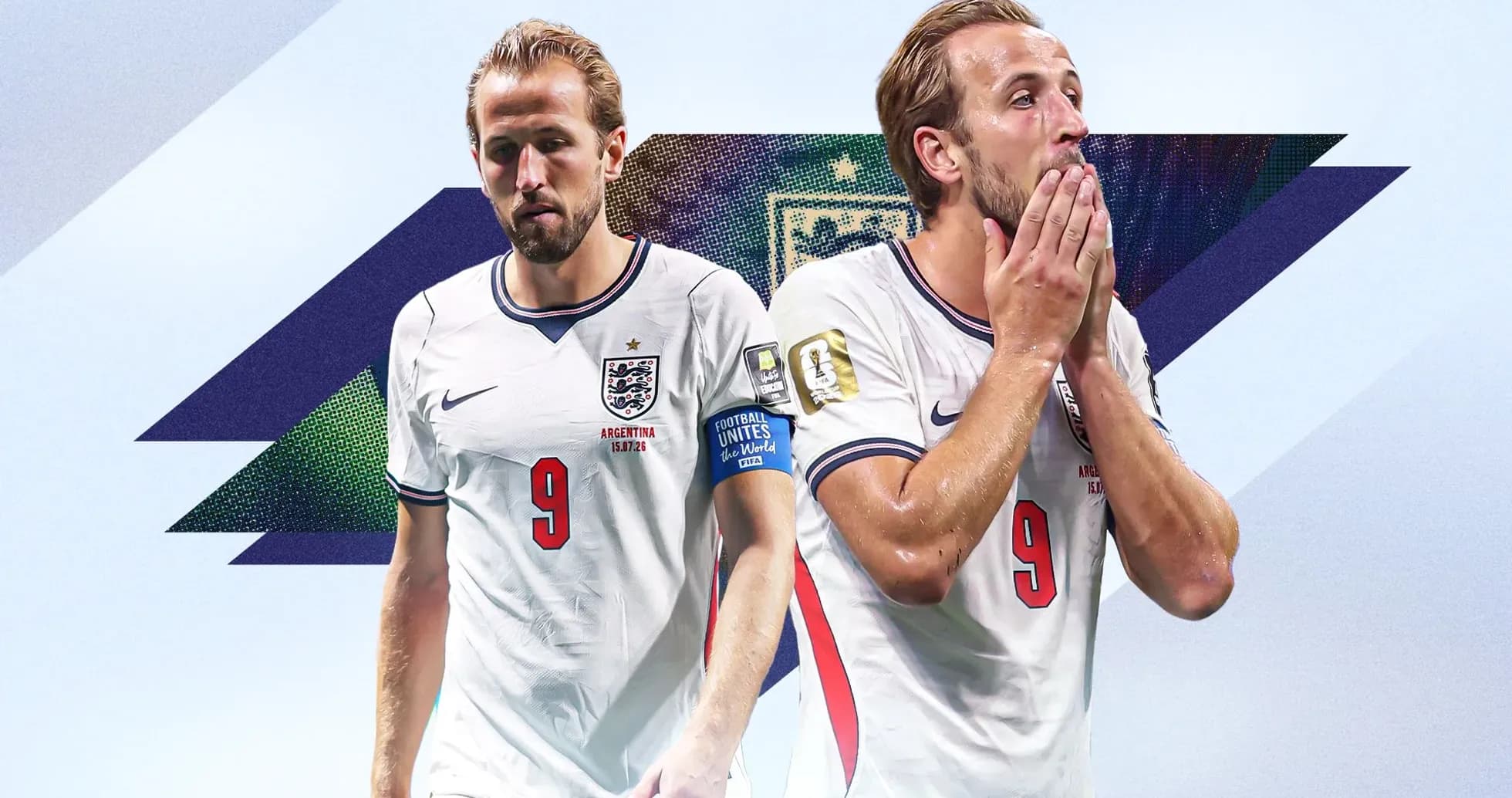
Harry Kane's World Cup Miss: A Legacy at Stake
For an hour in New Jersey, England went toe-to-toe with the world champions and didn’t blink. Thomas Tuchel’s team did not outplay Argentina, but they matched them stride for stride, tackle for tackle. When Anthony Gordon swept in the opener on 55 minutes, it felt less like a smash-and-grab and more like a fair reward for nerve and organisation.
It was the first punch. The assumption, almost baked into the occasion, was that Argentina would swing back. The question was whether England, this hardened, streetwise version under Tuchel, could answer in kind.
They didn’t. They shrank.
Once behind, Argentina surged forward with that familiar, ruthless certainty. Lionel Scaloni spoke afterwards of his team “smelling blood in the water”. England, retreating deeper with every attack, looked like they were pouring it in.
And right in the middle of this storm, Harry Kane became a strange, static figure.
His numbers are brutal: 26 touches, nine completed passes, one blocked shot, not a single touch in Argentina’s box. On paper, it reads like a disappearing act from England’s captain on the biggest night of the tournament.
It wasn’t quite that simple.
This was a snarling, scrappy semi-final, and Kane embraced the fight early. He spent much of the first half colliding with centre-backs, chasing loose balls, contesting everything. He attempted more duels than Lisandro Martínez and Alexis Mac Allister, hurling himself into challenges with a recklessness that felt almost out of character for such a meticulous forward.
In that opening spell, when the game was fractured and ugly, it had value. England weren’t trying to string together 20-pass moves; they were trying to survive and steal moments. Kane, bruised and combative, helped them do that.
Once they scored, the whole thing flipped.
Gordon’s goal presented Tuchel with a tactical dilemma he never truly solved. England had just come off a monumental backs-to-the-wall effort at the Azteca, a heroic defensive stand to edge Mexico. Kane had gone 89 minutes that night, all elbows and grit, playing as much firefighter as forward.
Four days later, it was the same story. Same running. Same scrapping. Same fatigue.
Kane was clear in his own assessment.
“For one reason or another, we struggled to be on the ball, we struggle to put pressure on the ball and it allowed them to create more momentum and created more attacks for them in our final third,” he said afterwards.
The twist is that he was part of the problem he was describing.
England needed an escape route, a genuine out ball. They needed someone to pin one of Argentina’s heavy-legged centre-backs, occupy them high, give the defence a target to hit and a chance to breathe. Kane, for all his gifts, is not that player anymore. He is almost complete as a striker, but he does not have pace. So he did what he always does when the game starts slipping: he dropped deeper, looking to stem the tide.
He couldn’t. The waves just kept coming.
This was no longer a match for Kane. Tuchel should have taken him off, not out of disrespect, but out of necessity. Instead, England’s captain was left stranded in midfield, watching the collapse unfold in front of him, unable to affect it where it mattered.
Strip away the emotion and it still feels like a harsh way to close a season that, at club level, bordered on the absurd.
Kane was phenomenal for Bayern Munich. He broke the single-season scoring record for a Bundesliga player with 58 goals in all competitions. No one in Europe’s top five leagues matched his 36 in the league. He became the fastest Bayern player to reach 100 goal contributions. Bayern won the title by 16 points, even after easing off late on.
These were not just big numbers; they were historic ones. Robert Lewandowski never climbed that high. Kane was operating in Messi-Ronaldo statistical airspace, the sort of territory that usually ends with a Ballon d’Or in your hand. On output alone, the argument for him to become the first English winner since Michael Owen was entirely legitimate.
Then came the brakes. Bayern fell short where it mattered most. They went blow for blow with eventual champions PSG in Europe, but failed to overturn the deficit in the second leg and fell 6-5 in the semi-finals. The season that looked like it might define Kane’s career suddenly had an asterisk.
The World Cup, then, became his reset button. Kane said as much before the tournament, openly acknowledging that a deep run with England could shove him back into the Ballon d’Or conversation.
“I’d be one of the favorites, definitely,” he admitted. “Given the trophies I’ve won this season and the number of goals I’ve scored, I’d be in the running. Especially as, should England win the World Cup, one could imagine the trophy going to an English player.”
For five matches, he played like a man intent on seizing that chance. Two goals against Croatia, one against Panama, two more against Congo, plus an assist in the Azteca cauldron. He and Jude Bellingham dragged England forward; everyone else filled in around them.
A Golden Boot would have strengthened his case even further. Heading into the semi-final, he trailed Lionel Messi and Kylian Mbappé by two. If England were going to reach the final, logic dictated that Kane would have to be at the heart of it. This was the stage set for his defining World Cup night.
Instead, he left MetLife Stadium empty-handed.
By failing to score against Argentina, he has almost certainly watched the Golden Boot disappear. Even a hat-trick against France in a third-place play-off he really shouldn’t be anywhere near would likely not be enough, with Messi still to face Spain in the final. The numbers game has turned against him.
He will go back to Germany without the Golden Boot, without the World Cup, without the individual coronation his season seemed to promise. His window, at least for this year, has slammed shut.
The cruel part is what it might mean in the long view.
Kane’s move to Bayern felt like a rebirth, a late-career correction. With hindsight, he stayed at Tottenham a year or two too long. He was magnificent there, one of the Premier League’s standout performers season after season, but always surrounded by structural flaws and a club reluctant to truly push all-in. The irony that Spurs are now throwing hundreds of millions at the squad will not be lost on him.
His first two seasons in Munich changed the narrative. They proved he could dominate at the very highest club level, that he hadn’t missed his peak but perhaps extended it. Kane has spoken often about studying other sports, other athletes, learning how they prolong their careers. He wants to hold off Father Time. On club evidence, he’s succeeding.
International football laughs at such plans.
This is not a 50-game campaign with load management and tactical evolution. This is a sprint, jammed into a handful of weeks at the end of a draining season. No rest weeks, no gentle rotations, no time to play yourself into form. England stretched their camp as much as they could, but it was still under two months. When it mattered most, in the most intense minutes of the biggest match, Kane had nothing decisive left.
If this is the last time he arrives at a major tournament in anything like his physical pomp, his England legacy becomes one of the strangest in the modern era.
On one hand, he is, almost beyond argument, England’s greatest ever striker. Assuming he stays fit, he will glide past 100 goals for his country. Peter Shilton’s record of 125 caps is within reach; Kane already has 121. He holds the record for most penalties scored at World Cups. He owns the 2018 Golden Boot.
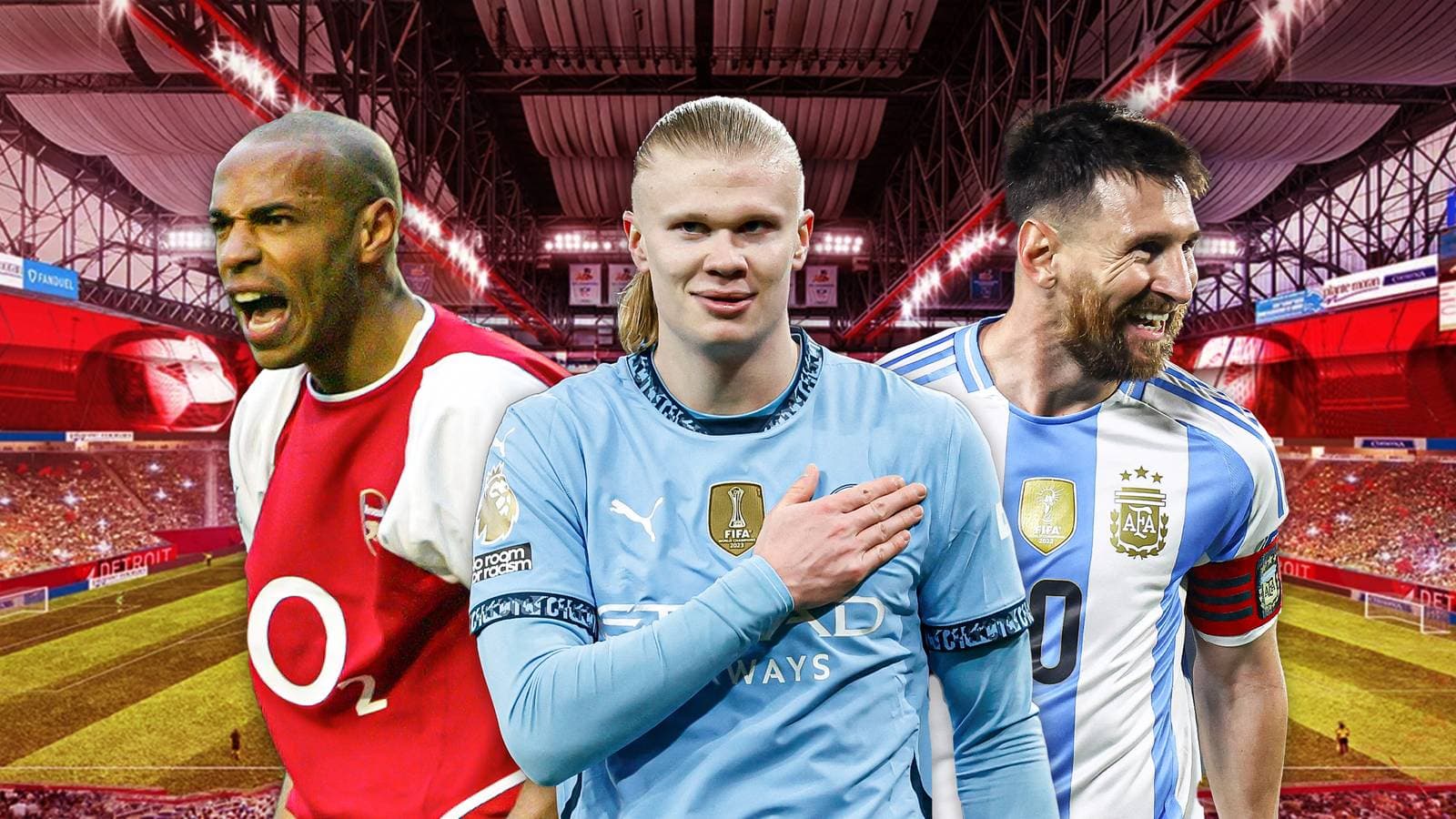
On the other hand, the empty shelf where a major international trophy should sit will haunt the conversation. He faded at Euro 2024. He missed a pivotal penalty against France in Qatar. Even accounting for the weaker squads of the 2018 World Cup and Euro 2021, he has never quite dragged England to glory in the way his talent suggests he might. The names he is statistically compared with – Messi, Ronaldo, Pelé, Maradona, Henry – all have that one defining trophy to point to. Kane does not.
And there is a wider problem. England do not have a ready-made successor.
Look at the depth chart. It’s sparse. Tuchel brought a 30-year-old Ollie Watkins and a 30-year-old Ivan Toney to this World Cup. Behind them, there is no obvious young centre-forward banging on the door. Kane is not just the present; he is, by default, the future.
So England will roll on with him. Barring injury, he will lead the line at Euro 2028. They will probably be strong again, loaded with talent in midfield and wide areas. But by then he will be deeper into his thirties, and the question will hang over every performance: can he still be the man, or is he just the name?
Kane himself is in no mood to walk away.
“The national team is my pride and joy,” he said. “It's what I love to do most more than anything. Obviously four years is a long way away, I'm 33 this summer but it never ended with Leo [Messi] there, he's still performing at the highest level. I never want to put a limit on these things.”
The problem is that tournaments do not care about sentiment, or about what you deserve on balance. Kane has had chances before to stamp his greatness on the international stage and watched them drift by. This one, with the Ballon d’Or dangling within reach and England on the brink of something huge, feels like the biggest miss of all.
And there may not be another World Cup left to fix it.