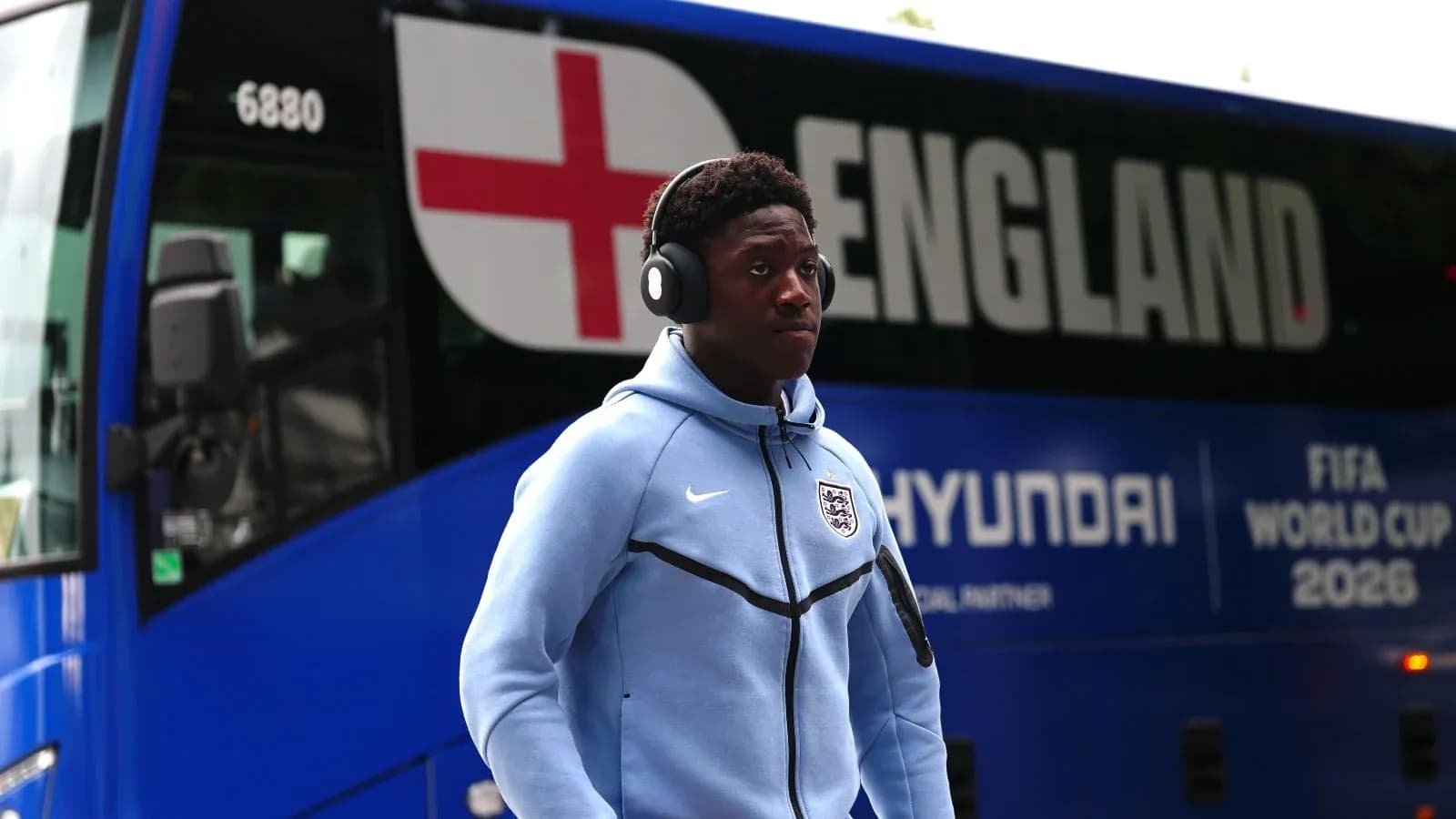
Kobbie Mainoo's World Cup Absence: Tuchel's Missed Opportunity
Kobbie Mainoo arrived at this World Cup as one of the stories of England’s season. The Manchester United midfielder had dragged his club through the 2025/26 run‑in, helped secure Champions League football and forced his way, on merit, into Thomas Tuchel’s squad.
Then the tournament started. And he vanished.
Not a late cameo. Not a consolatory run-out in a dead rubber. Not a single minute.
On paper, the pathway looked obvious. Tuchel’s preferred pairing was Declan Rice and Elliot Anderson, so Mainoo was always likely to start as an understudy. But tournaments bend plans. Rice battled fitness issues. Jordan Henderson picked up an injury. England laboured in games that cried out for a midfielder who could knit play and slide passes through stubborn lines.
Tuchel still never turned to him.
A week that changed Tuchel’s mind
The turning point, according to a report in The Daily Mail, came before England’s second group match against Ghana.
With Rice “starting to struggle”, Mainoo was drafted into central midfield in training alongside Anderson. Inside the camp, there was a sense that this was his opening, that Tuchel was edging towards using him.
Then the door closed.
The same report says bluntly that Tuchel “had not liked what he saw”. Whatever the specifics — positioning, tempo, decision‑making, tactical discipline — the impression was strong enough to cool the manager’s enthusiasm just when Mainoo seemed closest to the pitch.
From that moment, the pattern hardened. Rice, not fully right. Henderson, injured. England short of rhythm in midfield. And still no Mainoo.
A young star on the outside
Those decisions have become one of the tournament’s running arguments around England. Not just because of Mainoo’s form for United, but because of the optics.
He has, by several accounts, looked visibly disappointed after games. The Daily Mail described him as “the first player to leave the stadium, always alone and with headphones in” after almost every match. The Athletic echoed that picture, noting he was “often the first player back on the team bus”.
This was not the wide‑eyed youngster revelling in the experience of his first World Cup. This was a player who expected to matter and found himself on the fringes, watching others step into a role many assumed would, at some point, be his.
Inside the squad, the uncertainty extended beyond the player. The Athletic reported that “one source connected to the squad” wondered if Tuchel had misread Mainoo as the kind of prospect who would simply be happy to be there. Others felt the United midfielder “had simply not done enough to earn Tuchel’s trust”.
Two competing theories. One outcome. No minutes.
Trust, tactics and a brutal snub
If there was a plan for Mainoo, no one on the outside has been able to clearly define it.
The picture painted by those close to the camp is of a manager who never quite committed. A source insisted Mainoo trained well, yet when the crunch moments came, Tuchel looked elsewhere.
The most damning detail? As the tournament wore on and England searched for solutions, Reece James — a defender by trade — was pushed into midfield ahead of Mainoo. Rice, by then, was “clearly struggling for fitness”, according to the same reporting. Still, Tuchel resisted the obvious reshuffle.
For a young midfielder who had forced his way into the national conversation with his club form, it was a cold, public verdict. Selection is the purest expression of a manager’s belief. Tuchel’s choices left little room for interpretation.
Mainoo arrived as one of England’s form players and left without a single touch of the ball. The question now is whether this World Cup becomes a footnote in his rise — or the start of a more complicated relationship with the national team manager who chose not to use him when England needed something different.