Hellas Verona vs AS Roma: Serie A Season Finale Overview
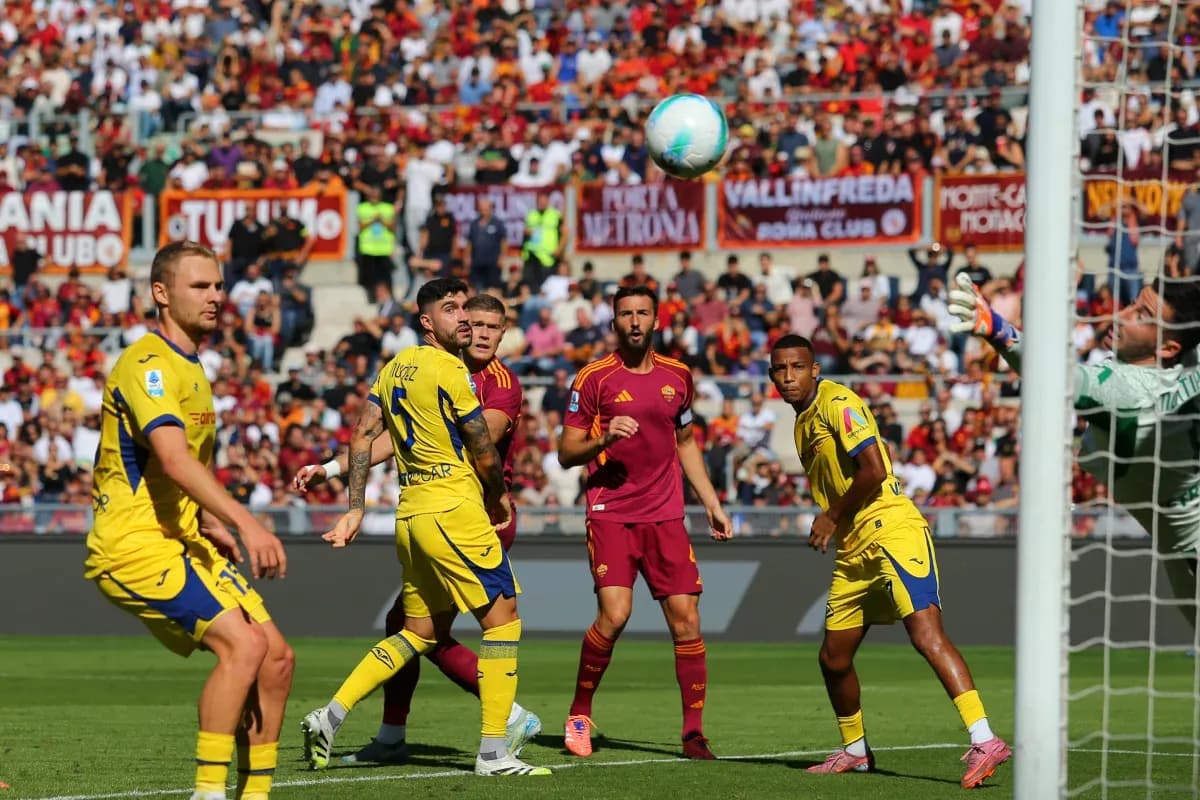
Under the fading light at Stadio Marcantonio Bentegodi, the final act of Hellas Verona’s Serie A season ended with a familiar storyline: resistance, effort, but ultimately defeat. AS Roma’s 2–0 win sealed the contrast between a side condemned to Serie B and a team finishing third, bound for the Champions League.
I. The Big Picture – Season DNA laid bare
Following this result, the table tells the story starkly. Verona close the campaign 19th with 21 points, their overall goal difference at -36, the product of 25 goals scored and 61 conceded in 38 matches. At home they managed just 1 win from 19, with 12 goals for and 28 against – an average of 0.6 goals scored and 1.5 conceded at Bentegodi. It is the profile of a team that never solved its attacking puzzle and too often bent under pressure.
Roma, by contrast, finish third on 73 points, with a positive overall goal difference of 28, built from 59 goals for and 31 against. On their travels they won 10 of 19, scoring 26 and conceding 21, an away average of 1.4 goals scored and 1.1 conceded. It is the statistical footprint of a side that can control games, travel well enough, and defend with a structure that rarely collapses.
The formations on the night mirrored those seasonal identities. Paolo Sammarco stayed loyal to Verona’s staple 3-5-2 – a system they used 26 times this season – with L. Montipo behind a back three of N. Valentini, A. Edmundsson and V. Nelsson. The wing-backs M. Frese and R. Belghali flanked a central trio of J. Akpa Akpro, S. Lovric and A. Harroui, with T. Suslov and K. Bowie tasked with stretching Roma’s back line.
Piero Gasperini Gian’s Roma, meanwhile, lined up in their favoured 3-4-2-1, the shape they used in 30 league games. M. Svilar anchored a back three of M. Hermoso, D. Ghilardi and G. Mancini, with Z. Celik and D. Rensch as wide outlets, and B. Cristante plus N. Pisilli controlling central zones. Ahead of them, a fluid line of M. Soule and P. Dybala buzzed around lone striker D. Malen.
II. Tactical Voids – Absences and discipline
Both squads arrived carrying scars. Verona were stripped of depth and experience: R. Gagliardini (suspended for yellow cards), D. Mosquera and S. Serdar (knee injuries), D. Oyegoke and J. Peci (injuries), and G. Orban (listed as inactive) all missed out. Gagliardini’s absence was especially acute. Across the season he made 29 appearances with 10 yellow cards, 73 tackles and 54 interceptions; his ability to break play and protect the back three has been central to Verona’s defensive resistance. Without him, the responsibility for duels and second balls fell heavily on Akpa Akpro and Lovric.
Roma’s list was equally high-profile: E. Ferguson (ankle), E. Ndicka and L. Pellegrini (thigh injuries), K. Tsimikas (illness), Wesley Franca (suspended after a red card), and B. Zaragoza (knee injury) were all unavailable. Wesley’s season numbers – 53 tackles, 23 interceptions and a combative presence that also produced 5 goals – underline how much bite Roma were missing in midfield. Pellegrini’s creativity was also absent, placing more onus on Dybala and Soule to knit attacks.
From a disciplinary standpoint, the risk lines were clear even before kick-off. Heading into this game, Verona’s season card map showed a yellow-card spike between 46-60 minutes (24.72%) and 31-45 minutes (21.35%), with red cards clustered in the 46-60 and 76-90 windows (each 40.00% of their reds). Roma’s yellows peaked between 61-75 and 76-90 minutes (both 23.53%), with their reds concentrated in the 46-75 band. It framed a contest likely to grow more fractious as legs tired and spaces opened.
III. Key Matchups – Hunter vs Shield, Engine Room battles
Hunter vs Shield
The headline duel was always going to be D. Malen against Verona’s fragile defence. Malen arrived as one of Serie A’s most efficient forwards: 14 goals and 2 assists in 18 appearances, from 49 shots with 31 on target. His penalty record this season is not flawless – 3 scored but 1 missed – a reminder that even Roma’s spearhead is not automatic from the spot.
Facing him was a Verona back line that has struggled all year. Overall they conceded 61 goals, 28 of them at home. The 3-5-2 gives them an extra centre-back, but without Gagliardini screening, Valentini, Edmundsson and Nelsson had to step out more aggressively to track Malen’s movements between the lines. Roma’s 3-4-2-1 is designed to isolate the central striker against the outside centre-backs; every time Malen peeled into the channels, he forced Verona’s shape to twist, opening pockets for late runners.
Behind Malen, the creative weight was shared by Soule and Dybala. Soule’s season – 6 goals and 5 assists, 46 key passes and 95 dribble attempts with 35 successful – made him Roma’s most persistent ball-progressor. Dybala, with 6 assists and 55 key passes, is the pure playmaker. Their duel was less with individual markers and more with Verona’s structure: could Lovric and Harroui step out without leaving Akpa Akpro exposed?
Engine Room – Control vs Chaos
In midfield, the “engine room” confrontation hinged on whether Verona’s trio could disrupt Roma’s rhythm. Akpa Akpro’s profile is emblematic of their approach: 44 tackles, 7 blocked shots and 23 interceptions this season, plus 39 fouls committed and 9 yellow cards. He is a disruptor, tasked with breaking Roma’s passing chains into Dybala and Soule.
On Roma’s side, Cristante and Pisilli represent control. Cristante’s experience in circulating possession and screening transitions underpins Roma’s defensive numbers: overall they concede just 0.8 goals per game, with only 10 goals allowed at home and 21 away. Even on their travels, that 1.1 goals-against average is solid, especially when paired with 7 away clean sheets.
On the flanks, Frese against Soule and Celik offered a fascinating sub-plot. Frese’s season – 84 tackles, 10 blocks and 29 interceptions, alongside 31 key passes – shows a two-way full-back who must both contain and create. Soule’s willingness to attack 1v1 meant Frese was often pinned deeper than Verona would like, blunting one of their few outlets.
IV. Statistical Prognosis – Why Roma’s structure prevailed
Even without explicit xG data, the season numbers sketch the expected shot-quality balance. Heading into this game, Verona failed to score in 20 of 38 league matches, including 11 blanks at home. Their total scoring average of 0.7 goals per match, and just 0.6 at home, hints at a side that struggles to generate high-value chances. Roma, conversely, average 1.6 goals per match overall and 1.4 away, with 18 clean sheets in total – a defensive platform that consistently suppresses opponent xG.
Roma’s card distribution, with yellows and reds clustering after the break, suggests a team that defends on the edge when managing leads, but their structure rarely breaks entirely. Verona’s own late-card spikes reflect a side forced into desperate defending, often chasing games.
In narrative terms, the 2–0 scoreline feels like the logical endpoint of these patterns. Roma’s attacking trident – Malen’s penalty-box presence, Soule’s dribbling and Dybala’s passing – was always likely to find cracks in a Verona side missing its primary ball-winner. Verona’s 3-5-2 can protect space but offers limited punch, especially without Orban’s goals and Gagliardini’s forward surges.
Following this result, the trajectories diverge clearly. Roma carry a coherent 3-4-2-1 blueprint, a top scorer in Malen, and creators in Soule and Dybala into the Champions League. Verona, relegated with a blunt attack and a leaky defence, must rebuild around the resilience of players like Frese, Akpa Akpro and Montipo – and find the goals that deserted them in a season where the numbers, and the story, have been unforgiving.