Inter's Late Surge Secures 1-0 Victory Against Shakhtar
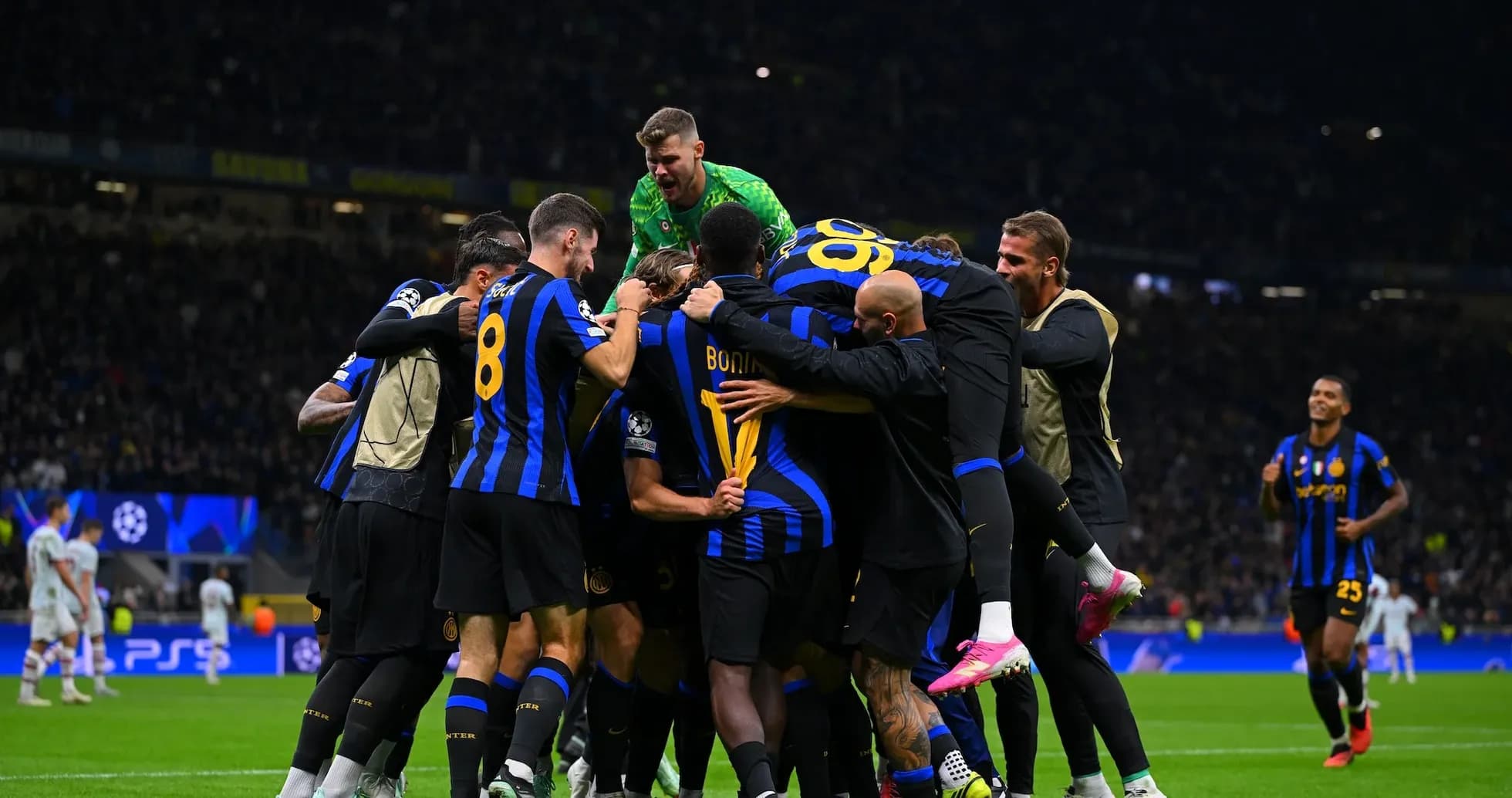
Under the San Siro lights, this League Stage - 3 clash in the UEFA Champions League unfolded as a study in contrasting identities: Inter, forced into a reshaped spine by injuries, and Shakhtar Donetsk, youthful and adventurous but still learning how to manage European pressure. By the final whistle, a 1-0 home win had subtly but significantly bent the group narrative.
I. The Big Picture – Context and Campaign DNA
Heading into this game, Inter’s European campaign had been strangely volatile. Overall they had taken 3 points from 3 matches, with a goal difference of -1, scoring 5 and conceding 6. At home, they had split their two fixtures: 1 win and 1 defeat, with 4 goals scored and 4 conceded, an average of 2.0 goals both for and against. Their season profile in Europe was clear: late surges in attack but frailty at key defensive moments. Overall, 80.00% of their goals came between 76-90 minutes, while they conceded 83.33% of their goals before the 30th and between 61-75 minutes combined.
Shakhtar arrived in Milan in a slightly stronger position in the table, ranked 17th with 4 points from 3 matches, and a positive goal difference of 1 (4 scored, 3 conceded). Their attack was split almost perfectly between the end of the first half and the dying stages: 50.00% of their goals between 31-45 minutes, 50.00% between 76-90. Overall, they conceded at a rate of 1.0 goal per match, with a goal-against pattern that spread evenly across 16-30, 46-60, and 76-90 minutes (each 33.33%).
This fixture, then, set up a fascinating timing battle: Inter’s late-game offensive spike against a Shakhtar side that tended to wobble in the same closing phase.
II. Tactical Voids – Absences and Their Echo
Both coaches had to work around important absences that reshaped the tactical script.
For Inter, C. Chivu was without C. Jones, L. Martinez, B. Pavard and J. Stones, all listed as missing. That cluster of absences cut into both ends of the pitch: Pavard and Stones as high-level defensive options, Martinez as a natural reference point in the box, and Jones as midfield depth. The solution was a pure 3-5-2: Josep Martínez in goal behind a back three of M. Akanji, A. Bastoni and Carlos Augusto, with the width and creative load pushed onto D. Spence and F. Dimarco as wing-backs, and N. Barella, H. Çalhanoğlu and P. Sučić forming the central engine. Up front, M. Thuram and A. Bonny were tasked with stretching and attacking depth rather than playing to a classic penalty-box finisher.
Shakhtar coach A. Turan had his own issues. I. Azarovi and Marlon were out injured, while Eguinaldo and several others (V. Korniyenko, P. Obah, T. Puzankov, M. Shved, D. Tvardovskyi) were off the roster. With Marlon unavailable, the choice of a 4-1-4-1 made sense: a tighter block and more protection for the centre-backs. D. Riznyk started in goal, shielded by Vinícius Tobias, V. Bondar, M. Matvienko and Pedrinho in defence. O. Ocheretko anchored as the single pivot, with an advanced line of four – Alisson Santana, Pedrinho (midfielder), Marlon Gomes and G. Mendoza – supplying lone forward Kauã Elias.
Disciplinary trends also hovered over the fixture. Inter’s season card map showed yellow cards spread across the match, with a particular spike between 31-45 and 61-75 minutes (each 25.00%), and a single red card between 61-75 minutes. That dismissal belonged to Bastoni, whose aggressive front-foot defending is both an asset and a risk. Shakhtar, meanwhile, had no reds but a heavy yellow distribution between 31-60 minutes (55.55% of their cautions in that window), reflecting a side that often has to foul to slow transitions once their press is broken.
III. Key Matchups – Hunter vs Shield, Engine Room vs Enforcer
Without a listed top scorer table, the “Hunter vs Shield” storyline for Inter was more collective than individual. The front two, Thuram and Bonny, were supported by a midfield that had already produced 5 goals overall in the campaign at an average of 1.7 per match. At home, Inter’s 2.0 goals-for average had to break a Shakhtar defence that conceded only 1.0 goal per match overall and had yet to keep a clean sheet but rarely collapsed.
The real individual duel emerged in the “Engine Room”: Hakan Çalhanoğlu and Nicolò Barella against Marlon Gomes. Çalhanoğlu’s deep-lying playmaking and Barella’s vertical running are central to Inter’s ability to pin teams back and create those late surges. Marlon Gomes, who had already collected 3 yellow cards in 3 appearances, is Shakhtar’s combative organiser. With 86 passes, 3 key passes and 15 tackles overall, he is both their first presser and their emergency brake. His 8 fouls committed underline the risk: step late against Barella or Thuram and Shakhtar concede dangerous set-pieces around the box.
Behind them, Bastoni versus Kauã Elias was another quiet but crucial battle. Bastoni’s season numbers – 213 passes at 91% accuracy, 3 successful blocks and 6 tackles – show a defender comfortable stepping into midfield. Against a lone striker like Kauã Elias, that aggression allows Inter to compress the pitch, but Bastoni’s prior red card is a reminder that mistimed interventions can leave Inter exposed, especially given their tendency to concede early and around 61-75 minutes.
On the flanks, Dimarco and Spence against G. Mendoza and Vinícius Tobias framed the width war. Shakhtar’s 4-1-4-1 relies on the wide midfielders to support full-backs and launch counters, particularly in the 31-45 and 76-90 ranges where their goals cluster. Inter’s wing-backs, however, are tasked with pinning those same players back, creating overloads and feeding late entries into the box where their late-goal profile is strongest.
IV. Statistical Prognosis – How the Numbers Shaped the Outcome
Inter’s season data suggested a match that might start cautiously but tilt their way late. They had scored 4 of their 5 goals overall in the final quarter-hour, while Shakhtar conceded 33.33% of their goals in that same 76-90 window. That overlap – Inter’s offensive peak against Shakhtar’s defensive dip – was the critical intersection of the contest.
Defensively, Inter’s 2.0 goals-against average overall is high for a contender, but Shakhtar’s attack away from home had been modest, averaging 0.5 goals on their travels. Combined with Shakhtar’s failure to score in 1 match overall and Inter’s single clean sheet at home, the balance tilted toward a narrow home win rather than a shootout.
With no penalties missed by either side this campaign – Inter had not yet taken one, Shakhtar had scored their only attempt – the probability of the game hinging on a spot-kick was low. Instead, the statistical story pointed to structured pressure, territorial dominance from Inter’s 3-5-2, and a Shakhtar side dangerous in specific time windows but unlikely to sustain threat across 90 minutes at San Siro.
The 1-0 full-time scoreline ultimately mirrored that prognosis: Inter leaning on their late-game identity, Shakhtar competing but never quite breaking through a back line anchored by Bastoni and a midfield that, on this night, controlled the critical phases rather than simply surviving them.