Iran's World Cup Participation at Risk as Political Tensions Rise
Iran’s path to the 2026 World Cup is no longer just about tactics, form, or qualifying groups. It now runs straight through a political and security storm.
On Tuesday, Iran’s Minister of Sport, Ahmad Dania Mali, reiterated that his country still wants its group-stage matches moved out of the United States and across the border to Mexico, as tensions linked to what he described as the “US-Israeli war on Iran” cast a shadow over the tournament.
The stance is blunt: no move, no guarantee Iran will play.
Tehran holds its line
Speaking to Turkey’s Anadolu agency, Dania Mali confirmed that Iran’s request to FIFA remains on the table.
“Our request to FIFA to move Iran’s matches from the United States to Mexico remains in place, but we have not yet received a response,” he said.
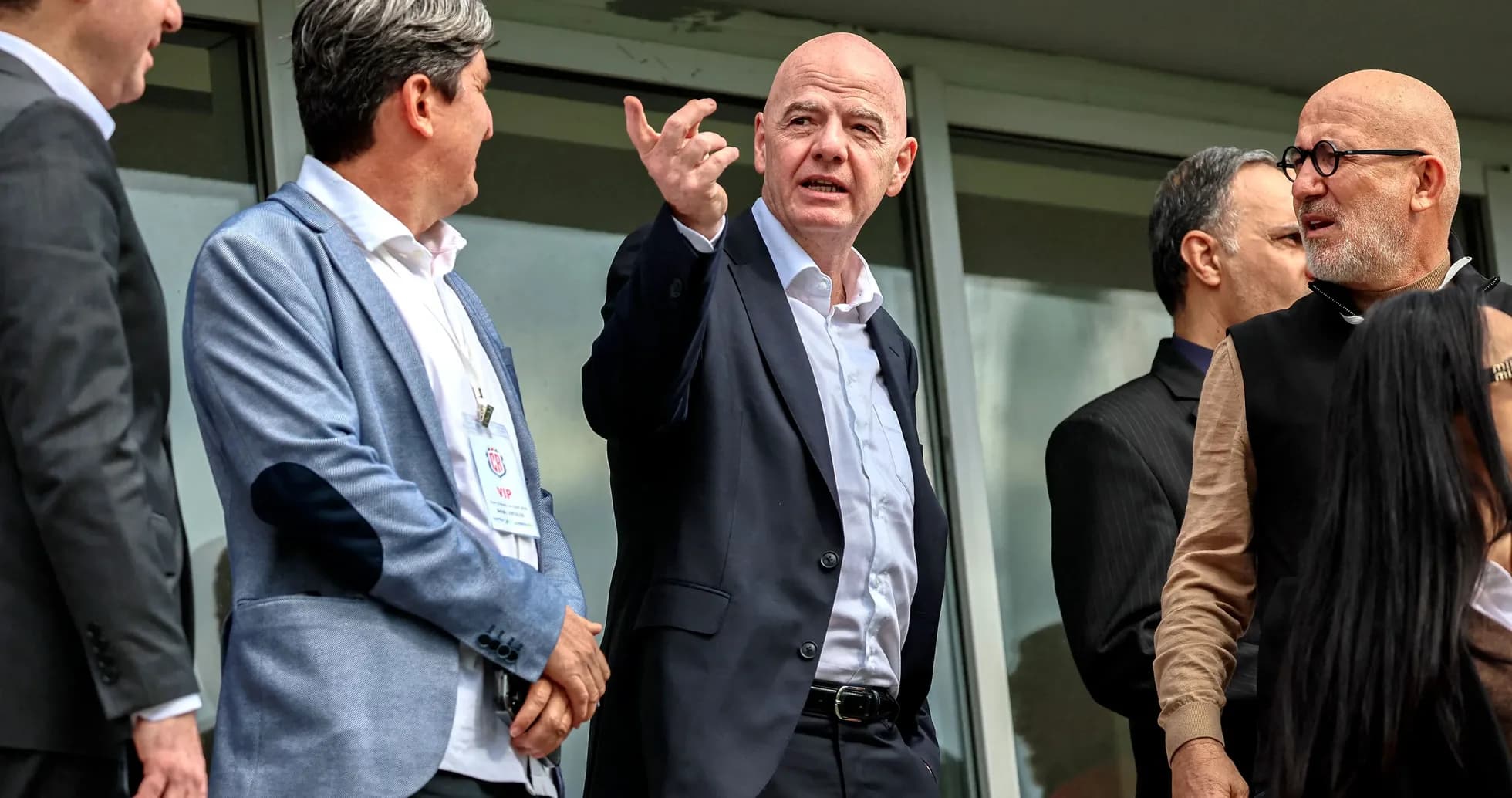
That line has not shifted, even after FIFA president Gianni Infantino stressed last week that Iran is scheduled to play its matches in the United States as planned. The federation in Tehran has already acknowledged it is in talks with FIFA over a venue change, but those discussions have yet to yield any visible breakthrough.
Dania Mali went further, tying Iran’s very presence at the World Cup to that decision.
“If the request is accepted, Iran’s participation in the World Cup will be confirmed. However, FIFA has not issued any response as yet.”
For now, the players train and wait. The minister insisted he will do his part.
“As Minister of Sport, and in cooperation with the Iranian Football Federation, we will ensure the national team remains ready for the World Cup. However, the final decision will be taken by the Cabinet.”
In other words, even sporting logic will bow to political calculation.
A Group G drawn on American soil
On paper, Iran’s World Cup looks straightforward. All three Group G fixtures are set for American stadiums: New Zealand and Belgium in Los Angeles, then Egypt in Seattle.
On the ground, nothing feels straightforward.
The United States, as co-host, has publicly opened the door. Last month, US President Donald Trump said the Iranian national team would be welcome to play on American soil, though he added that such a scenario “might not be appropriate” for his own life and safety. He later clarified that any threat to the Iranian players would not come from the United States.
The remarks underlined the charged atmosphere around Iran’s potential presence, even as the match schedule sits untouched on FIFA’s calendar.
Security guarantees at the heart of the dispute
Dania Mali closed his latest intervention by zeroing in on the issue that could decide everything: security.
“According to the relevant FIFA regulations, security must be guaranteed in the host country. The World Cup is due to kick off soon, and obtaining such guarantees during this period is highly doubtful,” he said.
That is the crux of Iran’s argument. Without what Tehran considers adequate, formal guarantees, the minister sees little chance of his national team stepping onto American pitches.
“Under these circumstances, the likelihood of Iran participating in the World Cup matches to be held in the United States is very low,” he added.
There is still a door open, however narrow.
“If the necessary security guarantees are provided, our government will make its decision regarding Iran’s participation in the World Cup.”
The message to FIFA and the host nation is clear: prove it is safe, in writing and in full, or risk losing one of the qualified teams before a ball is kicked.
If Iran walk away, who steps in?
The World Cup rarely leaves a vacant seat. If Iran withdraw, the immediate question will be who replaces them in Group G.
According to British newspaper The Sun, Italy, absent from the last three World Cup finals, would have a “very slim” chance of being drafted in. The logic is simple: the Azzurri are the highest-ranked side among those who failed to qualify through the final play-offs.
It is no more than a possibility at this stage, but it is enough to stir imaginations. A global heavyweight like Italy, sneaking into the expanded 2026 tournament through the back door, only because another nation steps aside under political and security pressure.
For now, the fixture list still reads: Iran vs New Zealand, Iran vs Belgium, Iran vs Egypt. The clock keeps ticking. The stadiums in Los Angeles and Seattle will be ready.
The real question is whether Iran will be there to walk out of the tunnel.