Jürgen Klopp's Controversial Comment Sparks Debate in Germany
Jürgen Klopp has never been shy with a microphone in front of him. This time, one small word was enough to light up Germany.
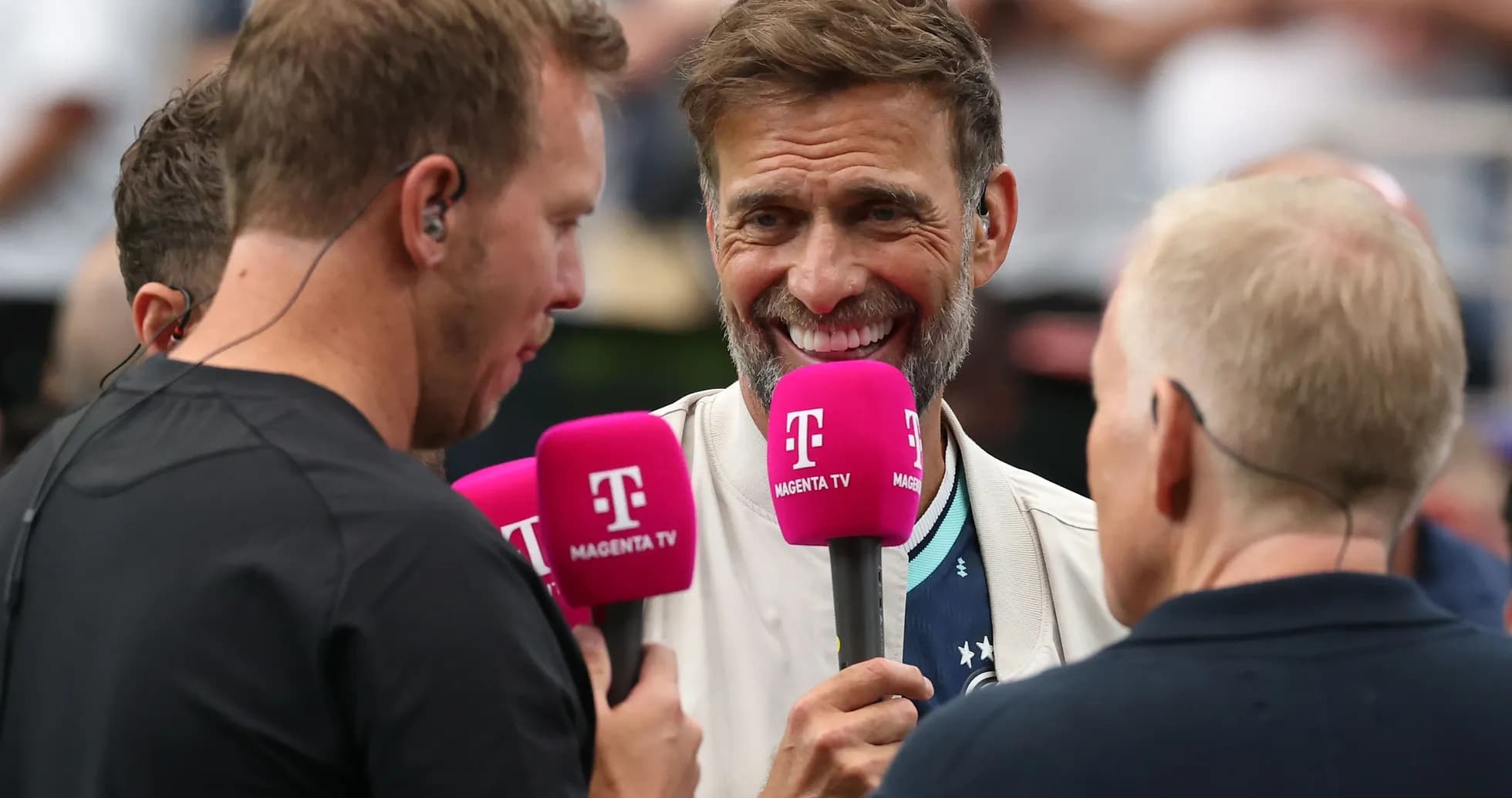
Working as a pundit for MagentaTV before Germany’s World Cup opener against Curacao, Klopp sat alongside Thomas Müller and chatted through Julian Nagelsmann’s team selection. Then came the line.
“Luckily, Julian Nagelsmann is still picking the team.”
That “still” detonated across German living rooms. In a country where Klopp’s name has long hovered over the national job, it sounded less like a throwaway aside and more like a reminder that Nagelsmann’s position might be temporary. Viewers picked up on it. Pundits did too. Lothar Matthäus led the criticism, calling out the tone as disrespectful to the current coach.
Klopp knew immediately he had stepped on a landmine.
By the time Germany had dismantled Curacao 7-1, the story was no longer just about a ruthless opening win in North America. It was about a pundit who also happens to be the most obvious heir to the national team job, and a single word that fed the narrative.
So Klopp went back on air and did what he often does best: he fronted up.
“I’ve already found the most hated word of the year: ‘Still’,” he said during the post-match coverage. “I could have punched myself in the face for that, but it was already too late and I was on TV. It just slipped out so casually and has absolutely no relevance.”
No excuses, no attempt to twist the meaning. Just a public admission that he had given the debate oxygen it didn’t need.
Klopp, who turns 59 this week, framed it as a lapse in judgement, not a coded message about Nagelsmann’s future. The former Borussia Dortmund coach knows how quickly offhand remarks can snowball around a national team at a major tournament. He also knows his own presence in any Germany conversation carries a different weight now, with some analysts tipping September as the moment he could, in theory, take over.
He made sure to address Nagelsmann directly during a live exchange, stripping away any ambiguity.
“There’s one more thing I have to say… we still need to make time for this,” Klopp said. “We’re also informally part of the team, we’re absolutely on your side. What I’ve realized is: I’ll be 59 the day after tomorrow and I’m still an idiot. We are completely on your side, whatever you do. Nothing was intended to come of it to disrupt the process here.”
Self-deprecation, yes. But also a clear message: no plotting, no undermining, no hidden agenda.
The awkwardness had its roots in what was supposed to be light studio banter. Before kick-off, Müller and Klopp had joked about team selection, even urging Nagelsmann to leave out Bayern Munich star Jamal Musiala. Müller also poked fun at Klopp, teasing that he was already thinking ahead to September rather than June – a nod to those swirling predictions about when Klopp might eventually take the reins.
Inside the studio it was all laughs. Outside, it landed differently.
Matthäus and other prominent voices in Germany argued that the exchange crossed a line. For them, the joking tone from two of the most influential figures in modern German football felt unprofessional and piled unnecessary pressure on Nagelsmann just as his team were stepping into a World Cup.
That is the tension Germany must manage now: the noise around the dugout versus the clarity on the pitch.
On the field, there was no doubt. The 7-1 demolition of Curacao underlined a side in sharp attacking rhythm, brushing aside their first hurdle in style. The result won’t define their tournament – the level of opposition is about to rise steeply – but it did show a group comfortable in Nagelsmann’s structure, unfazed by the chatter off it.
Next comes a very different kind of examination.
Germany now head to Toronto for a meeting with Ivory Coast on Saturday, a step up in physicality, pedigree and threat. Ecuador also await in the group, offering another stern test as the tournament winds its way through North America.
Nagelsmann’s job is to keep his players’ focus locked on that path, not on what is said in a television studio. Klopp’s job, for once, is to stay in the background.
Germany are chasing a fifth world title. The question is whether they can keep the conversation on the football, and not on the man who might one day stand in the technical area.