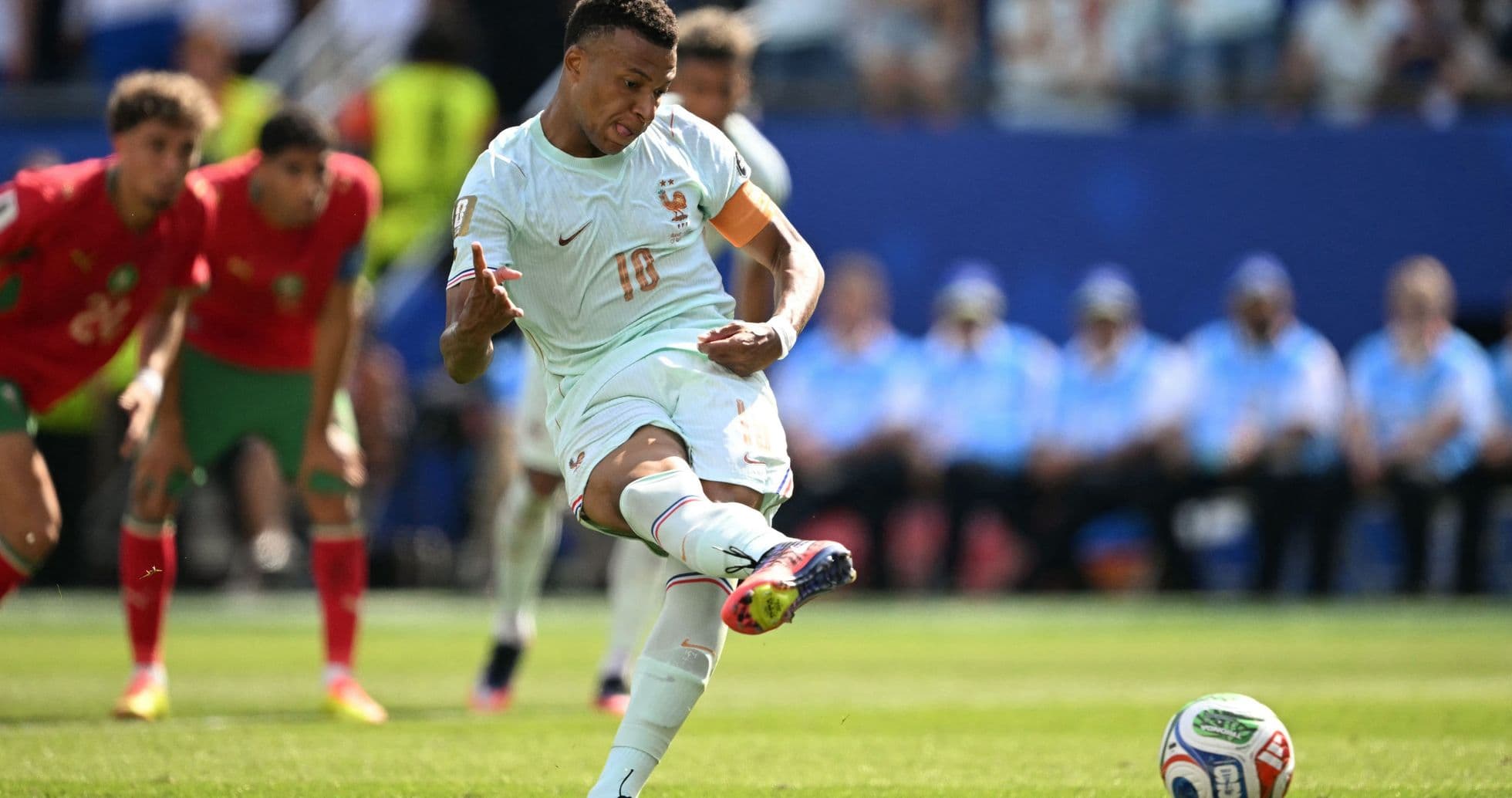
Kylian Mbappé's Penalty Miss: A Reflection on Modern Football
Kylian Mbappé has missed penalties before, but rarely amid chaos like this.
In the aftermath, there was no attempt to hide, no search for excuses. Just a blunt admission from one of the game’s most ruthless finishers that, on this occasion, his focus cracked under the weight of confusion.
“I didn't shoot well,” Mbappé told RMC Sport, stripping the moment down to its simplest truth. The rest of the story, though, was anything but simple.
The sequence unfolded in a blur of whistles, gestures and second guesses. Mbappé thought he had his moment from the spot. The referee confirmed there was a penalty. Mbappé checked again, wary of the ever-present spectre of VAR. Was the review complete? Yes, he was told. The green light. Time to lock in.
From there, the routine should have been familiar. Ousmane Dembélé handed him the ball. The forward entered that narrow tunnel of concentration penalty takers know so well: the walk, the breath, the picture in his mind of where the ball would go.
Then everything twisted.
“From that moment on, we transition to Ousmane, who gives me the ball,” Mbappé explained. “Then he comes to me, when I'm already focused, to tell me there's no penalty.”
The mental reset was brutal. Ball in hand, mind already fixed on the strike, he suddenly found himself in limbo. Penalty on. Penalty off. Game paused. Game rewound.
“So I don't know,” he said. “I pick up the ball, put it down again, thinking there's a penalty, and he tells me, 'No, wait, there's an action two minutes earlier that needs to be checked.'”
Time stretched. The tension didn’t just build, it warped. The striker who usually thrives in these high-wire moments was left standing in a kind of footballing no man’s land, waiting on a decision that seemed to move further away with every passing second.
When the kick finally came, the outcome matched the feeling: disjointed. The run-up lacked its usual conviction, the strike its usual venom. The miss felt like the logical end to an illogical process.
Yet when the dust settled, Mbappé didn’t point the finger.
“But that's how it is, I let myself get distracted,” he said, owning the moment in a way many players in his position would not. He spoke like someone who has spent years preparing for every pressure scenario from twelve yards, only to be blindsided by a situation even his meticulous mind hadn’t sketched out.
“I've certainly gone through a lot of scenarios about how to concentrate on a penalty, but I hadn't considered this particular scenario yet,” he admitted.
This is the reality of the modern game. The penalty area is no longer just a rectangle of grass and white paint; it’s a theatre wired to a control room, every contact and collision replayed, reinterpreted and sometimes reversed. Certainty has given way to delay. Instinct now shares space with interruption.
“It's a scenario we'll have to consider,” Mbappé said, almost as if he were already filing it away for future reference. “Because the referee can tell you there's a penalty, but then two minutes later he can tell you there isn't. I don't know how long it lasted. It's part of the new football. It's the new football with VAR, you have to adapt.”
That last line carried less complaint than resignation. The technology is not going away. The pauses, the rewinds, the rewrites of reality on the pitch are now baked into the sport at the highest level. For forwards like Mbappé, the challenge is no longer just beating the goalkeeper. It’s beating the wait, the doubt, the cold restart after the adrenaline has already surged.
On this night, the system won that battle. The distraction crept in, the strike went wrong, and one of the world’s deadliest finishers walked away with a rare reminder of his own fallibility.
The next time he stands over a ball with VAR humming in the background, he’ll have lived this scenario before. The question now is simple: who adapts faster to “the new football” — the technology, or the players forced to live inside its delays?