Lazio's Season Finale: Victory Over Pisa Secures 9th Place
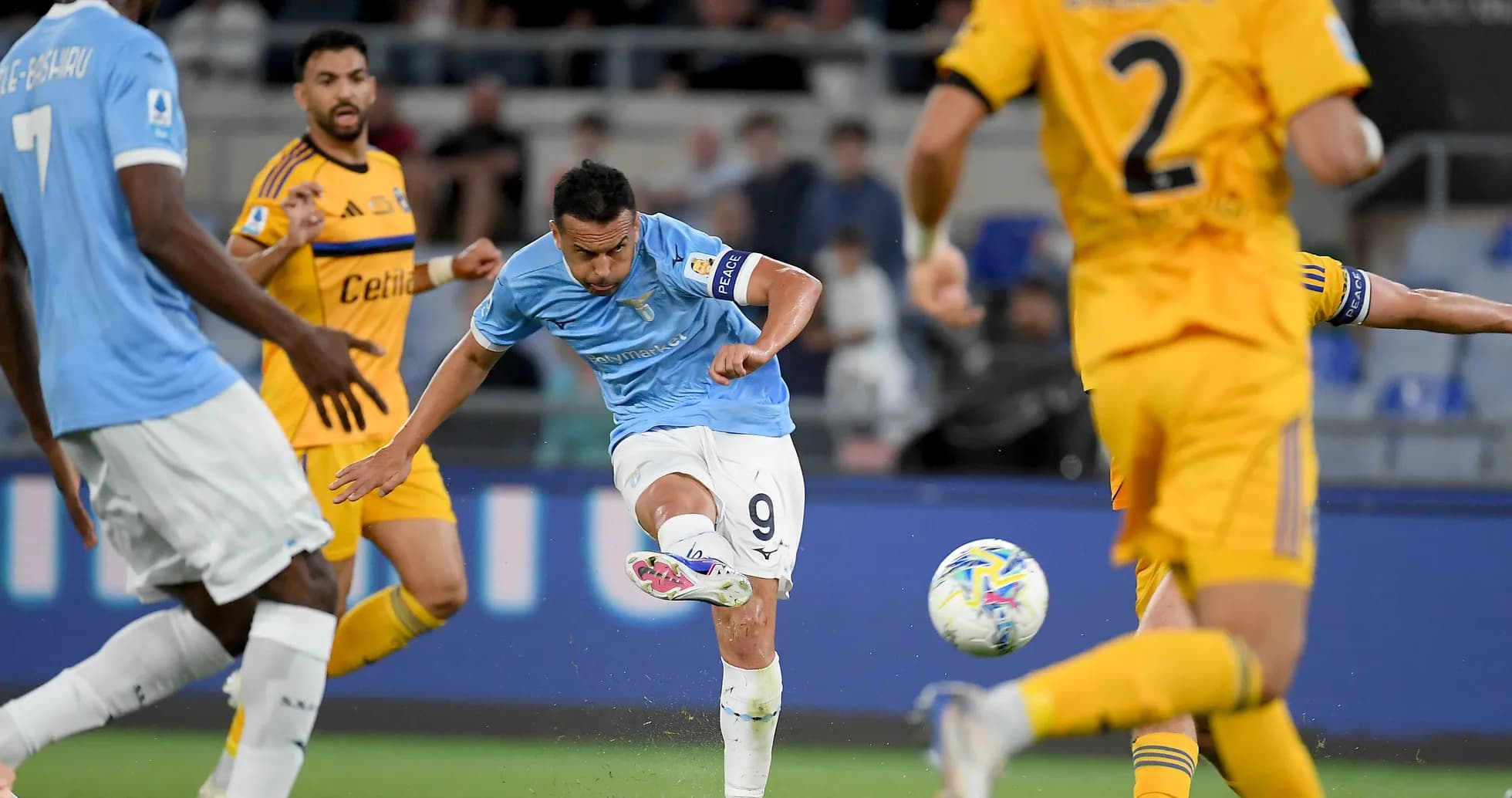
Under the Roman evening sky at Stadio Olimpico, Lazio closed their Serie A season with a 2–1 win over Pisa, a result that neatly mirrored the broader trajectories of both clubs. Following this result, Lazio cemented 9th place on 54 points, their overall goal difference a slender +1 after scoring 41 and conceding 40. Pisa, by contrast, ended rock bottom in 20th on 18 points, their season encapsulated by a brutal overall goal difference of -45 from 26 goals for and 71 against.
I. The Big Picture – Structures and Seasonal DNA
Maurizio Sarri stayed loyal to the 4-3-3 that has been Lazio’s default shape all campaign, a system they used in 36 of 38 league matches. A. Furlanetto started in goal, protected by a back four of A. Marusic, Mario Gila, A. Romagnoli and L. Pellegrini. The midfield trio of F. Dele-Bashiru, T. Basic and R. Belahyane underpinned a front line of M. Cancellieri, T. Noslin and Pedro.
This was very much an expression of Lazio’s season-long identity: at home they averaged 1.4 goals for and 1.3 against, a narrow attacking edge built on control rather than chaos. Fifteen clean sheets overall, including 6 at home, show a side that, when their structure holds, can be stubborn without the ball even if they failed to score in 17 matches in total.
Oscar Hiljemark’s Pisa arrived already condemned to relegation, and the 3-5-2 that started in Rome was the most familiar of their many shapes: they used it 21 times across the season. A. Semper was behind a back three of A. Calabresi, S. Canestrelli and R. Bozhinov. The five-man midfield band of M. Leris, M. Aebischer, E. Akinsanmiro, I. Vural and S. Angori supported a front two of S. Moreo and F. Stojilkovic.
On their travels, Pisa’s numbers told the story of a fragile side: they averaged 0.9 away goals for but a punishing 2.4 away goals against. Zero away wins, eight draws and eleven defeats underlined the scale of the task at the Olimpico.
II. Tactical Voids – Absences and Discipline
Both coaches had to navigate significant absences that subtly reshaped the tactical script.
For Lazio, the loss of I. Provedel to a shoulder injury handed Furlanetto a start in goal, altering the build-up dynamic from the back. The absence of N. Rovella (suspended after a red card), plus N. Tavares and K. Taylor (both out through yellow-card accumulation), thinned Sarri’s options in the middle and at full-back. Perhaps most telling was the knee injury to M. Zaccagni, one of Lazio’s more incisive attackers and, notably, a player who had already experienced the disciplinary edge of his game with one red card and a missed penalty this season. Without him, the front three had to find width and penetration in different ways, particularly through Cancellieri and Pedro drifting inside.
Pisa’s list was just as disruptive. A. Caracciolo, their defensive anchor and one of Serie A’s leading yellow-card collectors with 10 bookings, was suspended. His absence removed a defender who had blocked 24 shots and won 139 duels across the campaign, a crucial “stopper” in front of a vulnerable goal. Injuries to F. Coppola, D. Denoon, M. Marin and M. Tramoni, plus Lorran left out by coach’s decision, stripped Hiljemark of rotation and some technical quality in midfield.
Disciplinary trends framed the match’s edge. Heading into this game, Lazio showed a clear late-game spike in yellow cards, with 25.64% of their bookings coming between 76–90 minutes, and an even more dramatic 55.56% of their reds in the same window. Pisa mirrored that late tension with 25.64% of their yellows also arriving in the 76–90 minute range. It was a contest almost pre-programmed to fray at the edges as fatigue set in.
III. Key Matchups – Hunter vs Shield, Engine Room
With no explicit top-scorer data provided, the “Hunter vs Shield” narrative hinged more on unit-versus-unit than individual marksmen. Lazio’s home attack, averaging 1.4 goals, confronted a Pisa away defence leaking 2.4 goals per match. The structural mismatch was obvious: Sarri’s 4-3-3 looks to pin full-backs and half-spaces, while Pisa’s back three, deprived of Caracciolo, had to cope with constant width and third-man runs.
Mario Gila and A. Romagnoli formed Lazio’s central “Shield”. Both have been among the league’s more prominent red-card recipients, but their underlying numbers speak of authority: Romagnoli completed 2001 passes at 93% accuracy and blocked 20 shots, while Mario Gila added 1820 passes at 90% accuracy and 17 blocks. Against a Pisa side that averaged only 0.9 away goals and failed to score in 21 matches overall, their calm progression from the back and aerial presence against Moreo and Stojilkovic were decisive in keeping the second half under control after the early flurry of goals.
In the “Engine Room”, Lazio’s improvised trio had to contend with Pisa’s more established midfield core. M. Aebischer, one of Pisa’s standout performers, arrived with 1530 passes at 85% accuracy and 34 key passes, plus 65 tackles and 6 blocks. He is both metronome and disruptor. Yet without the physicality and experience of Caracciolo behind him, Aebischer’s defensive interventions often came higher and wider, leaving channels for Noslin to drop in and combine with Dele-Bashiru and Belahyane.
Pisa’s own enforcer profile was embodied in Idrissa Touré, a top red-card recipient for the club. Even though he did not start here, his season data — 406 duels contested, 222 won, 43 tackles and 8 blocks — illustrates the kind of combative presence Pisa lacked in the starting XI at the Olimpico. The midfield battle tilted towards Lazio as the game wore on, allowing them to protect the 2–1 lead without being drawn into the end-to-end chaos that might have suited a desperate Pisa.
IV. Statistical Prognosis – xG Echoes and Defensive Solidity
There is no explicit xG data in the snapshot, but the statistical context offers a clear reading of how this match would typically play out. Lazio’s overall scoring rate of 1.1 goals per match, combined with Pisa’s overall concession rate of 1.9, points towards a home side likely to generate the higher-quality chances, particularly in the first hour before nerves and discipline become factors.
Defensively, Lazio’s overall average of 1.1 goals against and 15 clean sheets suggest a structure that, while not impregnable, is fundamentally sound. Pisa’s meagre tally of 5 clean sheets in total — only 1 away — and a propensity to concede heavily on their travels (including a biggest away loss of 5–0) underline their fragility once the first line is broken.
The final 2–1 scoreline feels like the narrative midpoint between those extremes: Lazio’s control and modest attacking edge overcoming Pisa’s resistance, but not producing the rout their underlying numbers might have threatened. Following this result, the campaign closes with Sarri’s side looking like a team whose statistical profile promises more than mid-table, while Pisa’s numbers, and their night in Rome, confirm a relegation that was written in the data long before the final whistle.