Lecce and Fiorentina Share Points in Tense Serie A Clash
On a tense night at Via del Mare, Lecce and Fiorentina shared a 1-1 draw that felt less like a point apiece and more like a snapshot of two very different seasons converging under pressure. Following this result in Serie A’s Regular Season - 33, Lecce remain deep in relegation trouble in 18th on 28 points, while Fiorentina, 15th with 36 points, continue to hover uneasily above the drop without ever fully escaping it.
I. The Big Picture – Structures, Context, and Season DNA
Lecce lined up in a 4-2-3-1 under Eusebio Di Francesco, a shape that mirrors their seasonal identity: compact, reactive, and often short on attacking punch. Heading into this game, they had scored just 22 goals in total from 33 matches, with only 12 at home and an average of 0.7 goals per game both overall and at Via del Mare. Their defensive record – 46 goals conceded in total, 23 at home at an average of 1.4 – underlined why they arrived here with a goal difference of -24 and a form line of “DLLLL”, spiralling towards Serie B.
Opposite them, Paolo Vanoli’s Fiorentina came in with a 4-3-3, a system that has been their most-used structure this season and the clearest expression of their ambition to dominate through possession and width. Heading into this game, they had scored 38 goals in total (20 at home, 18 away), averaging 1.2 goals overall and 1.1 on their travels, while conceding 45 in total at 1.4 per game, including 25 away at 1.5. Their goal difference of -7 and a recent form of “DWWDW” suggested a side finally learning how to turn control into results, without ever becoming watertight.
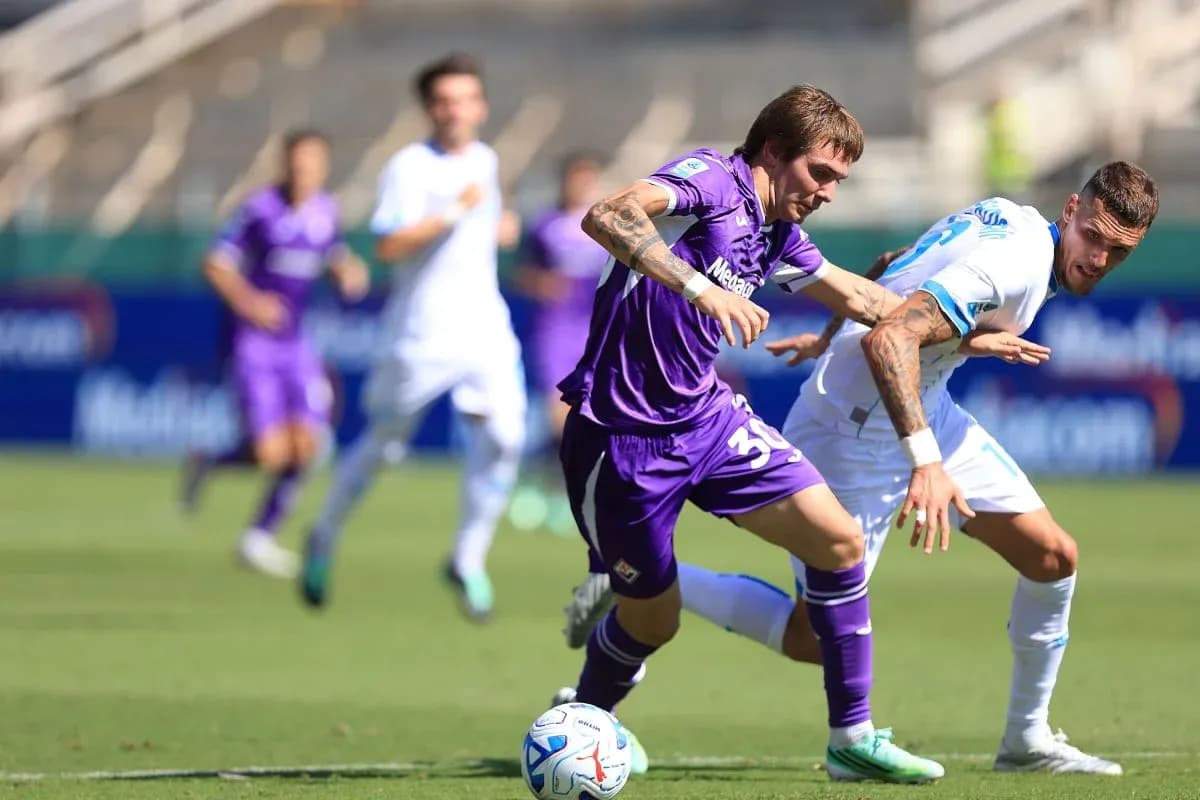
The first half followed the script: Fiorentina’s 4-3-3 pressed high, with Dodo and Robin Gosens pushing on from full-back, and the midfield trio of Rolando Mandragora, Nicolò Fagioli and Cher Ndour rotating to pull Lecce’s double pivot apart. Lecce’s 4-2-3-1, with Ylber Ramadani and Ousmane Ngom screening in front of the back four, tried to compress the central lane and spring forward through the trio of Santiago Pierotti, Lassana Coulibaly and Koffi Ndri behind Walid Cheddira.
II. Tactical Voids – Absences and Discipline
Both squads were shaped by notable absences. Lecce were without M. Berisha (thigh injury), F. Camarda (shoulder), S. Fofana (inactive), Kialonda Gaspar (knee) and R. Sottil (back). The loss of Gaspar in particular removed a physically dominant centre-back who, across the season, had combined strong aerial presence with 21 successful blocks and solid duel numbers. Without him, Di Francesco turned to J. Siebert alongside Tiago Gabriel, a pairing that had to learn on the fly against a fluid Fiorentina front line.
Fiorentina, meanwhile, travelled without N. Fortini (back), Moise Kean (calf), Tariq Lamptey (knee) and F. Parisi (inactive). Kean’s absence stripped Vanoli of his top scorer in the league – 8 goals in total and 2 penalties scored – and a direct, vertical reference point in the final third. That responsibility shifted to Roberto Piccoli and Albert Guðmundsson, the latter a creative forward whose season has been marked not only by 5 goals and 4 assists, but also by a red card that hints at a combustible edge.
Disciplinary trends framed the risk zones. Heading into this game, Lecce showed a clear late-game yellow-card spike: 27.27% of their yellows arrived between 76-90 minutes, with another 10.91% between 91-105. Fiorentina mirrored that pattern with 26.32% of their yellows in the 76-90 range and both of their red cards this season also coming in that late window. This was always likely to be a match where the final quarter-hour turned into a psychological and physical test rather than a purely tactical one.
III. Key Matchups – Hunter vs Shield, Engine Room Battles
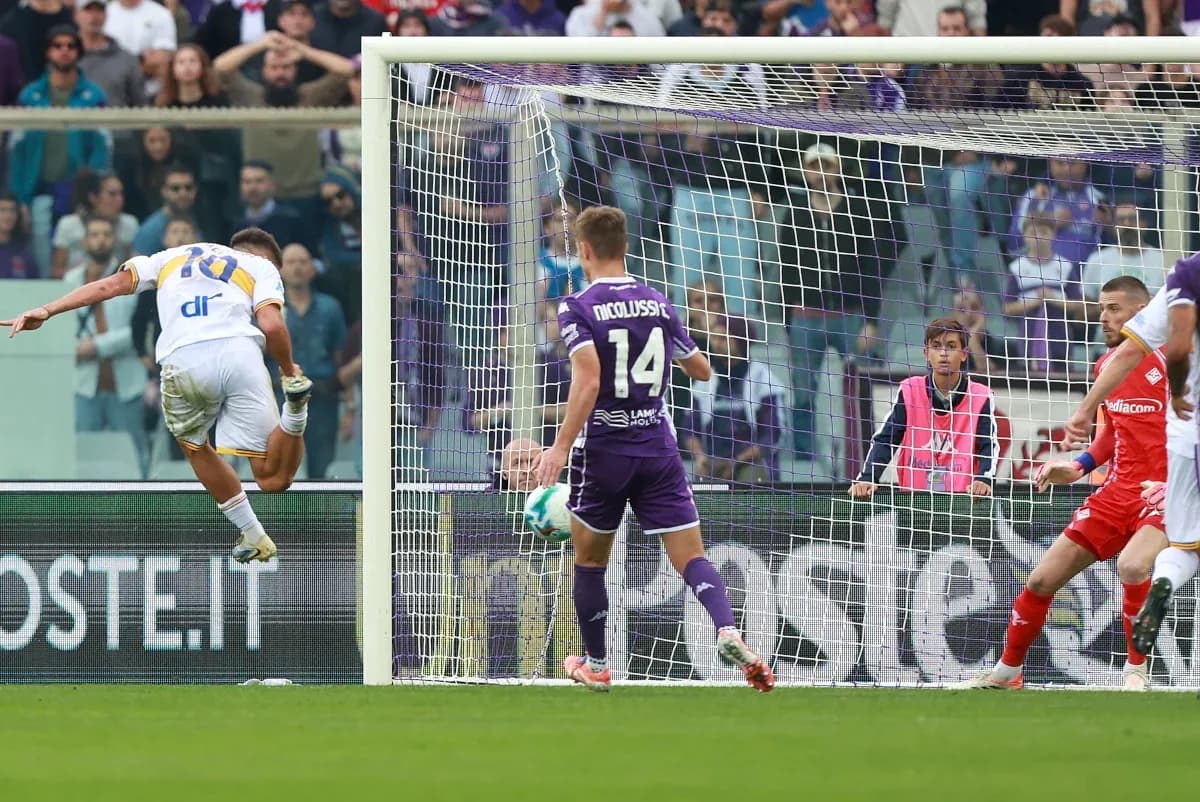
Without Kean, Fiorentina’s “hunter vs shield” dynamic shifted. The visitors’ offensive identity – 1.1 away goals on average – was carried by a front three of Jack Harrison, Piccoli and Guðmundsson. Their task was to probe a Lecce defence that, at home, had conceded 23 goals at 1.4 per game. Fiorentina’s crossing game, particularly from Gosens and Harrison, constantly asked questions of Siebert and Tiago Gabriel, while Wladimiro Falcone’s positioning and command of the box were critical in preventing the visitors from turning pressure into a second goal.
In midfield, the “engine room” duel was sharp and unforgiving. Ramadani, one of Serie A’s most industrious ball-winners this season, arrived with 75 tackles, 10 successful blocks and 42 interceptions. His role was twofold: screen Fiorentina’s central combinations and ignite Lecce’s rare transitions. Opposite him, Fagioli and Mandragora tried to break lines with passing and late arrivals, forcing Ramadani and Ngom to constantly choose between stepping out and holding shape.
Further up, the Lecce trio behind Cheddira – Pierotti, Coulibaly, Ndri – sought pockets behind Fiorentina’s midfield line. With Fiorentina averaging 1.5 goals conceded away from home, the space behind their advanced full-backs was always a latent weakness. Whenever Dodo and Gosens surged forward, Lecce’s wide midfielders tried to spin into the channels, especially down the side of Marin Pongračić and Luca Ranieri.
Pongračić himself embodied Fiorentina’s defensive risk-reward balance. Across the season, he has been a high-volume defender: 29 tackles, 22 successful blocks, 33 interceptions and 10 yellow cards. His aggression in stepping out of the line often broke Lecce’s attempts to combine centrally, but it also flirted with disciplinary danger in a match already tilted towards late-game chaos by both teams’ card profiles.
IV. Statistical Prognosis – xG, Control, and What This Draw Says
Even without explicit xG values, the structural and seasonal data sketch the likely story of the underlying numbers. Fiorentina, with a higher total scoring rate (1.2 goals per game overall, 1.1 away) and a more assertive 4-3-3, would have expected to generate the better chances, especially in the first half when their press pinned Lecce deep and produced the 0-1 advantage at the break.
Lecce, by contrast, came into the game as a low-output attack – 0.7 goals per game at home, 17 matches at Via del Mare yielding just 12 goals – and a side that often fails to score (9 home matches without a goal this season). Their route back into the contest was always more likely to come from set pieces, second balls, or chaotic transitions rather than sustained pressure. The 1-1 full-time scoreline reflects a familiar pattern: Fiorentina creating enough to feel they should have won, but their away defensive average of 1.5 goals conceded again undercutting their control.
From a defensive solidity standpoint, neither side can claim comfort. Lecce’s 1.4 goals conceded per game at home, Fiorentina’s 1.5 away, and their shared tendency to collect cards late suggest that the final stages were probably stretched and emotionally charged rather than methodically managed. The draw preserves Fiorentina’s unbeaten momentum in recent weeks but keeps their goal difference in the red and their margin for error thin. For Lecce, it is a point that slows the bleeding but does not fundamentally alter their trajectory: with 7 wins, 7 draws and 19 defeats in total, survival will require turning tight, nervy nights like this into victories.
In narrative terms, this 1-1 at Via del Mare reads like a crossroads. Fiorentina look like a side with the framework of a mid-table team but the fragility of one still glancing over its shoulder. Lecce, meanwhile, remain trapped between tactical discipline and attacking scarcity, their 4-2-3-1 solid enough to compete but not yet sharp enough to escape.