Levadiakos vs Aris Thessalonikis: Tactical Analysis of the 1–1 Draw
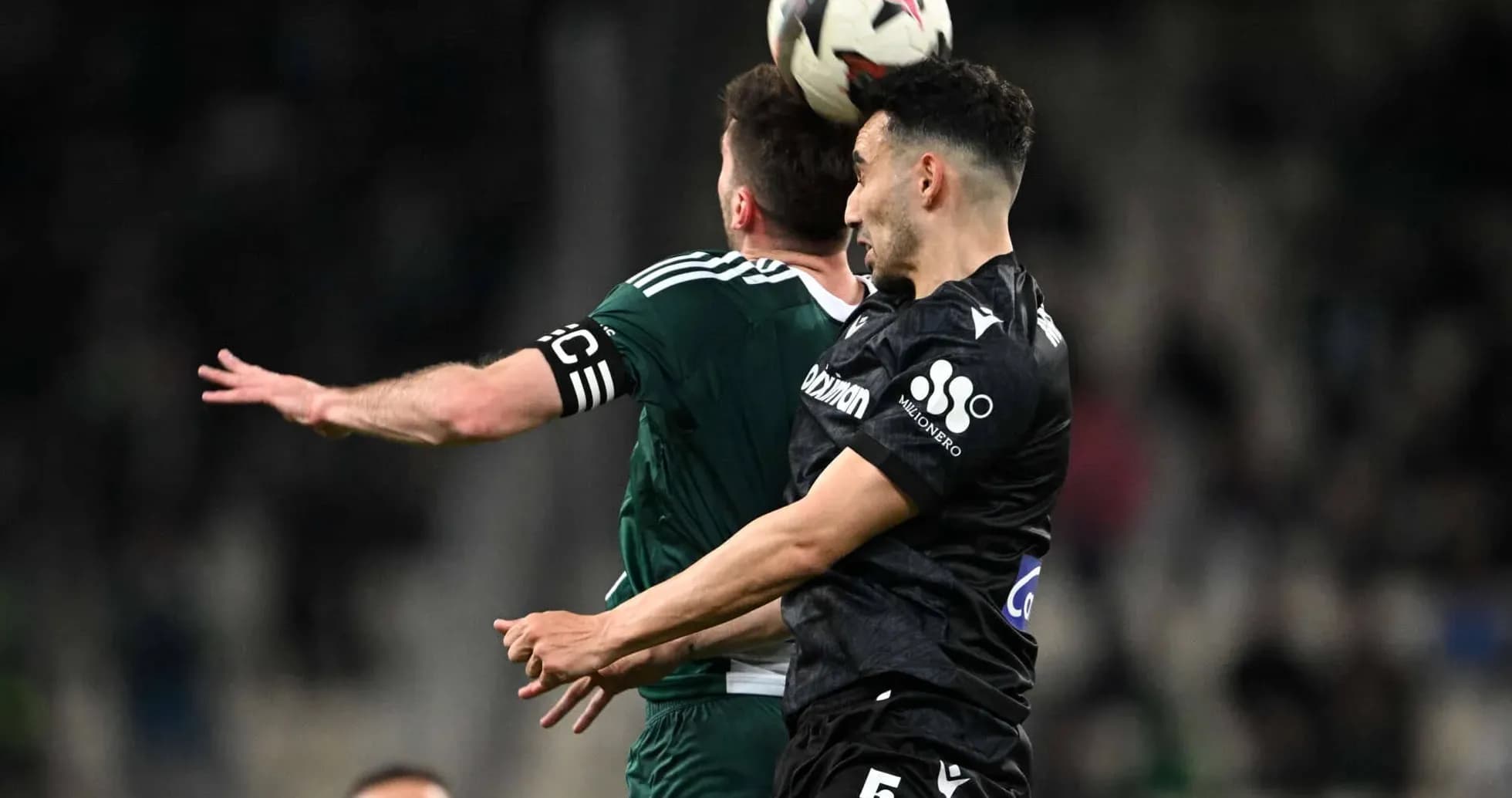
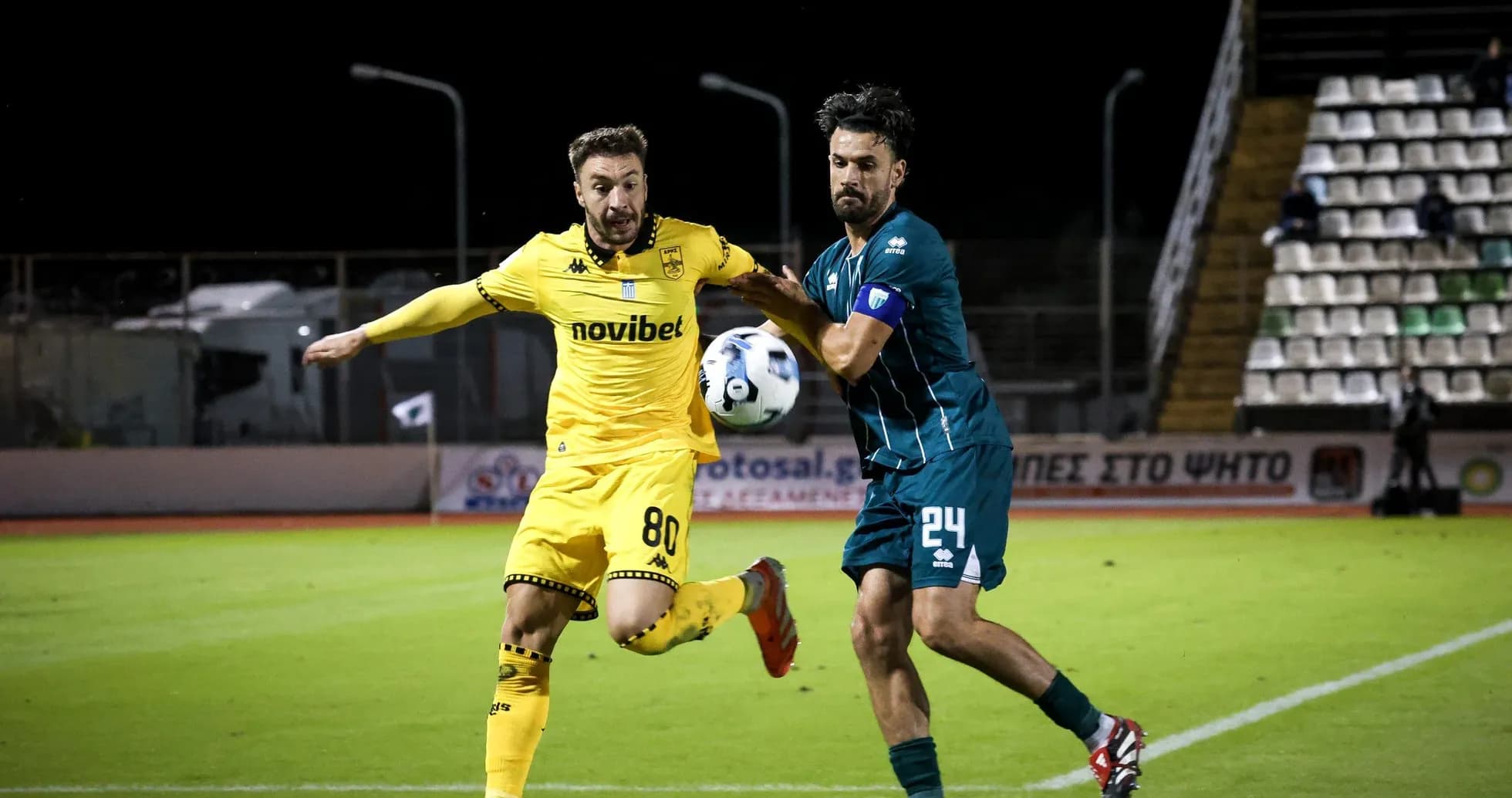
Levadiakos and Aris Thessalonikis produced a 1–1 draw in Levadia that was tactically defined by contrasting approaches: Levadiakos’ structured 4-1-4-1 possession game against Aris’ more direct, vertically aggressive 4-4-2. The statistical profile underlines this clash of ideas: Levadiakos held 60% of the ball, completed 302 of 391 passes (77%), and generated 1.66 expected goals, while Aris, with just 40% possession and 184/257 passes (72%), produced 1.4 xG from fewer but more incisive attacks.
Aris’ Tactical Approach
Aris’ 4-4-2 was built to threaten quickly through the front pair and wide midfielders. Tino Kadewere (yellow card 23' for a foul) and Carles Pérez led the line, supported by Benjamin Garré on the right and Giannis Gianniotas on the left. The early disallowed goal at 10' – Martin Hongla’s effort cancelled by VAR – showed Aris’ intent: aggressive central running from midfield and second-ball pressure high up the pitch. Even though the goal did not stand, it signalled that Hongla and Uroš Račić were prepared to break lines from the double pivot.
The opening goal at 31' encapsulated Aris’ plan. B. Garre scored, assisted by T. Kadewere, in a move that married wide 1v1 quality with direct support from the striker. Aris consistently tried to isolate Garré against Marios Vichos and then attack the half-spaces around Panagiotis Liagas and Hörður Magnússon. Their shot map backs this up: 10 of 13 total shots came from inside the box, and they also produced 4 blocked shots, reflecting repeated attempts to penetrate central areas rather than rely on speculative efforts.
Out of possession, Aris’ 4-4-2 narrowed into a compact mid-block, with Račić and Hongla screening passes into Levadiakos’ No. 6, Enis Çokaj. The cost of this physical, combative approach was discipline: 17 fouls and three yellow cards (Kadewere 23', Hamza Mendyl 45' for argument, Fabiano 63' for argument). Fabiano’s booking, in particular, came as Levadiakos began to sustain pressure, highlighting how often Aris’ centre-backs were forced into reactive defending in their own third.
Levadiakos’ Tactical Approach
Levadiakos’ 4-1-4-1 under Nikolaos Papadopoulos was more methodical. Çokaj sat as the single pivot, with a line of four – Sebastián Palacios, Guillermo Balzi, Giannis Kosti, and Benjamin Verbič – positioned to receive between Aris’ lines and connect to lone striker Alen Ožbolt. With 60% possession and a 77% pass completion, Levadiakos controlled tempo, circulating through the back four of Triantafyllos Tsapras, Liagas, Magnússon, and Vichos to move Aris’ block laterally.
Early on, this possession was sterile. Levadiakos managed just 2 shots on goal from 9 total attempts, with 3 blocked – a sign that Aris’ central compactness forced them wide and into crowded shooting lanes. However, the home side’s patience was rewarded after the interval. The equaliser at 58' came from a classic full-back–to–wide midfielder connection: B. Verbic scored, assisted by T. Tsapras. Tsapras’ advanced positioning down the right, stepping beyond the first line of pressure, was a key second-half adjustment; Levadiakos began to overload Aris’ left, drawing Mendyl and Gianniotas deeper and pinning back the away side’s wide outlets.
Giannis Kosti’s yellow card at 36' for a foul was emblematic of Levadiakos’ need to counterpress immediately after turnovers. With only one dedicated holding midfielder in Çokaj, the interior eights had to foul occasionally to prevent Aris’ transitions from turning into full breaks. Despite this, Levadiakos finished with just 15 fouls and one yellow card, maintaining better disciplinary control than Aris while still disrupting counters.
Substitutions and Tactical Adjustments
The substitution pattern in the second half further shaped the tactical narrative. At 66', Papadopoulos refreshed his defensive line and attacking band: G. Tsivelekidis (IN) came on for H. Magnusson (OUT), and H. Layous (IN) came on for G. Balzi (OUT). Tsivelekidis’ introduction at centre-back allowed Levadiakos to maintain a higher line with fresher legs against Aris’ direct balls into the channels, while Layous added more vertical running from midfield, stretching Aris’ tiring block.
Simultaneously at 66', Michalis Grigoriou altered Aris’ midfield and left flank: A. Donis (IN) came on for G. Gianniotas (OUT), and F. Jensen (IN) came on for U. Racic (OUT). Donis offered more direct threat from the left, often tucking inside to create a narrow front three with Kadewere and Pérez, while Jensen brought fresh energy but slightly less physical presence than Račić. This subtly shifted Aris towards a more transition-focused final half-hour, with less emphasis on controlling the central corridor.
Levadiakos doubled down on attacking impetus at 77', when P. Symelidis (IN) came on for B. Verbic (OUT) and L. Jallow (IN) replaced I. Kosti (OUT). Symelidis’ arrival maintained the threat from the left half-space, while Jallow injected dynamism between the lines, helping Levadiakos continue to probe despite losing Verbič’s goal threat and Kosti’s box arrivals. Aris responded at 78' by introducing C. Kouame (IN) for B. Garre (OUT), trading Garré’s wide 1v1 ability for more central running power and pressing from the front.
The final wave of changes at 83' and 87' underlined the tactical stalemate. For Aris, O. Boussaid (IN) came on for M. Hongla (OUT) and L. Moron (IN) for T. Kadewere (OUT), turning the midfield into a more creative, lighter unit and refreshing the striker line with a penalty-box finisher. Levadiakos, in turn, brought on O. Ozegovic (IN) for A. Ozbolt (OUT) at 87', seeking a different reference point up front to attack crosses and second balls as they chased a late winner.
Statistical Overview
In goal, the statistical profile is revealing. Yury Lodygin made 2 saves for Levadiakos, while Giorgos Athanasiadis registered just 1 save for Aris. With both teams posting 0 goals prevented according to the model, the 1–1 scoreline aligns closely with the xG balance (1.66 vs 1.4). Levadiakos’ greater volume of possession and passing did not translate into a decisive advantage in shot quality, in part because Aris’ 4 blocked shots and deep compact block repeatedly forced them into crowded or suboptimal shooting positions.
Overall, the draw reflects a finely balanced tactical contest: Levadiakos’ controlled, possession-heavy 4-1-4-1 against Aris’ more vertical, box-focused 4-4-2. The home side edged the ball and xG, but Aris’ ability to generate 10 shots inside the box from limited possession ensured that a point apiece was a fair outcome.