Liverpool and Brentford Draw in Premier League Finale
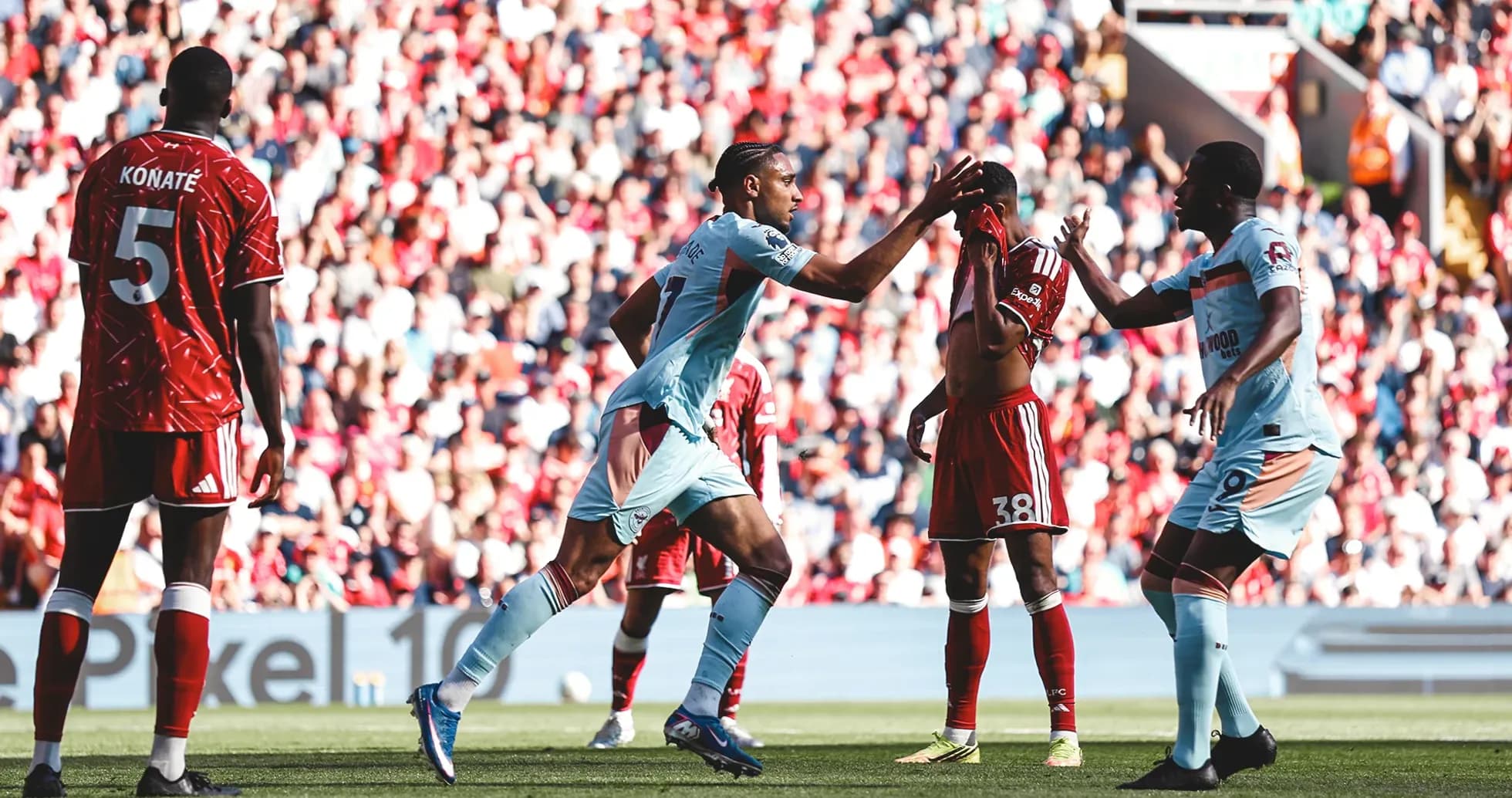
Anfield’s final act of the 2025–26 Premier League season ended not with a coronation, but with a stalemate that told you plenty about both Liverpool and Brentford. The 1–1 draw, sealed in regular time under the watch of Darren England, closed out Round 38 with Liverpool finishing 5th on 60 points and Brentford 9th on 53.
Heading into this game, Liverpool’s season-long profile was clear: a high-variance, front-foot side. Overall they scored 63 league goals and conceded 53, for a goal difference of +10. At home they were more controlled, with 34 goals for and 20 against across 19 matches, averaging 1.8 goals scored and 1.1 conceded at Anfield. Brentford arrived as one of the division’s awkward opponents: 55 goals scored and 52 conceded overall, a goal difference of +3, with a solid home record but a more fragile away profile (22 scored, 31 conceded on their travels, averaging 1.2 for and 1.6 against away).
Both coaches doubled down on their season’s tactical backbone. Arne Slot again trusted the 4-2-3-1 that has been Liverpool’s default (34 league uses), while Keith Andrews matched that shape with his own 4-2-3-1, a formation Brentford have used 29 times. What unfolded was less a chaotic shootout and more a chess match between two sides who know exactly what they are – and what they are not.
Tactical Voids and Selection Choices
The absentees quietly shaped the contours of the contest. For Liverpool, the midfield and attacking rotation was thinned by the absence of S. Bajcetic (hamstring), C. Bradley (knee), H. Ekitike (Achilles) and G. Leoni (knee). The loss of Ekitike in particular removed an 11-goal option from the bench, forcing Slot to lean on Cody Gakpo as the central forward and to keep faith in Mohamed Salah and Dominik Szoboszlai as dual creative and scoring threats.
Brentford were without F. Carvalho (knee), R. Henry (hamstring) and A. Milambo (knee). Henry’s absence at left-back nudged K. Lewis-Potter into a defensive role, an attacking winger re-tasked as a full-back in a game where Liverpool’s wide rotations and diagonal switches could easily expose him.
On the disciplinary front, the broader season context mattered. Liverpool’s card profile shows a pronounced late-game edge: 31.58% of their yellow cards came between 76–90 minutes, with another 17.54% in added time (91–105). Brentford, too, skew late, with 26.09% of their yellows in the 76–90 window and 21.74% between 61–75. This is not a fixture of early rashness, but of accumulating tension – the kind of game where the final quarter of an hour is as much about emotional control as tactical precision.
Key Matchups
For Brentford, everything in the attacking phase orbits Igor Thiago. Heading into this game he had 22 league goals, second-best in the division, from 38 appearances and 37 starts. He is not just a finisher but a volume focal point: 67 shots, 43 on target, and 524 duels contested, winning 202. He is a constant wrestle with centre-backs, a striker who happily plays with his back to goal and drags defences into uncomfortable zones.
Across from him stood Virgil van Dijk and Ibrahima Konaté, the heart of a Liverpool defence that, at home, allowed only 20 goals in 19 matches. Liverpool’s overall defensive averages – 1.1 goals conceded at home, 1.4 overall – suggest a unit that can be opened up on their travels but is far more composed at Anfield. The battle was as much about preventing service as it was about winning duels. Ryan Gravenberch and Alexis Mac Allister, the double pivot, were tasked with cutting off the vertical lanes into Thiago’s feet and tracking the second balls he thrives on.
Engine Room
The creative axis for Liverpool is increasingly dual-headed. Salah, with 7 goals and 7 assists in 27 appearances, remains the talismanic outlet from the right, but Szoboszlai is the rhythm-setter. His 7.19 average rating across 36 starts, 2,184 completed passes with 87% accuracy, and 78 key passes paint the picture of a midfielder who dictates tempo and progression.
Yet Szoboszlai’s profile also carries an edge. He accumulated 8 yellow cards and 1 red over the season, and crucially, he missed a penalty. Liverpool’s season-long penalty record is technically perfect at team level (1 scored from 1), but individually Szoboszlai’s miss from the spot is a reminder that even their most polished technician can be fallible under pressure.
On the other side, Brentford’s midfield pairing of J. Henderson and V. Janelt brought a different kind of control – less about line-breaking artistry, more about positioning and work rate. Ahead of them, M. Jensen and K. Schade formed the creative and chaotic axis. Schade, with 8 goals and 3 assists, also carried disciplinary risk: 6 yellow cards and 1 red, plus 2 penalties won but 1 missed. His willingness to run at defenders and draw fouls makes him a constant threat, but also a figure who can tilt the emotional balance of a match.
Structural Duels and Statistical Prognosis
Structurally, both sides mirrored each other in a 4-2-3-1, but their intentions differed. Liverpool’s front four of Salah, Szoboszlai, R. Ngumoha and Gakpo suggested a fluid, interchanging attack, with Gakpo dropping into pockets and Salah attacking the space behind K. Lewis-Potter. The full-backs – A. Robertson and C. Jones – offered width and underlaps, supported by Mac Allister’s ability to recycle possession and Gravenberch’s vertical surges.
Brentford’s back four, with M. Kayode and Lewis-Potter as full-backs, had to compress space between the lines. The double pivot shielded the centre-backs S. van den Berg and N. Collins, but the risk was always that Liverpool’s numerical overloads between the lines would force Brentford deeper, leaving Igor Thiago isolated unless the wide midfielders, D. Ouattara and Schade, could transition quickly.
From a season-long Expected Goals lens – even without raw xG numbers here – the patterns are suggestive. Liverpool’s overall scoring average of 1.7 per game, and 1.8 at home, versus Brentford’s 1.4 overall and 1.2 on their travels, points to a home side that usually creates and converts more. Defensively, both sit at 1.4 goals conceded per match overall, but Brentford’s away figure of 1.6 conceded hints at vulnerability under sustained pressure.
Yet Brentford’s 10 clean sheets, matching Liverpool’s 10, and their ability to manage tight games – 11 draws overall – underline a side comfortable in survival mode. Their perfect penalty record (8 scored from 8, with no misses) adds another dimension: any clumsy challenge in the box, particularly against Schade or Thiago, carries a brutal cost.
Following this result, the 1–1 draw feels like a statistical compromise between Liverpool’s attacking ambition and Brentford’s resilience. The numbers suggested Liverpool should edge it, especially at Anfield, but Brentford’s structure, discipline and the presence of a true penalty-box predator in Thiago were always likely to keep them in the contest.
In narrative terms, it was a fitting final chapter: Liverpool, still a Champions League side on the table, but with enough defensive scars to explain why they were not in a title race; Brentford, a top-half team whose tactical clarity and individual stars, from Thiago to Schade, make them one of the Premier League’s most dangerous underdogs heading into the next campaign.