Mallorca and Villarreal Battle to 1-1 Draw in La Liga Clash
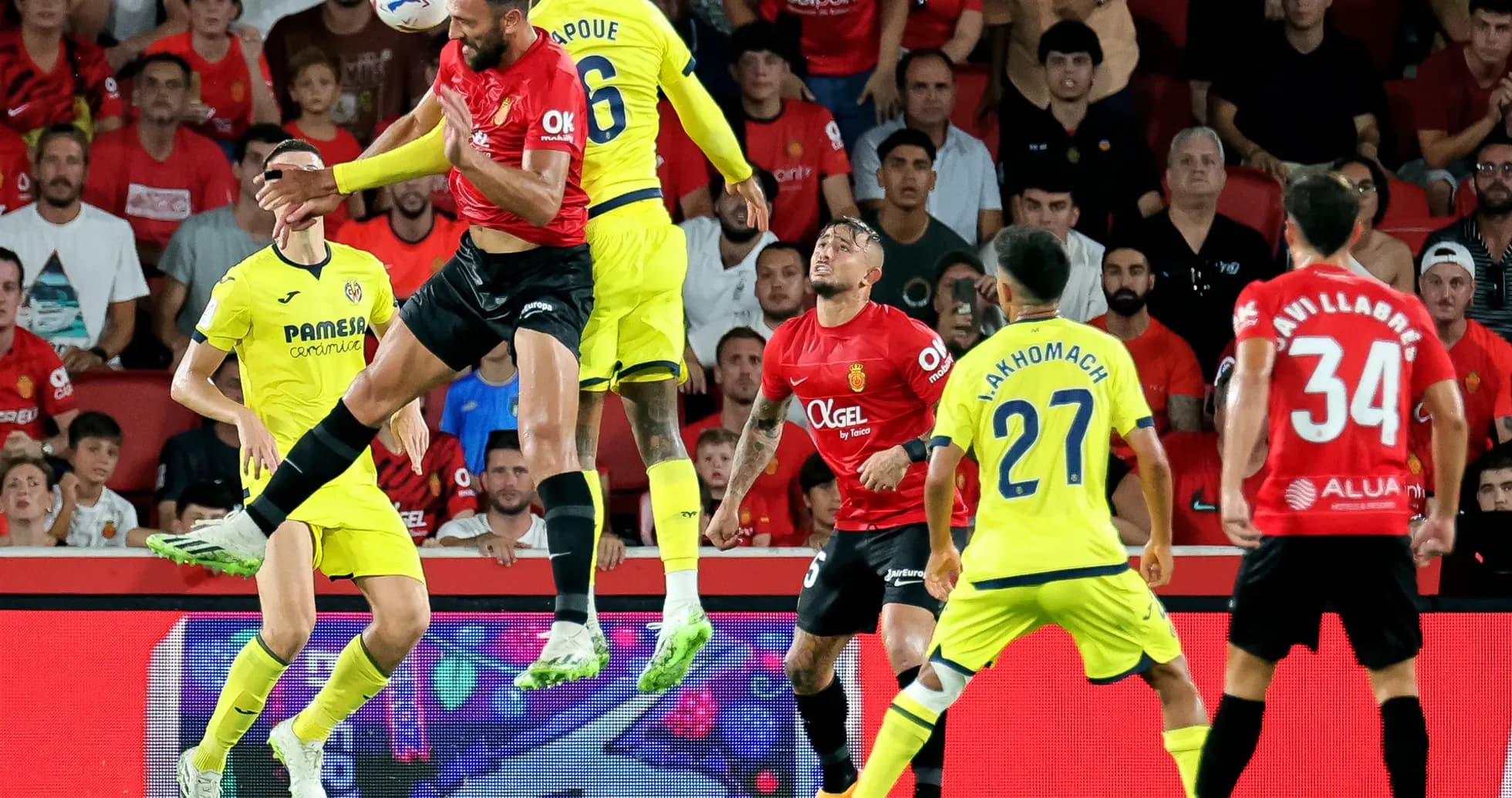
Under the midday glare at Estadi Mallorca Son Moix, Mallorca and Villarreal played out a 1–1 draw that felt less like a deadlock and more like a clash of identities. The fixture, part of La Liga’s Regular Season – 35, pitted a Mallorca side fighting to stay clear of trouble against a Villarreal team chasing the sharp end of the table.
Following this result, the standings snapshot is stark. Mallorca sit 15th with 39 points, their overall goal difference of -9 the product of 43 goals scored and 52 conceded across 35 matches. Villarreal, by contrast, occupy 3rd place on 69 points, boasting a goal difference of +25 from 65 goals for and 40 against.
The scoreline mirrored their season-long patterns. At home, Mallorca have been stubborn and efficient: 8 wins, 6 draws and only 4 defeats from 18 matches, scoring 28 and conceding 21. Villarreal, on their travels, have been more volatile but still dangerous: 7 wins, 5 draws and 6 defeats in 18 away games, with 24 goals scored and 25 conceded.
Mallorca’s seasonal DNA is that of a survivalist: low-scoring, combative, and heavily reliant on set pieces and the power of Vedat Muriqi. Their overall goals-for average sits at 1.2 per game, rising to 1.6 at home, while they concede 1.5 overall and 1.2 at home.
Villarreal are the opposite – expansive and front-foot: they average 1.9 goals per game overall, with a ferocious 2.4 at home and a still-threatening 1.3 away, conceding 1.1 overall and 1.4 away.
Tactical voids – absences that shape the game
Mallorca arrived heavily patched up. A defensive core that usually provides structure was shredded by injuries: M. Kumbulla, A. Raillo, J. Kalumba, J. Salas and L. Bergstrom all missed out, while Pablo Maffeo sat suspended due to yellow cards. That forced Martin Demichelis into a back four of M. Morey Bauza, M. Valjent, O. Mascarell and J. Mojica, with Mascarell dropping from midfield into the defensive line.
Those absences mattered. Mallorca’s season-long defensive record – 52 goals conceded in total – is already fragile, and much of their resilience has been built on combative full-backs like Maffeo and the leadership of Raillo. Without them, the hosts had to compensate with compactness and numbers in midfield, leaning on Samu Costa and S. Darder to screen the improvised back four.
Villarreal’s only listed absentee was J. Foyth, out with an Achilles tendon injury. Marcelino could still roll out his preferred 4-4-2 with A. Tenas in goal, a back line of S. Mourino, R. Marin, R. Veiga and S. Cardona, and a midfield anchored by S. Comesana and T. Partey. In terms of pure depth, Villarreal’s bench – featuring G. Mikautadze, N. Pepe, D. Parejo and Alberto Moleiro – underlined the gulf in resources.
Disciplinary trends also framed the contest. Mallorca are a yellow-card heavy side: their season card map shows a notable surge between 46-60 minutes, where 22.08% of their yellows arrive, and a further late-game spike with 15.58% between 76-90 minutes and another 15.58% between 91-105. Villarreal, meanwhile, accumulate yellows late too: 22.37% between 61-75 and a peak 25.00% between 76-90. It was always likely that the game would grow scrappier as legs tired and space opened.
Key matchups – Hunter vs Shield, and the engine room
Hunter vs Shield: Vedat Muriqi vs Villarreal’s away defence
Few duels in La Liga are as clear-cut as this: Mallorca’s entire attacking identity funnelled through V. Muriqi against a Villarreal back line that, away from home, concedes 1.4 goals per game.
Muriqi’s numbers this season are elite: 22 league goals and 1 assist in 34 appearances, from 85 shots (47 on target). He is not just a finisher but a reference point – 416 duels contested, 214 won, and 59 fouls drawn tell the story of a striker who turns long balls into territory and free-kicks. He has also been a key penalty taker, scoring 5 but missing 2, an important note when Mallorca’s team penalty record (5 scored from 5 at team level) looks perfect on paper; his individual ledger reminds us there is risk in every spot-kick.
Against him, Villarreal’s “shield” away from home is solid but not impenetrable: 25 goals conceded in 18 away matches. S. Mourino, one of La Liga’s most card-prone defenders with 9 yellows and 1 yellow-red, is also extremely active defensively: 98 tackles, 9 blocked shots and 28 interceptions. His duel with Muriqi – strength vs timing, aerial dominance vs anticipation – is the axis around which Mallorca’s threat turns.
Engine room: S. Darder & Samu Costa vs Santi Comesaña & T. Partey
In midfield, this fixture was always going to be decided by who controlled the second balls and transitions. Mallorca’s 4-3-1-2 placed Samu Costa, S. Darder and M. Morlanes at the heart of their structure, with P. Torre as the advanced link. Samu Costa, one of the league’s leading yellow-card collectors (10 yellows), is a pure disruptor: 62 tackles, 13 blocked shots, 25 interceptions and 400 duels contested, winning 207. His willingness to foul – 61 committed – is part of Mallorca’s tactical risk calculus.
Opposite him, Santi Comesaña is Villarreal’s metronome and enforcer rolled into one. He has 6 assists and 3 goals, underpinned by 1,169 passes at 82% accuracy and 26 key passes. Defensively, he is relentless: 45 tackles, 15 blocked shots and 30 interceptions. He carries his own disciplinary edge too, with 5 yellows and 1 red this season.
Alongside Comesaña, T. Partey offers verticality and press resistance, while wide players like T. Buchanan and A. Gonzalez provide width to stretch Mallorca’s narrow midfield trio. The battle for the central lane – Costa and Darder trying to suffocate Comesaña and Partey – was the game’s strategic heart.
Out wide and between the lines, Villarreal’s depth offered game-changing options. G. Mikautadze, with 11 goals and 5 assists, and Alberto Moleiro, on 10 goals and 4 assists, can both attack the spaces behind Mallorca’s full-backs. N. Pepe, La Liga’s 11th-ranked assister with 6 assists and 8 goals, is a dribbling and creative threat (114 dribbles attempted, 56 successful, 53 key passes) who can tilt any contest from the bench.
Statistical prognosis – what this draw tells us
Following this result, the numbers reaffirm the trajectories of both clubs.
Mallorca, with 10 wins, 9 draws and 16 defeats overall, remain a team whose margin for error is thin. Their home scoring rate of 1.6 goals per game, against 1.2 conceded, is just enough to keep them afloat, especially when backed by 3 home clean sheets and only 2 failures to score. The 1–1 here fits that pattern: competitive at Son Moix, but rarely dominant.
Villarreal’s broader profile remains that of a top-three side with Champions League ambitions. Their 21 wins from 35 matches, 65 goals scored and only 40 conceded overall speak to a side with both firepower and structure. On their travels, 24 goals scored and 25 conceded in 18 games underline why a draw at a tricky ground like Mallorca is acceptable rather than alarming.
From an xG-style perspective – even without explicit xG data – the shot and scoring profiles point to a Villarreal side that typically creates more and better chances, especially through the combined creative weight of Comesaña, Moleiro, Mikautadze and Pepe. Mallorca, by contrast, concentrate their threat through Muriqi, set pieces and the late surges of runners like Z. Luvumbo and P. Torre.
Defensively, Mallorca’s season-long concession rate of 1.5 goals per game overall remains a concern, but their home figure of 1.2 suggests that when they can compress space and lean on their crowd, they can drag superior opponents into attritional battles – exactly what happened here. Villarreal’s away concession rate of 1.4 means they are rarely watertight on the road, and a 1–1 outcome reflects that vulnerability.
In narrative terms, this draw is a point of consolidation for Mallorca and a minor stumble for Villarreal. Yet tactically, it reinforces the same lesson for both: Mallorca’s survival rests on the continued dominance of Muriqi and the ferocity of Samu Costa in midfield, while Villarreal’s ceiling will be defined by how often their creative core – Comesaña, Moleiro, Mikautadze and Pepe – can turn territorial control into decisive goals, especially away from home.