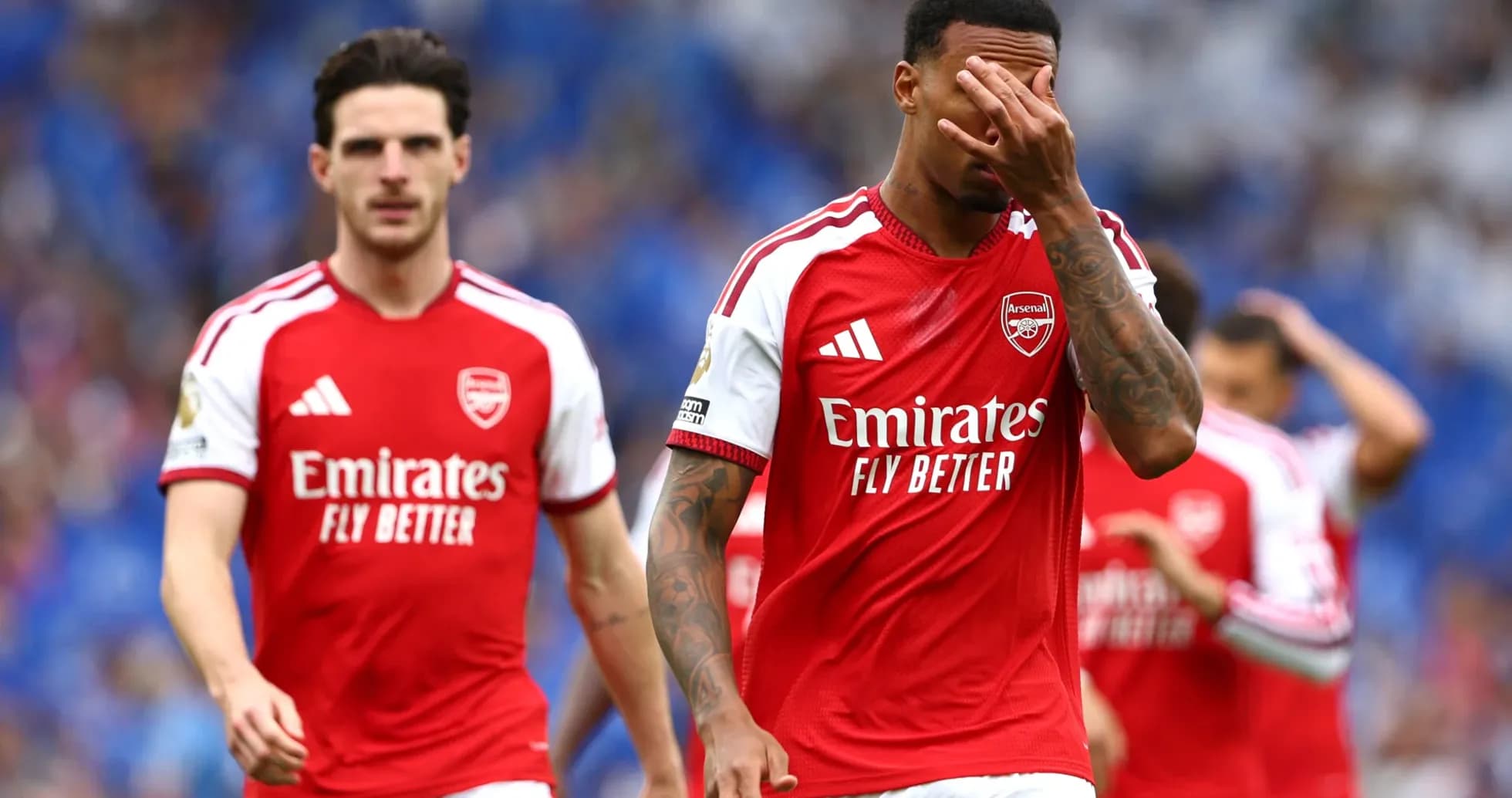
Manchester City Edges Arsenal 2–1 in Premier League Clash
The Etihad Stadium felt like the centre of the Premier League universe as second‑placed Manchester City edged league leaders Arsenal 2–1, a result that tightens a title race already stretched taut. Following this result in Round 33 of the 2025 season, the margins at the top shrink, and the game itself read like a study in how two elite squads bend their identities to each other’s strengths and flaws.
I. The Big Picture – Clash of Structures and Season DNA
On their travels this campaign, Arsenal had been ruthless: 9 away wins from 17, scoring 27 and conceding only 15. City, though, came into this fixture with one of the division’s most imposing home records: at home they had 12 wins from 16, with 38 goals for and only 12 against. Overall, City’s goal difference stood at +36 (65 scored, 29 conceded), Arsenal’s at +37 (63 scored, 26 conceded) – two sides with almost identical statistical profiles colliding in Manchester.
Pep Guardiola leaned into control and vertical punch with a 4‑2‑3‑1, a slight twist on City’s season-long preference for single‑pivot and 4‑1‑4‑1 shapes. G. Donnarumma anchored the side behind a back four of Matheus Nunes, A. Khusanov, M. Guehi and N. O’Reilly. Rodri and Bernardo Silva formed the double pivot, with A. Semenyo, R. Cherki and J. Doku supporting E. Haaland.
Mikel Arteta responded with Arsenal’s familiar 4‑3‑3: D. Raya behind a line of C. Mosquera, W. Saliba, Gabriel and P. Hincapie; a midfield triangle of M. Odegaard, M. Zubimendi and D. Rice; and a fluid front three of N. Madueke, K. Havertz and E. Eze.
The 1–1 half-time score reflected the balance of the opening 45, but City’s capacity to sustain pressure at home – where they average 2.4 goals for and only 0.8 against – ultimately tilted the second half in their favour as they found the decisive second goal to win 2–1.
II. Tactical Voids – Absences and the Edges of Risk
Both managers had to redraw their defensive maps. City were without R. Dias (muscle injury) and J. Gvardiol (broken leg), stripping Guardiola of his two most natural left‑sided stoppers and aerial leaders. The response was bold: Khusanov and Guehi as the central pairing, with Nunes repurposed as an attacking full‑back and O’Reilly tasked with balancing the opposite flank. It left City with technical progression from deep but less dominant penalty‑box defending.
Arsenal’s absences were just as structural. R. Calafiori (knock) and J. Timber (ankle injury) removed two progressive defenders who normally help them escape pressure, while M. Merino (foot injury) and, crucially, B. Saka (injury) robbed Arteta of a ball‑carrying midfielder and his primary right‑wing outlet. Without Saka, Arsenal lost their most direct wide threat and penalty‑box gravity, shifting more creative responsibility onto Odegaard and Eze and placing heavy two‑way demands on Madueke.
Disciplinary trends added a layer of risk management. Heading into this game, City’s yellow-card profile showed a clear spike from 46–60 minutes (22.03%) and another late surge from 76–90 (20.34%), with 13.56% more between 91–105. Bernardo Silva, on 9 league yellows, embodied that edge: his role as presser and tempo-setter always flirting with the line. Arsenal, meanwhile, also peaked late with 20.93% of their yellows between 76–90 and 18.60% from 61–75, underlining how both sides tend to become more frantic and stretched as matches reach the closing stages.
III. Key Matchups – Hunter vs Shield, Engine Room vs Enforcer
The headline duel was always going to be Erling Haaland against Arsenal’s defensive shield. Haaland arrived as the league’s leading scorer with 23 goals overall and 7 assists, firing off 91 shots with 51 on target. His total goal contribution, backed by 219 total duels and 120 won, speaks to a striker who not only finishes but wrestles games into his orbit.
Arsenal’s answer was a defensive axis of Saliba, Gabriel and Zubimendi, protected by Rice. On their travels this season, Arsenal had conceded only 15 goals in 17 away matches – an average of 0.9 goals against away – a testament to their compactness and control of space in front of the box. For long spells, Saliba and Gabriel held Haaland at arm’s length, but City’s structure is designed so that you can never mark just the nine.
That is where R. Cherki’s role as chief creator became decisive. With 10 assists overall and 47 key passes, he operates as City’s lock‑picker between the lines. His ability to receive on the half‑turn between Rice and the centre‑backs forced Arsenal’s midfield line to constantly choose between stepping out and leaving space for Haaland, or holding shape and allowing Cherki time. The 2–1 scoreline owed much to those small hesitations.
In the engine room, Rice and Odegaard faced Rodri and Bernardo Silva in a battle for narrative control. Rice, with 5 assists, 63 tackles, 11 blocks and 31 interceptions overall, is Arsenal’s enforcer‑playmaker hybrid. His job was to suffocate City’s central progression and spring transitions for Havertz and Madueke. Rodri, averaging 2.0 goals for and 0.9 against overall in City’s season context, remains the metronome that keeps Guardiola’s structure stable; beside him, Bernardo’s 1772 passes at 90% accuracy and 36 key passes allowed City to manipulate Arsenal’s press, even at the cost of occasional fouls – he has committed 36 this season.
On the flanks, Doku and Semenyo stretched Arsenal’s full‑backs, preventing Hincapie and Mosquera from joining the midfield as aggressively as usual. Without Saka to pin City back on the counter, Arsenal’s wide threats were more episodic than sustained, placing extra weight on Havertz’s movement between lines and Eze’s dribbling.
IV. Statistical Prognosis – What This Result Says About the Run‑In
Following this result, the underlying numbers still paint two heavyweight contenders. City’s overall scoring rate of 2.0 goals per game, combined with only 0.9 conceded, continues to be underpinned by a flawless penalty record this season (3 scored from 3, 0 missed) and 13 clean sheets. Haaland’s penalty history – 3 scored, 1 missed overall – is a reminder that even their most reliable weapon has a human margin, but City’s collective structure keeps generating high‑value chances.
Arsenal, with 1.9 goals for and 0.8 against overall and 15 clean sheets, remain one of the league’s most balanced sides. Their own perfect penalty record (4 from 4, 0 missed) underlines a team that usually maximises its big moments. Yet this match showed how the absence of Saka and Timber can blunt both their transition threat and their build‑up resilience against the very best.
From an Expected Goals perspective – even without raw xG data – City’s home volume, combined with Haaland’s shot profile and Cherki’s creative output, suggests they will continue to generate the slightly higher xG in most remaining fixtures, especially at the Etihad. Arsenal’s defensive solidity and control of away spaces will keep them close, but nights like this underline a subtle truth of the title race: when both teams hit their average levels, City’s ceiling in these knife‑edge home games still feels fractionally higher.
The 2–1 at the Etihad did more than close a points gap; it reasserted a hierarchy built on structure, stars and the smallest of statistical tilts. As the season narrows to its final weeks, this encounter will sit in the memory as the evening when Guardiola’s retooled City, even without Dias and Gvardiol, found just enough invention and control to drag the leaders back within reach.