Marc Cucurella: Real Madrid’s Strategic Transfer Success
Real Madrid have spent recent summers chasing galácticos. This time, one of their smartest moves arrived with much less noise.
Marc Cucurella, signed from Chelsea, is already looking like a transfer that ticks every box: sporting, financial, and regulatory.
From zero presence to world champions
Before Cucurella walked through the doors at Valdebebas, there was a curious detail on Luis de la Fuente’s World Cup 2026 list: not a single Real Madrid player in Spain’s squad.
For a club that has long seen La Roja as a natural extension of its own power base, that was a jarring image.
Cucurella changed it overnight.
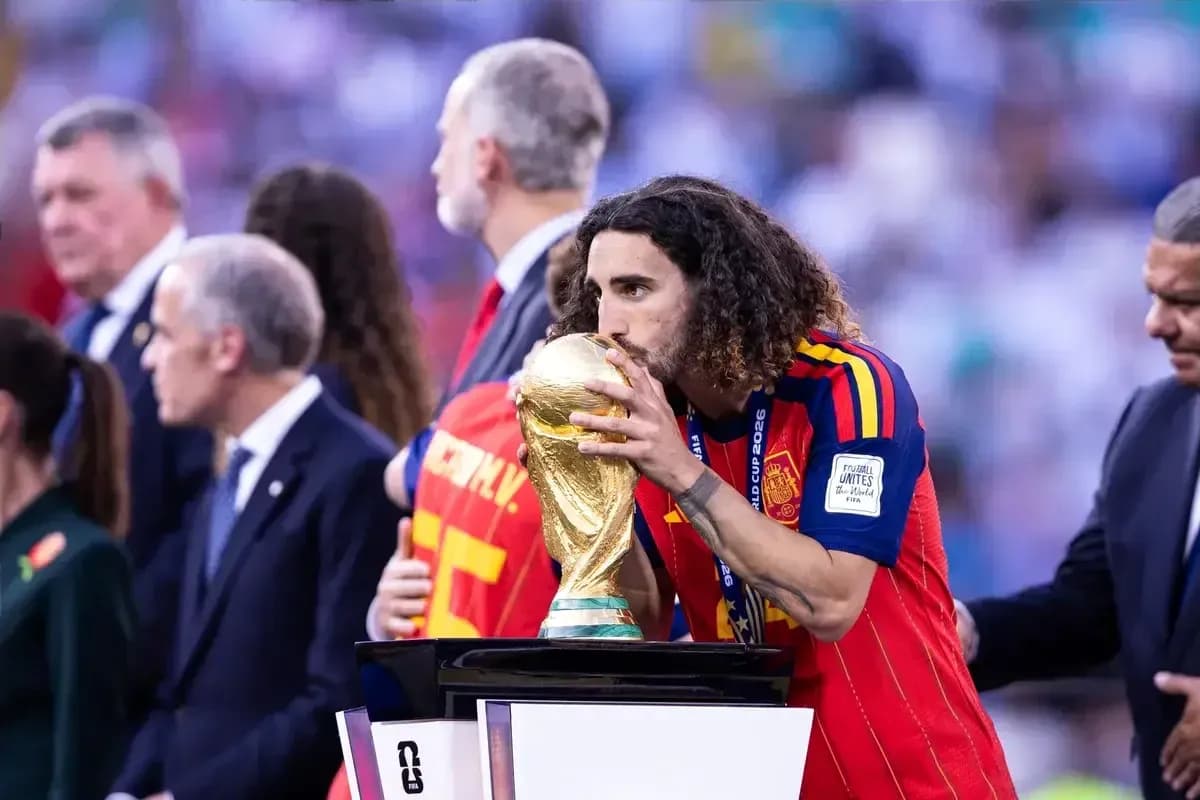
His inclusion gave Madrid a direct line into Spain’s World Cup-winning campaign. When De la Fuente’s side lifted the trophy, the celebrations carried a subtle white tint. Real Madrid could finally point to one of their own in that red shirt, sharing in the glory of the biggest prize in international football.
The left-back didn’t just make up the numbers. He impressed enough to be voted into the FIFA World Cup Best XI by fans, one of three Madrid players to earn that honour. In a matter of weeks, he went from new signing to global showcase piece.
An asset that grew before he’d even kicked a ball
The impact wasn’t only on the pitch or in the trophy photos.
After the tournament, Transfermarkt updated Cucurella’s valuation to €60 million. For Madrid, who had only just brought him in, it meant the value of their new asset had already climbed. A player signed days earlier had become significantly more expensive on paper without the club needing to do anything but watch him shine.
That kind of immediate appreciation is exactly what elite recruitment departments dream of: a player who strengthens the squad and strengthens the balance sheet.
More than a left-back: a solution to a UEFA headache
Cucurella’s arrival also solves a more hidden, but crucial, problem.
UEFA rules are clear. From a 25-man squad, at least eight players must be locally trained to be eligible for the Champions League and other European competitions. For Real Madrid, that means footballers who spent key developmental years — between 15 and 21 — in Spain, whether at their own academy or another club in the country.
The margin for error is small. Fall short of that quota and the European squad list has to shrink.
With Cucurella, Madrid not only secure a high-level option on the left flank; they also tick one more box in that locally trained category. As Mundo Deportivo highlighted, his signing helps the club reach the minimum of eight such players, easing the pressure on squad planning for UEFA tournaments.
A Barcelona education, a Spanish passport… and a Madrid payoff
Cucurella’s path makes him an unusual but ideal fit for this rule.
He grew up in Barcelona’s youth system, learned the details of top-level positional play there, then continued his formation at Eibar and Getafe. Those years in Spain, between 15 and 21, locked in his status as a locally trained player under UEFA’s criteria. His later move to Chelsea gave him Premier League experience and a tougher competitive edge, but the regulatory groundwork was already laid.
Now Madrid reap the benefits.
They have signed a Spain international fresh from a World Cup triumph, a fan-voted member of the tournament’s Best XI, a player whose market value is rising, and a defender who helps them stay compliant in Europe.
All from one transfer.