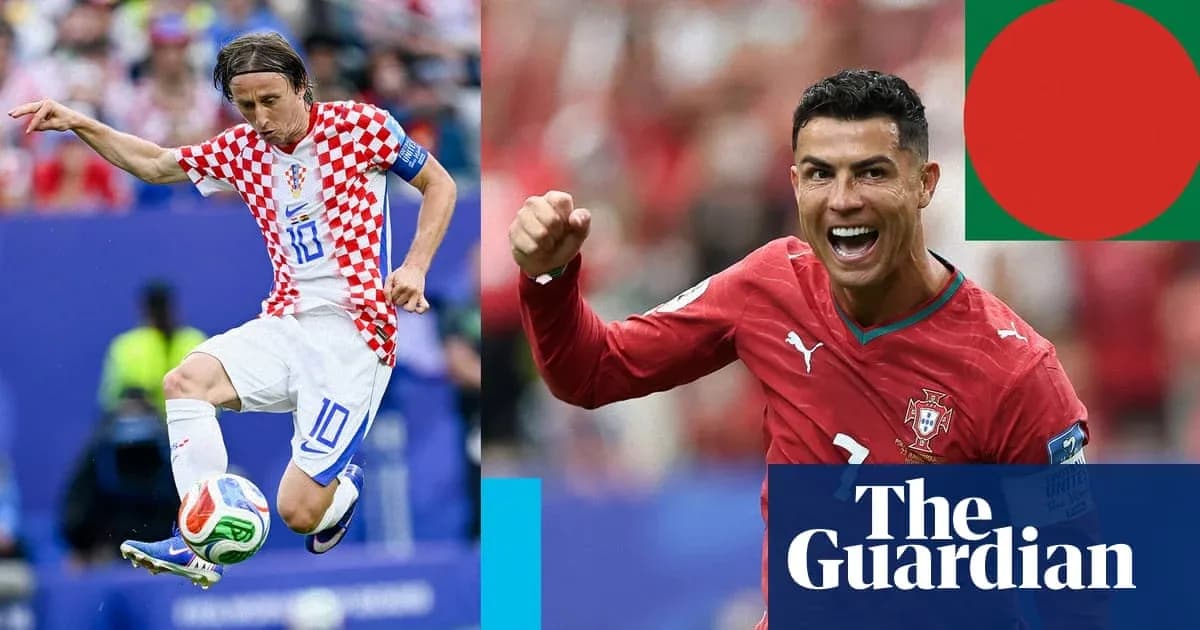
Luka Modric and Cristiano Ronaldo: A Legendary Rivalry
Can you remember what you were doing on 1 March 2006?
You might have been at Anfield, watching England edge Uruguay 2-1. Maybe you were at Hampden Park, where Switzerland put three past Scotland. Or perhaps you were in front of a television somewhere, watching a skinny 20‑year‑old called Luka Modric pull on the Croatia shirt for the first time.
That night in Basel, Croatia beat Argentina 3-2. Lionel Messi scored his first international goal. In Riyadh, Cristiano Ronaldo struck twice in a 3-0 win for Portugal over Saudi Arabia, already dreaming big, though probably not of the day he would be living and working in that very country.
Two decades on, Messi and Ronaldo have come to define an era. Their goals, their awards, their rivalry. Yet, quietly, relentlessly, Modric has been there too. Not as a headline-chasing finisher, but as football’s constant rhythm – passing more than scoring, dictating rather than decorating, always present, always relevant.
Now, at 41 and 40, Ronaldo and Modric stand on the brink of yet another shared chapter. When Portugal face Croatia in the last 32 of the World Cup, Ronaldo will pull on his country’s colours for the 232nd time. Modric will make his 202nd appearance for Croatia. They belong to an almost mythical club: just four men in history have reached 200 international caps. Those two are the standard-bearers.
The numbers tell their own story. When Modric made his Croatia debut back in 2006, Ronaldo already had 29 caps. More than 20 years later, that gap has grown by only one. Different nations, different roles, different paths – but the call from their country has always been answered at almost the same relentless rate.
Their careers began to intertwine in England. In the 2008‑09 season, they faced each other at Wembley in the Carling Cup final. Modric in Tottenham white, Ronaldo in Manchester United red. Both played the full 120 minutes, both earning solid sevens in the ratings, before United won on penalties. It felt like a big occasion at the time. In hindsight, it was just a prologue.
The stakes rose when Ronaldo left for Spain. By the 2010-11 season, Modric and Tottenham met Real Madrid in the Champions League quarter-finals. Madrid went through, as they so often would in the years to come. Modric would soon join Ronaldo in the Spanish capital and what followed was one of the defining partnerships of modern club football.
For six seasons at Real Madrid, they formed the spine and the spearhead of a team that dominated Europe. Four Champions League titles together. Semi-finals in the other two campaigns. A dynasty built on Modric’s control and Ronaldo’s ruthlessness.
If there was a single image that captured their shared peak, it came in Cardiff in 2017. Juventus were threatening a comeback in the Champions League final when Modric darted to the byline and cut the ball back. Ronaldo arrived, as he so often did, exactly where it mattered. One touch, one finish, 3-1 to Madrid. The final swung, the trophy effectively secured.
That move was one moment in a vast body of work. Across 222 matches, they have shared a pitch. Modric is the central midfielder with whom Ronaldo has played most often. It makes sense. The passer and the finisher. The conductor and the executioner. Two careers, tightly wound together at club level, now stretching into the late autumn of their international lives.
So when Portugal and Croatia line up in the last 32, it will be more than just another knockout tie. It may be the last time these giants of 21st‑century football share the same field, one more night in a story that began long before most of their current team-mates had even kicked a ball professionally.
Ronaldo will still look for the goal, Modric will still look for the pass. The habits of a lifetime do not fade easily. The question now is simple: how many more times can they bend the game to their will before the era they shaped finally gives way to the next?