Norway vs England: World Cup 2026 Quarterfinal Showdown
Miami will sweat. England and Norway will suffer.
On Saturday night, in the thick, sticky heat of south Florida, one of World Cup 2026’s most compelling stories will either gather irresistible momentum or be abruptly ripped up.
Norway, back on this stage for the first time since 1998, have already rewritten their own history. They have beaten Brazil. They have won knockout games for the first time. They have turned a returning participant into a genuine threat. Standing in their way now is England, chasing a fourth World Cup semifinal, desperate not to add yet another quarterfinal exit to a long, frustrating list.
This one feels different. It has a sharp edge. It has a Golden Boot shootout.
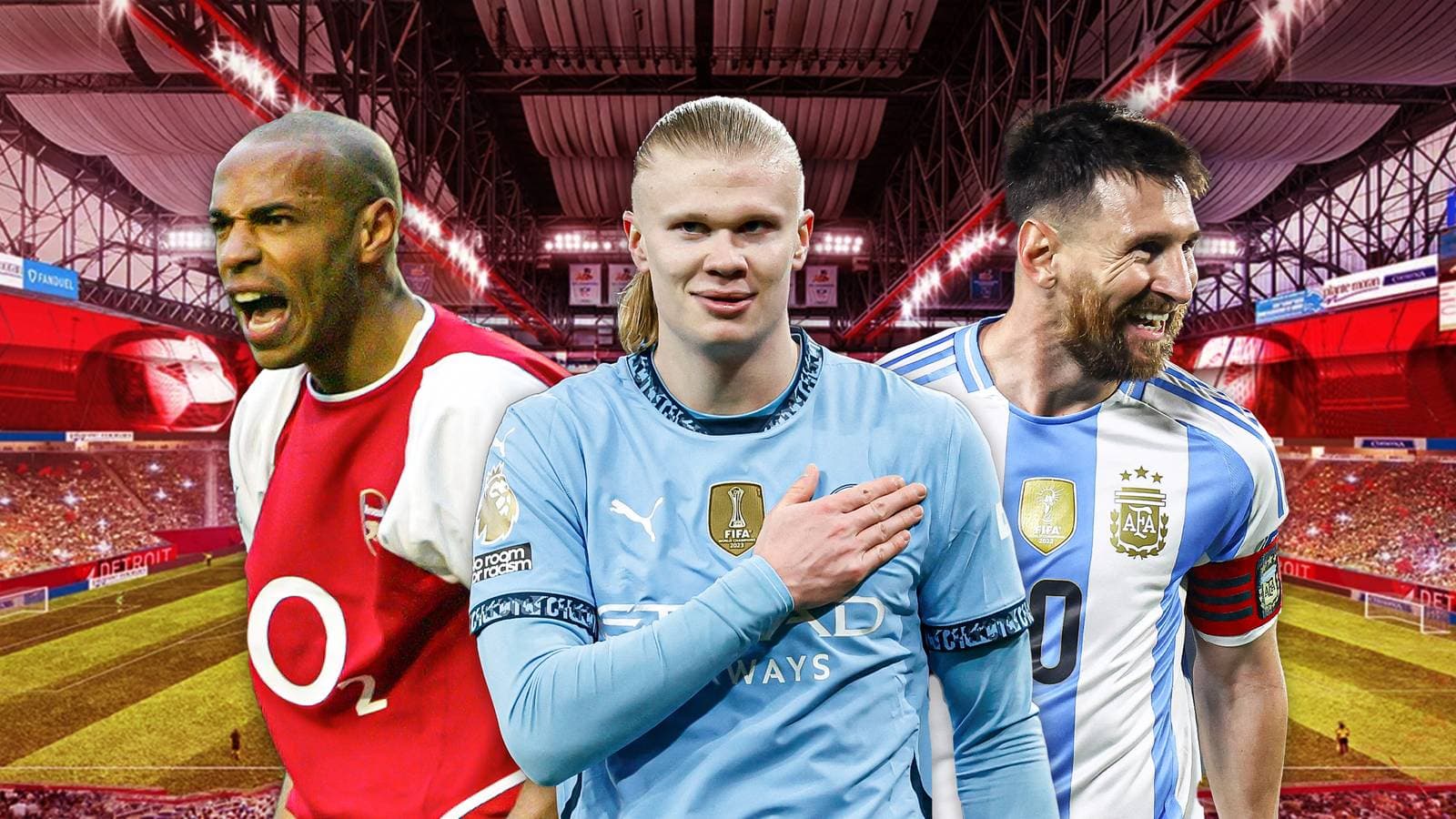
Haaland vs Kane: the heavyweight duel
For the first time at this tournament, two of the leading Golden Boot contenders share the same pitch.
Erling Haaland should have crossed paths with Kylian Mbappé in the group stage, but Stale Solbakken chose rest over theatre. After Haaland hit braces against Iraq and Senegal, Norway had already qualified, so their No 9 watched from the bench as France won in Boston.
He has been making up for it ever since.
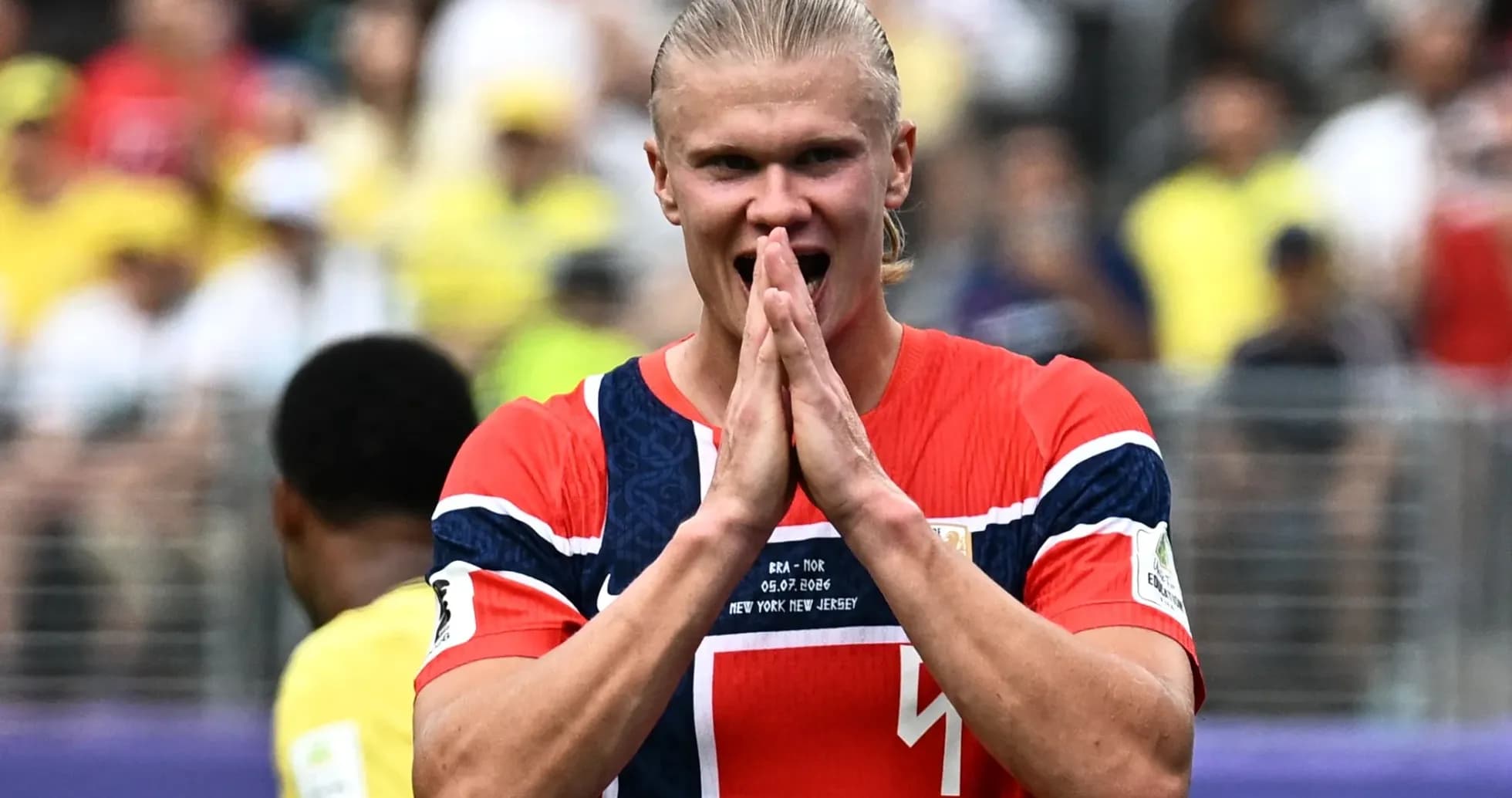
Haaland scored the winner against Ivory Coast in the first knockout round, then both goals in the 2-1 triumph over Brazil. Seven goals in four appearances at this World Cup. Fourteen consecutive Norway games with at least one goal, 27 in that run. His international numbers now read 62 goals in 54 caps – a strike rate that defies belief at this level.
He arrives in Miami one behind Mbappé and Lionel Messi in the Golden Boot race, and one ahead of Harry Kane.
Kane’s tournament has built in familiar, relentless fashion. Two goals to open against Croatia. Another in the win over Panama to secure top spot. Both strikes in the late turnaround against DR Congo in the Round of 32. Then the penalty that ultimately decided the wild 3-2 victory over Mexico.
Both men know this terrain. Both have three Premier League Golden Boots. Both have dominated in Germany. Yet they have barely shared the same grass: just two meetings in 2022/23, when Tottenham and Manchester City split a win each and Kane and Haaland scored once apiece.
Now the stakes are far higher. This is not about a winter title race. In Miami, one of them can drag his country into a World Cup semifinal and, in the process, strengthen his claim to being the most ruthless No 9 on the planet right now.
The Dan Burn question
How do you stop a striker who scores a goal for his country every 73 minutes?
You might start with a 6’7” centre-back who seems to bother him more than most.
Dan Burn’s selection for Thomas Tuchel’s World Cup squad raised eyebrows. He made his England debut only months before his 33rd birthday, and his four starts had all come in low-key qualifiers against Andorra and Albania. Nothing suggested he would be central to a World Cup quarterfinal plan.
Then came Mexico.
Thrown on for the final 15 minutes to help protect a fragile 3-2 lead with 10 men, Burn turned into a magnet for the ball. He headed everything. He blocked everything. England dropped deep, almost onto their own goal-line at times, and Burn simply kept clearing.
The Haaland angle is impossible to ignore. The Norwegian is quicker, more explosive, nine years younger. But Burn is taller, awkward, and familiar. Since Haaland arrived at Manchester City in 2022, they have faced each other eight times – six in the Premier League, two in domestic cups. Across more than 10 hours together on the pitch, Haaland has scored just once against him, in their very first meeting in August 2022.
For a striker who chews through defences in England and abroad, that is a striking anomaly.
The numbers against Ezri Konsa tell a similar story: one Haaland goal in 406 minutes across five matches when Konsa was at Aston Villa, again in their first encounter. Against most Premier League centre-backs, Haaland has feasted – 112 goals in 132 league appearances, three Golden Boots in four seasons. Against Burn and Konsa, the returns are far leaner.
By contrast, he scored seven in five against Marc Guehi before the Crystal Palace defender joined him at City, and he has never faced John Stones in opposition at club level.
Tuchel cannot build his entire plan around a quirk of matchups. But if England want to tilt the odds even slightly against the most devastating striker in the tournament, Burn and Konsa offer evidence that Haaland can at least be dragged into a fight.
Odegaard vs Rice: control at the core
If Haaland is the finisher, Martin Odegaard is the conductor.
Norway’s captain produced a masterclass against Brazil. He carried the ball forward 61 times, completed 101 of his 109 passes and dictated a game in which the Selecao were reduced to chasing shadows. Brazil managed just 331 passes in total, at a much lower completion rate, and saw only 33.6 percent of the ball – their lowest possession figure ever in a World Cup match.
That level of control will alarm England. Against Mexico, reduced to 10 men, they were pushed so far back that they recorded their lowest share of possession since such data has been tracked. They survived, but they cannot afford to spend another half-hour pinned in their own penalty area against a side that moves the ball as cleanly as Norway.
Disrupting Odegaard is non-negotiable.
No one in the England camp knows him better than Declan Rice. The pair have shared the Arsenal midfield 117 times over the past three seasons, leading the club to a long-awaited Premier League title and a Champions League final. Rice has seen Odegaard’s patterns, his preferred angles, his triggers for risk and his moments of patience, from a few yards away.
The question is whether Rice’s body will let him act on that knowledge.
He has been wrestling with neural pain for months, affecting his lower back and hamstring. He still logged 3,094 minutes in the Premier League this season, while his England midfield partner Elliot Anderson played even more. Odegaard, by comparison, played just 1,369 league minutes – a huge gap in physical load.
Fresh legs in this heat can be worth as much as fresh ideas. Odegaard will know exactly where Rice’s mobility might be compromised. Rice will know exactly what Odegaard wants to do. Somewhere in that duel, the rhythm of the match will be set.
Miami’s furnace
This quarterfinal will not be played at a gentle tempo. The weather will see to that.
The two hottest games of the group stage both took place in Miami. On Saturday, the forecast is around 33C, 91F, with humidity nudging 60 percent and thunderstorms lurking. Kickoff is 5pm local time. The air will feel heavy, the pitch sticky, the lungs tight.
Norway have had more exposure to these conditions. They opened in Boston against Iraq, then moved to New York/New Jersey for the win over Senegal. They returned to Boston to face France, when Solbakken rotated heavily, then briefly escaped the elements in Dallas under a roof against Ivory Coast. Their win over Brazil came back in the heat and humidity of New York/New Jersey.
England’s route has been kinder. Croatia in the enclosed Dallas stadium. A rain-soaked goalless draw with Ghana in Boston. A wet but manageable win over Panama in New York/New Jersey. Then the air-conditioned comfort of Atlanta for the victory over DR Congo. Even Mexico City, delayed an hour by a thunderstorm, offered far cooler temperatures than Miami will.
This is where conditioning, rotation and game management collide. Which side dares to press? Who conserves energy and sits off? Which substitutes can actually raise the tempo rather than simply survive it?
Handle the conditions, and the semifinal on Wednesday suddenly feels much closer.
Norway’s left vs England’s right
There is one more fault line that could decide everything: Norway’s left flank against England’s makeshift right.
Reece James, the only recognised right-back in Tuchel’s squad, has missed the last three matches after a hamstring injury against Ghana. Tino Livramento was ruled out on the eve of the tournament. Since then, England have been patching the position together.
Djed Spence has filled in. Konsa has done a job there. Stones has shuffled across. At one point against DR Congo, Rice even dropped to right-back to plug the gap. Now Jarell Quansah is suspended after his red card against Mexico, further limiting options.
James is pushing to be fit for the quarterfinal, which would be a significant relief for Tuchel. If he does not make it, Konsa is expected to continue in the role he handled impressively during England’s backs-to-the-wall stand in the last game.
Whoever starts will have no margin for error.
Antonio Nusa offers one kind of test. Quick, direct, slippery, the left-sided attacker cuts in onto his right foot and has already delivered a moment of pure quality – that curling strike into the top corner against Ivory Coast in the Round of 32. He drifts into pockets, isolates full-backs, forces them to turn and chase.
And then there is Andreas Schjelderup, the man who changed the Brazil game.
Introduced at half-time for Nusa, the Benfica winger produced his best performance of the tournament. He whipped in the cross that Haaland buried for the opener. Later, he found him again on the edge of the box, setting up the fierce low finish that settled the tie. Two decisive contributions, both from that left channel, both exploiting space and hesitation.
If James returns, he brings experience, recovery pace and the ability to push Norway back with his own attacking threat. If he does not, England will lean on Konsa’s reading of the game and positional discipline.
On one side of the pitch, Haaland waits for service. On the other, Nusa and Schjelderup are queuing up to provide it. The right-back who can shut that supply line down might just tip the entire contest.
In a city built on heat and spectacle, England and Norway are about to stage a quarterfinal that promises both. A surging underdog, a scarred heavyweight, two prolific No 9s, one exhausted midfield enforcer trying to cage a fresh-legged creator, and a defence searching for the right combination to slow a phenomenon.
By Saturday night, we will know whether Norway’s fairytale keeps running, or whether England finally turn promise into something more tangible in the most unforgiving of climates.