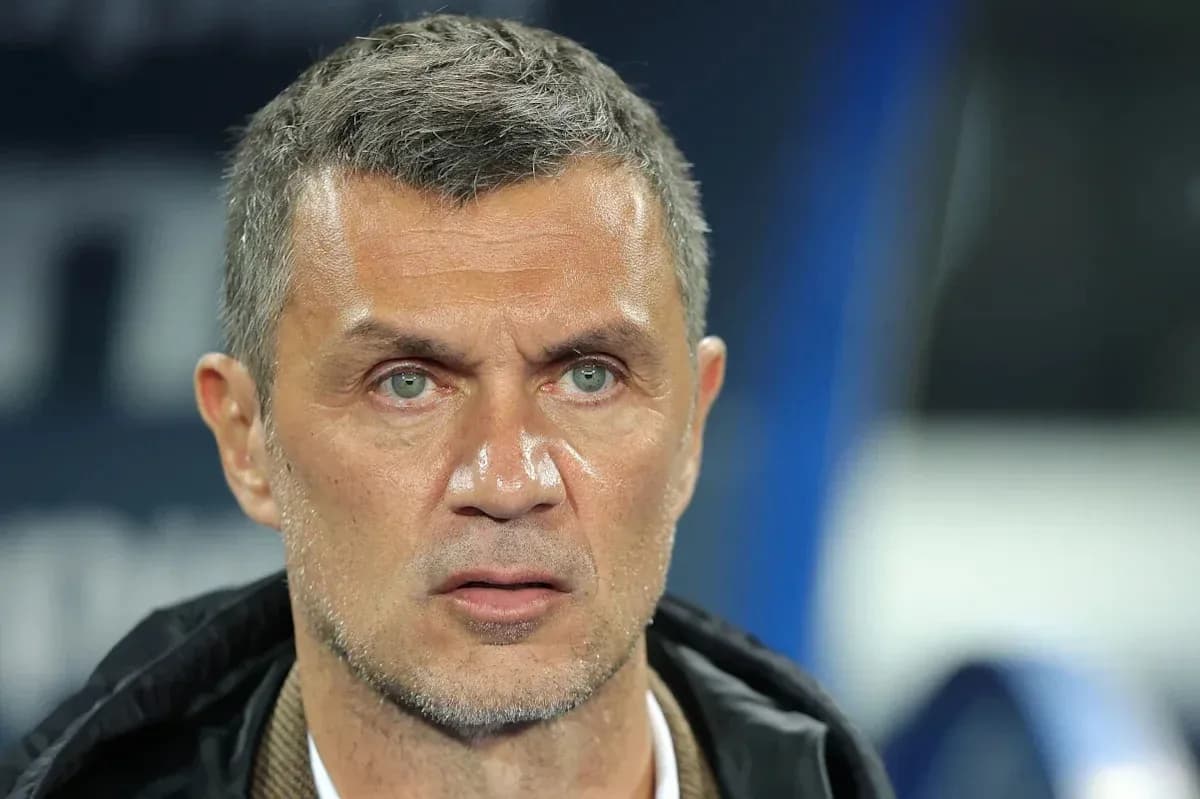
Paolo Maldini Appointed as Italy's New Technical Director
Paolo Maldini has spent a lifetime carrying Italy’s footballing conscience on his shoulders. Now, after another World Cup watched from the sofa rather than the touchline, the Azzurri have turned back to their most elegant defender to help rebuild what has been repeatedly broken.
On Saturday night, the FIGC made it official: Maldini is Italy’s new technical director. At his side will be Leonardo, installed as an advisor. Two men who once shaped Milan’s destiny are now being asked to redraw the future of the national team.
Across the country, the reaction was immediate and overwhelmingly warm. This was not a controversial experiment or a left-field gamble. It felt like a return to something Italy trusts.
A new project after another World Cup in front of the TV
For the third straight World Cup, Italy’s involvement has been confined to television broadcasts and post‑mortems. The tournament has surged ahead without them, with France, Spain, Argentina and England all booking semi-final places, while Italian fans are left to remember what it felt like to belong on that stage.
The sense of urgency in Rome is real. Italy needed a reset, a fresh project, and Maldini’s appointment is the first bold stroke on a blank canvas. He will not just advise or consult; he will command. The former captain has been handed a central role in shaping the Azzurri’s technical identity.
Together with Leonardo, Maldini will now set about the task that will define this new era: choosing the next head coach of the national team. Antonio Conte and Roberto Mancini are widely viewed as the leading candidates, familiar names with proven track records and strong personalities. Italian media have already begun to float more glamorous, less realistic possibilities as well, with Pep Guardiola and Didier Deschamps mentioned as the kind of dream appointments that stir debate, if not expectation.
For Giovanni Malagò, the new FIGC president, naming Maldini is the first major call of his mandate. Judging by the early reactions, it is one that has landed perfectly.
Zoff’s seal of approval
When Dino Zoff speaks about Italian football, people still lean in. The 1982 World Cup winner, who coached Maldini at Euro 2000, did not hold back in his praise.
“Paolo has given so much for our football, to Milan in particular but also for the national team,” Zoff said, recalling not only the defender but the family legacy. “He was also one of my players when I was in charge and I can't forget his father Cesare either, who was Bearzot's assistant when I won the World Cup in 1982.”
Then came the verdict that many in Italy instinctively share. “Maldini is a perfect appointment in terms of character, charisma and competence. I also understand the choice of Leonardo as an advisor. It's right that a leader surrounds himself with people he trusts.”
Zoff knows the political and emotional weight of the Italy bench. He is convinced Maldini will handle the key decision with the independence it demands. “Maldini has to be free to follow his beliefs, without external interference,” he said. That line, in a country where the national team can become a battleground of interests, carries particular resonance.
Old Milan guard, new national mission
If Zoff speaks from the vantage point of an elder statesman, Alessandro Costacurta speaks from the dressing room. Few know Maldini better. They shared a back line, a lifetime of trophies, and the pressure of the San Siro spotlight.
“This is great news for Italian football, because we have brought in one of the most illuminated and sincere people in the sport,” Costacurta said. For him, Malagò’s move goes beyond a symbolic gesture. “Malagò made the best possible choice. In fact, picking Maldini is perhaps more important than choosing the new coach.”
It is a striking statement, but it underlines the belief that Italy needs a clear, coherent sporting vision before it picks the man on the touchline. Maldini is expected to provide that vision, Leonardo to challenge and enrich it.
Costacurta captured that dynamic neatly: “Leonardo is more of a dreamer, a visionary, whereas Paolo is more practical, looks to his knowledge and instinct. The best thing about them is that they listen to each other, despite starting from different ideas, and always manage to find a common solution.”
That balance—between dream and pragmatism, between imagination and hard-edged judgement—will now be tested on the biggest institutional stage Italian football has.
Italy remains absent from the World Cup, reduced again to observer status while others chase the trophy. With Maldini and Leonardo now in charge of the Azzurri’s technical future, the real question is whether this is the moment the national team finally stops watching and starts leading again.