Paris Saint Germain vs Arsenal: UEFA Champions League Final Preview
At Puskas Arena in Budapest, Paris Saint Germain and Arsenal meet in the UEFA Champions League Final, a single game that will define their entire 2025 campaign: for Arsenal, the chance to crown a dominant league phase from rank 1 with the trophy; for Paris Saint Germain, ranked 11 in the league phase, the opportunity to transform a solid but imperfect run into a historic title and erase the gap that separated them from Arsenal over the earlier rounds.
Head-to-Head Tactical Summary
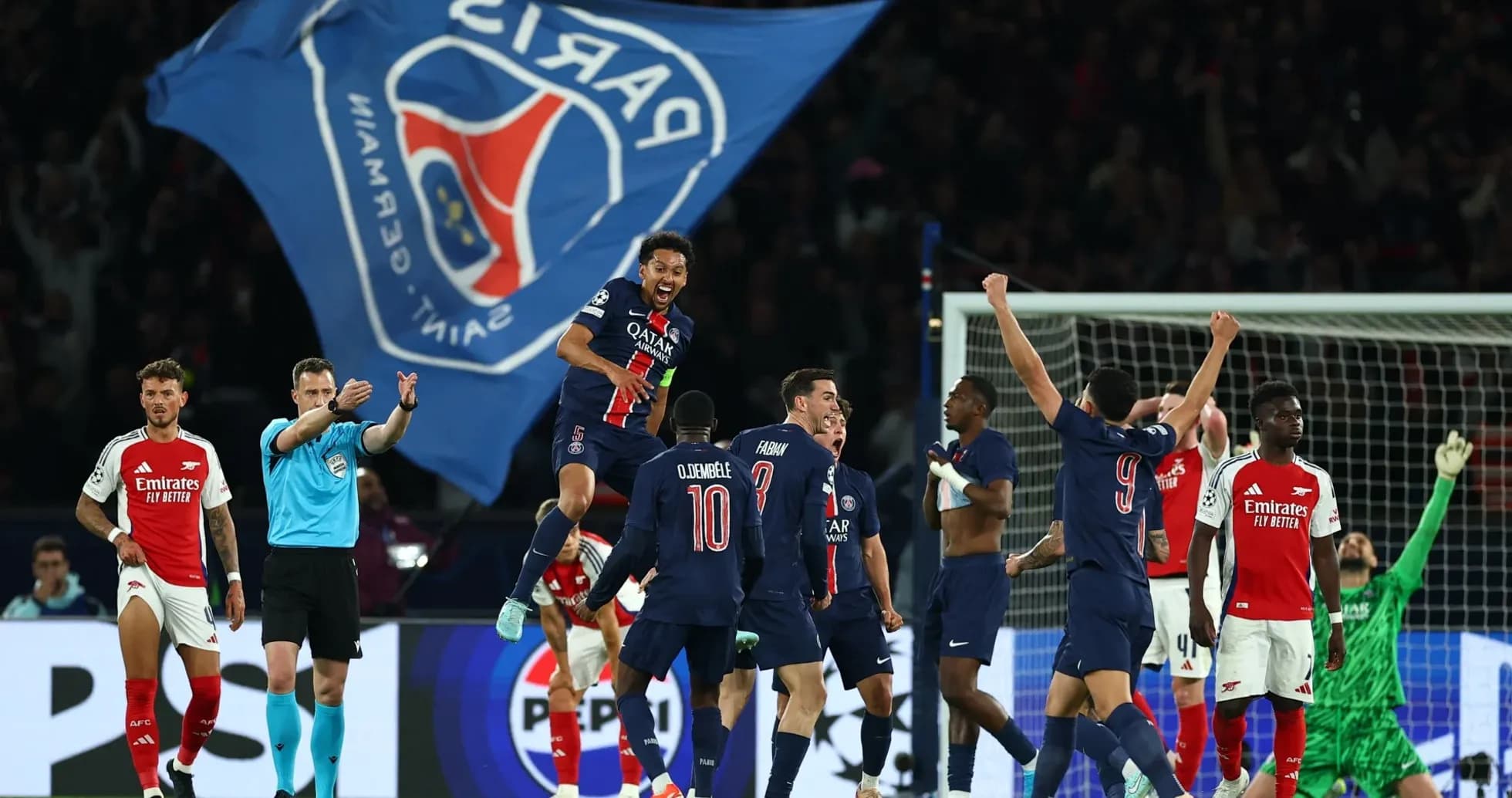
The recent head-to-head history in European competition leans slightly towards Paris Saint Germain but has been finely balanced at the top level. In the 2024 UEFA Champions League semi-finals, the sides met twice: on 29 April 2025 at Emirates Stadium in London, Arsenal 0–1 Paris Saint Germain (HT 0–1), with the visitors protecting an early advantage; and on 7 May 2025 at Parc des Princes in Paris, Paris Saint Germain 2–1 Arsenal (HT 1–0), completing a two-leg triumph built on compact defending and efficient counter-attacks.
Earlier in the 2024 league stage, on 1 October 2024 at Emirates Stadium, Arsenal 2–0 Paris Saint Germain (HT 2–0), Arsenal imposed themselves with an assertive first half and then controlled the tempo. Outside the current Champions League cycle, there was a high-scoring International Champions Cup meeting on 28 July 2018 at The National Stadium (Singapore), Arsenal 5–1 Paris Saint Germain (HT 1–0), and a more evenly matched UEFA Champions League group-stage contest on 23 November 2016 at Emirates Stadium, Arsenal 2–2 Paris Saint Germain (HT 1–1). Overall, the pattern shows Arsenal at their best when they dictate play at home, while Paris Saint Germain have recently been more effective in knockout ties, especially when managing narrow leads.
Global Season Picture
- League Phase Performance:
Paris Saint Germain arrive at the final from a mid-pack league-phase position: rank 11 with 14 points, built on 4 wins, 2 draws and 2 losses in 8 matches, scoring 21 goals and conceding 11 in the league phase (goal difference +10). Their home and away splits were balanced, with 11 goals for and 6 against at home, 10 for and 5 against away, underlining a strong but occasionally vulnerable side.
Arsenal dominated the league phase from rank 1 with a perfect 24 points from 8 games, 8 wins, 0 draws, 0 losses, scoring 23 goals and conceding only 4 (goal difference +19) in the league phase. They were flawless both at Emirates Stadium (12 scored, 3 conceded) and away (11 scored, 1 conceded), projecting the profile of the competition’s benchmark team. - Season Metrics:
Scope detection shows Paris Saint Germain have 16 fixtures and Arsenal 14 in the statistics dataset, while the league phase lists 8 each, so these metrics reflect performance across all phases of the competition.
For Paris Saint Germain, the attack has been aggressive and high-output: 44 goals scored across all phases of the competition (25 at home, 19 away), averaging 2.8 goals per match (3.1 at home, 2.4 away). Defensively they have been more open, conceding 22 goals (14 at home, 8 away) at 1.4 per match (1.8 at home, 1.0 away), suggesting a proactive but occasionally exposed structure. Their disciplinary profile shows a concentration of yellow cards late in games (42.86% between minutes 76–90), pointing to rising defensive stress in closing phases.
For Arsenal, the numbers describe a controlled, efficient side: 29 goals scored across all phases of the competition (15 at home, 14 away), averaging 2.1 per match both home and away. Defensively, they have been elite, conceding just 6 goals in total (3 home, 3 away), an average of 0.4 per match, with 9 clean sheets. Their yellow cards cluster between minutes 61–75 (31.82%), often coinciding with game-management periods where they protect leads rather than chase deficits. - Form Trajectory:
In the league phase, Paris Saint Germain closed with a mixed “DLDWL” sequence: draw, loss, draw, win, loss. This pattern reflects inconsistency against top-level opposition, alternating strong attacking displays with games where defensive issues resurfaced.
Arsenal finished the league phase on a perfect “WWWWW” run: five consecutive wins, reinforcing their status as the most stable and dominant side in the competition’s early rounds. That momentum underpins their psychological edge coming into this final.
Tactical Efficiency
Across all phases of the competition, Paris Saint Germain’s attacking profile is that of a high-variance, front-loaded side: 2.8 goals per match with a highest away win of 2–7 and a best home win of 4–0 underline their capacity to overwhelm opponents when their front line clicks. However, conceding 1.4 goals per match, with 14 allowed at home, signals a defense that can be stretched when asked to defend large spaces or protect leads late on (supported by the late yellow-card spike).
Arsenal, by contrast, have paired a strong attack with exceptional control: 2.1 goals scored per match across all phases of the competition, with no defeats and only 6 goals conceded at 0.4 per match. Their biggest wins (4–0 at home, 0–3 away) show that when they do open up, they do so without sacrificing defensive structure. The clean-sheet count (9) and absence of any recorded losses point to a team whose “defensive index” is significantly stronger than Paris Saint Germain’s, while still maintaining a high offensive baseline.
In comparative terms, Paris Saint Germain’s efficiency leans towards volatility: they can outscore any opponent on their day but are more exposed to game-state swings. Arsenal’s profile is more stable and repeatable, with their defensive numbers across all phases of the competition amplifying the supremacy they showed in the league phase. Going into a one-off final, that contrast suggests that if the game becomes stretched and transition-heavy, Paris Saint Germain’s explosive attack can compensate for structural weaknesses; if it remains controlled and positional, Arsenal’s season-long balance between attack and defense gives them the superior overall efficiency.
The Verdict: Seasonal Impact
This final is season-defining for both clubs but in different ways. For Arsenal, victory would complete a near-perfect Champions League campaign: rank 1 in the league phase with 24 points and a +19 goal difference, followed by an unbeaten run across all phases of the competition with elite defensive metrics. Lifting the trophy here would validate their project as the new European benchmark and convert statistical dominance into tangible silverware. A defeat, however narrow, would leave an outstanding statistical profile without the ultimate reward, framing 2025 as a missed opportunity at the very top level.
For Paris Saint Germain, the stakes are more transformative. Coming from rank 11 in the league phase with 14 points and a +10 goal difference, a Champions League title would radically reframe their campaign: what looked like a good but not dominant run would be remembered instead for knockout resilience and high-impact attacking football across all phases of the competition. It would also confirm their recent head-to-head edge over Arsenal in elimination ties as a sustainable pattern rather than a one-off. Conversely, defeat would reinforce the existing hierarchy: Arsenal’s league-phase superiority would be validated, and Paris Saint Germain’s season would be judged as strong but short of the very top tier.
Looking forward, the result will shape the competitive landscape of the Champions League in 2026. An Arsenal win consolidates a model built on defensive control and consistency, setting the standard others must chase. A Paris Saint Germain win signals that high-variance, attacking-heavy structures can still win the biggest prize, even from outside the top positions in the league phase, and would likely encourage them to double down on their current offensive identity while addressing defensive tightening as the final step towards sustained dominance.