Pau Cubarsí Shines as Spain Advances in World Cup
Luis de la Fuente insisted last summer that Pau Cubarsí’s omission from Euro 2024 had nothing to do with age. He said, bluntly, he just had four centre-backs “at a higher level”.
That line already feels dated.
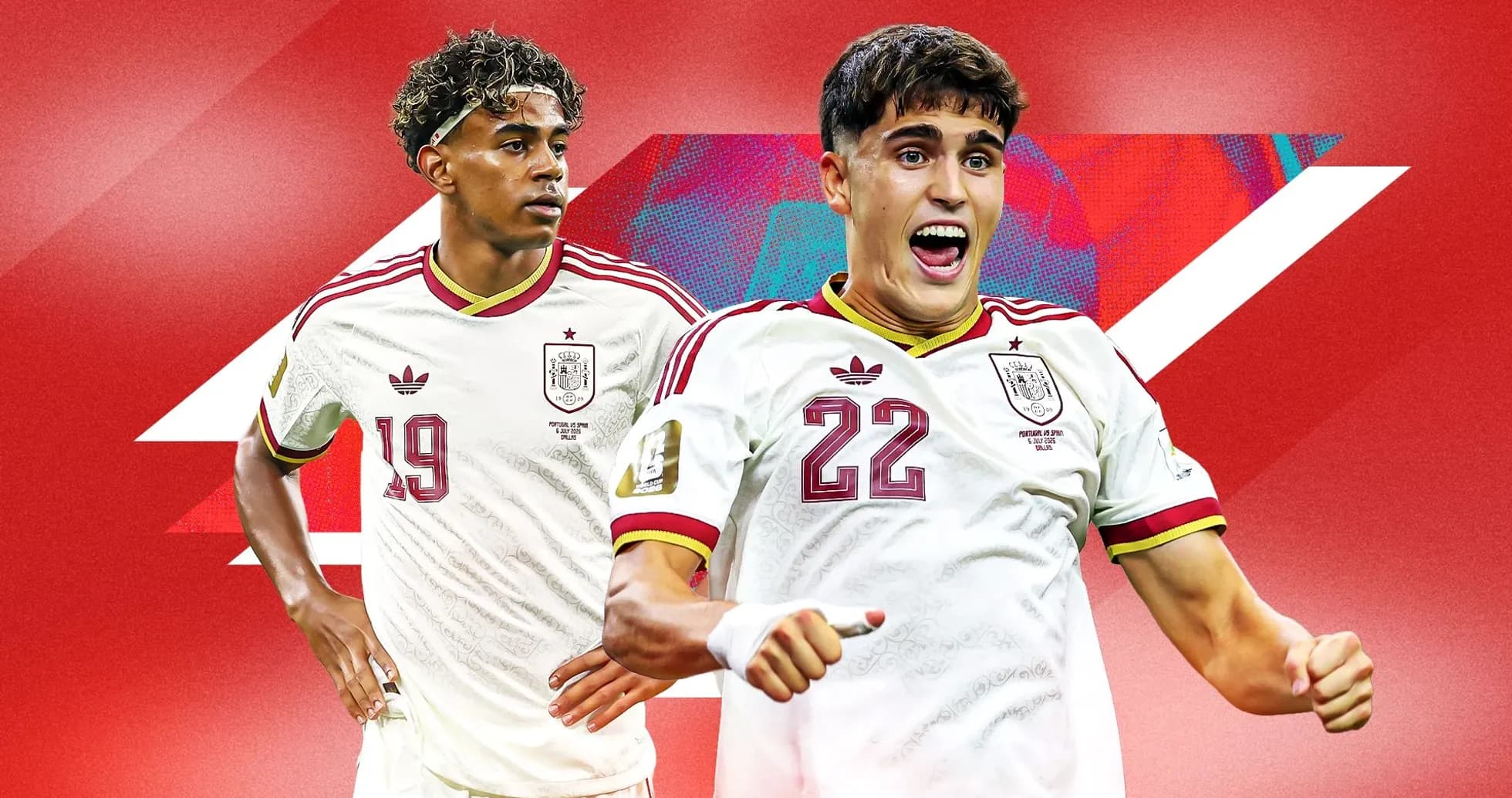
Right now, at this World Cup, there are not many defenders on the planet playing at a higher level than the 19-year-old from La Masia.
A defence that doesn’t blink
Spain have glided into the quarter-finals in North America without conceding a goal. That kind of record is never the work of one man.
Mikel Oyarzabal sets the tone from the front, harassing centre-backs and forcing rushed clearances. Rodri, in front of the defence, continues to operate like a one-man security system, reading danger before it even looks up. The back five behind them have been almost immaculate.
Marc Cucurella is already justifying the €60 million Real Madrid have handed Chelsea, snapping into duels and offering constant width. Unai Simón has rewarded De la Fuente’s faith with five straight clean sheets, keeping David Raya and Joan García firmly on the bench. Aymeric Laporte, at 32, looks as assured as he did at his peak.
And Pedro Porro? In a Spain shirt, he looks nothing like the erratic full-back Tottenham fans know. He looks like an international right-back in complete control.
Yet even in this collective, Cubarsí stands out.
Cubarsí, the teenager who runs the game
The striking thing about Cubarsí is not just that he’s coping. It’s that he’s dictating.
He has been a regular for Barcelona since 17, praised by Xavi as “an era-defining player” and tipped by Carles Puyol to be Barça’s first-choice centre-back for the next 15 years. The hype could have crushed him. It hasn’t come close.
Cubarsí says he doesn’t feel pressure on the pitch. Watching him, you believe it. He moves like a veteran, not a teenager in his first World Cup.
Defensively, he has barely put a foot wrong. His positioning is sharp, his decision-making clean, his duels measured rather than frantic. Laporte’s presence beside him has clearly helped. De la Fuente has been quick to underline that partnership.
“At crucial moments, a player like Laporte brings that experience Cuba needs [alongside him], and they complement each other fantastically,” the coach said. “We’ve achieved a phenomenal balance in the centre of defence.”
That balance is the foundation of Spain’s campaign. But Cubarsí offers more than solidity.
He is a La Masia graduate steeped in the art of building from the back, and it shows. Only Rodri has played more passes at this World Cup. From centre-back. At 19.
Spain use him as an extra playmaker, the first brain in their possession chain. He steps out, breaks lines, switches play, and never looks rushed. It’s why he is one of just four players in De la Fuente’s squad to have played every single minute so far.
Spain’s new era is supposed to belong to Lamine Yamal. It may yet belong to both of them.
Yamal searching for his moment
Yamal’s tournament has been more complicated.
The hamstring injury that cut short his 2025-26 season with Barcelona threatened his World Cup before it began. He missed both of Spain’s warm-up games and could manage only 19 minutes in the shock 0-0 draw with Cape Verde.
When he finally started, in the 4-0 demolition of Saudi Arabia in Atlanta, Spain looked transformed. Yamal opened the scoring and stretched the game in a way nobody else in the squad can. With him on the pitch, La Roja suddenly had an edge, a chaos factor.
Then came the inconsistency.
He teased and twisted in the round-of-32 rout of Austria, a match that made history as Spain became the first team since Brazil in 1958 to start two teenagers in a World Cup knockout game. His dribbling lit up the occasion.
But against Portugal, the old duel returned. Nuno Mendes, his nemesis, shackled him again in the 1-0 win. The most feared winger in football reached the quarter-finals still without an assist, having created just five chances all tournament.
Yamal doesn’t hide from that reality. He leans into it.
“I’m very demanding of myself,” he told Mundo Deportivo. “I’m never satisfied with what I’m doing. Besides that, I just need to keep playing. I was out for almost two months, and it’s not the same as when you’ve already played seven games in a row.
“Keep touching the ball, keep playing, keep adding minutes and, obviously, that [big] match will come. In the end, people remember these moments, from the round of 16 and the quarter-finals onwards. That’s when I’m most motivated.
“I’ve taken this whole process calmly so I can arrive at this point in good shape. I feel great, eager to show what we are as Spain and what I am.
“I’ve never been the best player in the group stage. The closer the important matches get, the semi-finals or the final, the better I play.”
Those are not the words of a teenager overawed by the stage. They are the words of a player waiting for the knockout rounds like a sprinter waiting for the gun.
Belgium warned
So Spain head into Friday’s quarter-final against Belgium with a defence that hasn’t been breached and a winger who insists his tournament hasn’t really started yet.
For Belgium, the equation is brutal. To reach the last four, they must solve a back line anchored by a 19-year-old who plays like he’s been here a decade, and they must hope that Yamal’s prophecy about himself does not come true.
Spain won Euro 2024 because Yamal came alive when it mattered most. The decisive moments seemed to pull the best out of him.
Now De la Fuente has an era-defining talent at both ends of the pitch. If Cubarsí keeps locking the door and Yamal finally kicks it down at the other end, who stops them this time?