Pedri's Role in Spain's World Cup Journey
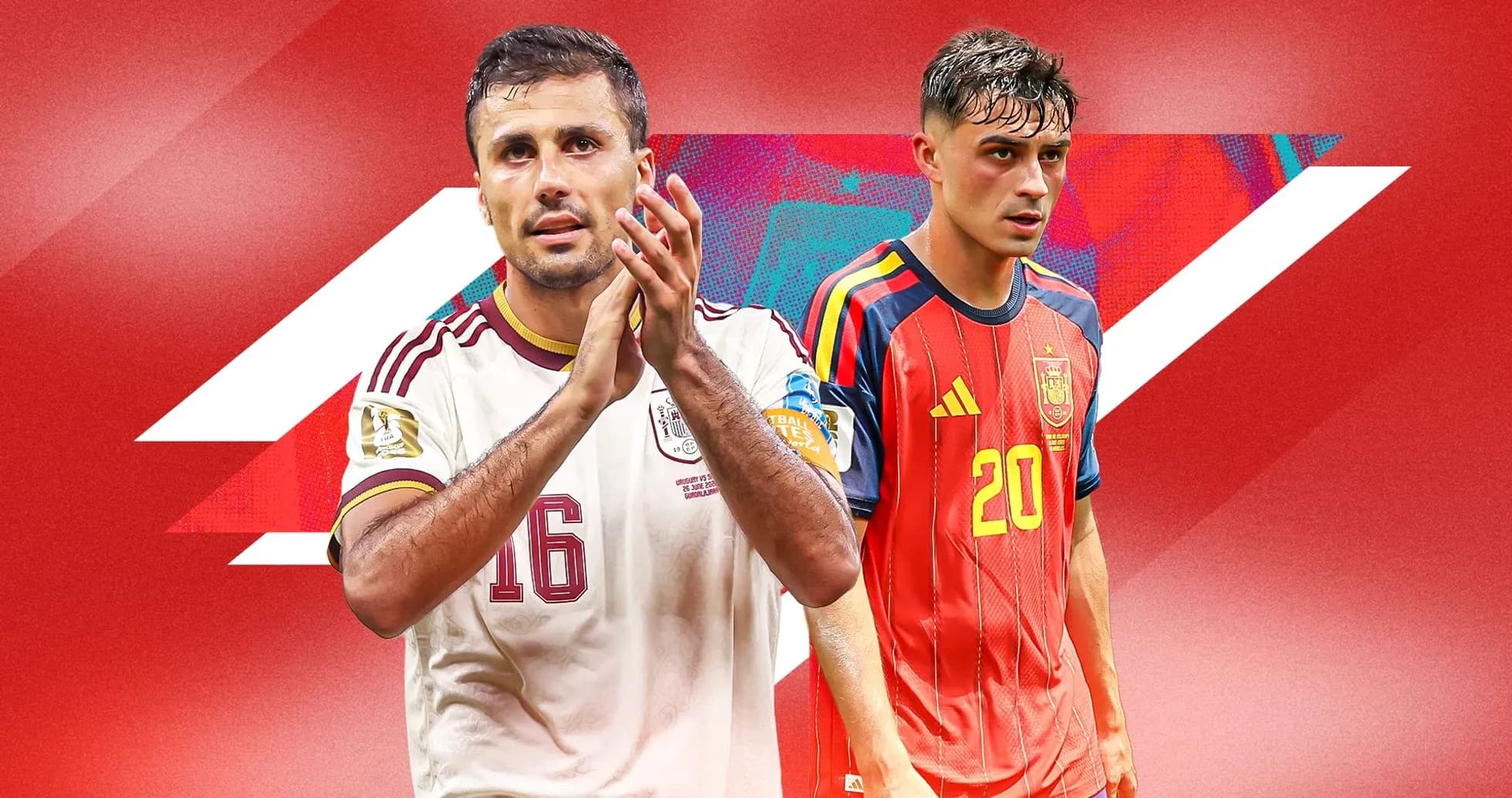
Spain arrived in North America with a midfield axis that looked ready-made for immortality. Rodri, the Ballon d'Or winner back to his imperious best, and Pedri, the golden boy from Las Palmas, were supposed to be the pair that turned a European crown into a world title.
Half of that prophecy is holding up. The other half has become a running argument back home.
Pedri’s World Cup has been a study in perception. On paper, his tournament began well: five chances created in the frustrating opening draw with Cape Verde, more than any other player on the pitch. On the pitch, he knitted moves together, took the ball under pressure, kept Spain ticking.
Back in Spain, it wasn’t nearly enough.
The bar for Pedri is set so high that a creative masterclass without a goal or assist now reads like a failure. Cape Verde’s subsequent form softened the blow of that scoreless draw, yet every game that passed without a decisive contribution only sharpened the focus on his lack of end product.
The comparison with Jude Bellingham has poured fuel on the fire. The two are different players, operating in different roles, yet the narrative is irresistible. Bellingham, the Real Madrid phenomenon, is lighting up the tournament with goals, assists, and big-game swagger. Pedri, Barcelona’s primary playmaker, is grafting in a deeper role and struggling to leave a mark on the scoreboard.
Nuance rarely survives in this kind of debate. The bottom line does. Bellingham scores and creates. Pedri, so far, does neither.
That is why Luis de la Fuente’s decision to drop Pedri still jolted, even if it made tactical sense. This is a player who had started five consecutive games at this World Cup, and nine in a row at the tournament stretching back to Qatar. He has been a pillar of De la Fuente’s Spain.
Yet the coach has a luxury most of his predecessors never enjoyed: a midfield overflowing with elite options.
He made that point clearly. Mikel Merino, fresh from scoring a late winner against Portugal in the previous round, remained on the bench against Belgium. If anyone had cause to complain, it was the Arsenal midfielder. Instead, he came on and did it again, delivering another decisive blow in the 2-1 victory.
De la Fuente called it “unfair” that Merino did not start, before adding that it would be equally unfair to leave out someone else. Only 11 can play. The message was blunt: reputations don’t start games, roles do.
Inside the camp, there has been no hint of a sulk from Pedri. Unai Simón lifted the lid slightly after the Belgium win, explaining that the midfielder had accepted his demotion with maturity. Everyone wants to play, the goalkeeper said, but everyone wants to win the World Cup more. If that means swallowing a new role, you swallow it.
So what is Pedri’s role now, with France looming?
His cameo against Belgium hardly strengthened his case. Spain broke late, the game stretched, Belgium open. Pedri, usually so precise in transition, misjudged a simple pass and squandered the chance. It was a rare technical lapse from a player whose game is built on clarity of thought and execution.
At the same time, Fabian Ruiz has muscled his way into the conversation with force. The Paris Saint-Germain midfielder scored Spain’s opener in Los Angeles and has backed up De la Fuente’s faith with authority on the ball and aggression without it. Simón called him “an immense talent” and noted, pointedly, that he has just “won two Champions Leagues in a row”.
De la Fuente finds himself juggling two footballers he describes, without hesitation, as among the best in the world. “Pedri is a class player, one of the best in the world, if not the best,” he said, before repeating the same praise for Fabian. It was not flattery. It was a problem statement.
The coach’s view is clear: there is a Barcelona Pedri and a Spain Pedri. They are not the same.
“Pedri can't play like he does for Barca, because we play differently,” he explained. The structures change, the profiles around him change, the demands change. With Rodri anchoring the midfield, his partner’s responsibilities shift. De la Fuente believes Pedri can operate as a 6, 8, or 10, but each choice carries a tactical cost elsewhere.
That is the heart of the France dilemma.
Spain could, in theory, field all three of Rodri, Fabian, and Pedri, as they did against Cape Verde. On paper, it is a tantalising idea. Midfield is the one area where La Roja can realistically claim to be stronger than France. Flood that zone with technicians, dominate the ball, and you reduce the time Kylian Mbappé and company have to run at you. It is Spain’s best, maybe only, way to blunt Didier Deschamps’ devastating front four.
Yet the equation is not that simple. A Pedri–Fabian–Rodri trio likely means sacrificing Dani Olmo, who has quietly built a compelling case in the No.10 role since the knockout rounds began. His finishing can still frustrate, but his movement between the lines, pressing intensity, and ability to connect midfield and attack have become central to Spain’s attacking structure.
De la Fuente has always viewed Pedri as a “special talent” who should, ideally, play closer to the opposition box, where his feints, flicks, and one-twos can cut teams apart. He has also praised the midfielder for setting “a very good tone” even when not at his scintillating best. Yet his recent comments hint at a specific plan: use Fabian’s physical and tactical work to exhaust opponents, then unleash Pedri against tired legs and stretched lines.
“Pedri could benefit from Fabian’s work,” the coach said after the Belgium game. That was not a throwaway remark. It sounded like a blueprint.
This Spain side’s defining trait is not individual brilliance but collective sacrifice. Stars accept rotation. Match-winners accept the bench. Nobody, not even Pedri, is immune. In a tournament that often rewards egos, De la Fuente has built a squad that seems genuinely willing to subsume them.
France will test that unity and that talent to the limit. De la Fuente knows it. “France have already shown some extraordinary, exceptional potential,” he said, “but we have too.” He expects a game decided by freshness, intensity, and which team can reach its absolute peak for 90 minutes, or longer if required.
Somewhere in that equation sits Pedri, still one of the finest midfielders of his generation, still searching for his World Cup moment in this tournament.
The question is no longer whether Spain can live without him from the first whistle. It is whether, when it matters most, they will finally see the Barcelona version of Pedri in a Spain shirt.