Understanding Interceptions: The Key to Defensive Mastery
An interception is over almost before it begins. A defender reads a pass, darts into the lane and gets there first. Less than a second of movement. Inside that second, though, the brain has to solve a moving equation: speed, distance, direction, balance, acceleration, deceleration. Get any part of it wrong and the whole defensive structure can fall apart.
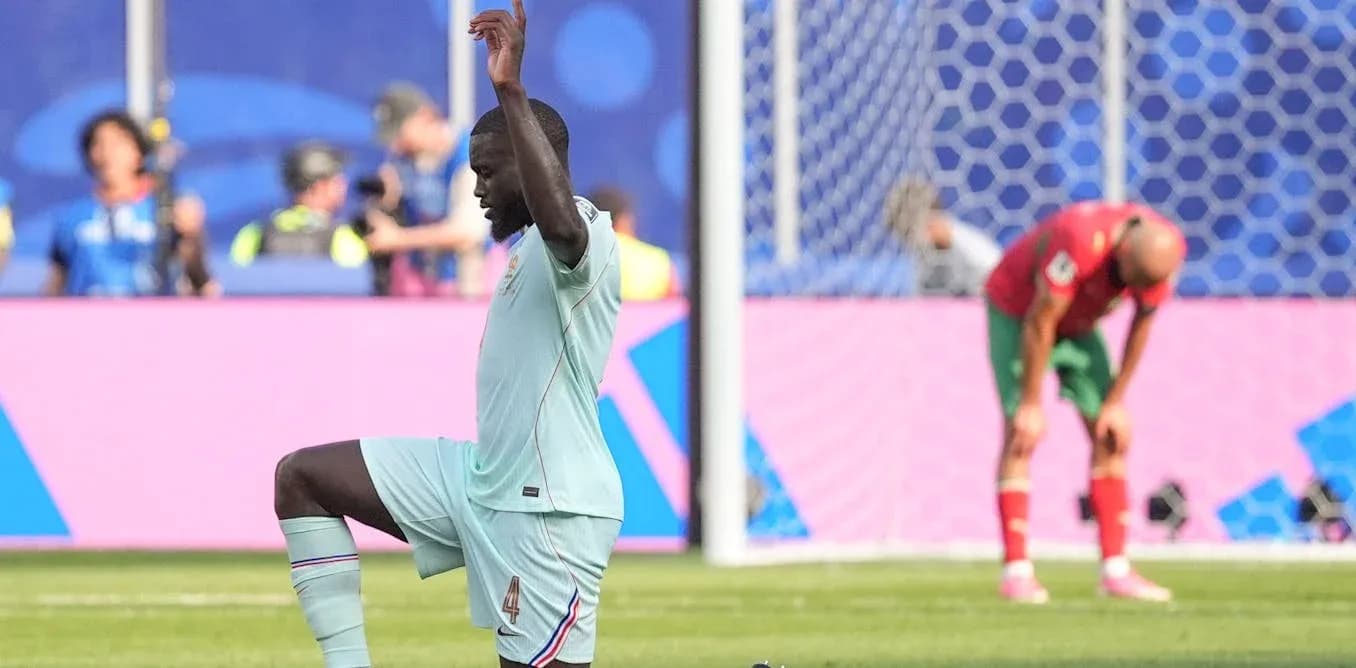
At this World Cup, no one has lived inside that split-second quite like Dayot Upamecano. As semi-final week began, the France centre-back led the tournament with 12 interceptions. Twelve moments when he stepped into danger and rewrote the script of an attack. It is a number that hints at how often an elite defender must make those rapid-fire calculations on the biggest stage.
Cape Verde, on their first appearance at a World Cup, built an entire campaign on those same instincts. Against Euro 2024 winners Spain in their Group H opener, they produced 15 interceptions in a single match and walked away with a 0-0 draw. Across four games, they averaged roughly 13 interceptions per outing, clawing their way out of the group before finally losing 3-2 after extra time to defending champions Argentina in the round of 32.
Those numbers do not prove that interceptions alone powered their run. A high tally can just as easily tell you that a team spent long spells without the ball, pinned back and forced to react. But cutting out passes did allow Cape Verde to disrupt superior possession sides and spring forward before those opponents could reset. Every successful step into a passing lane became both a shield and a starting gun.
The brain behind the tackle
To understand why this matters, you have to look inside that single stride to the ball.
Before a defender moves, they must decide whether the interception is even on. That means predicting where the ball will travel and whether they can reach it first. Research on anticipation in sport shows that skilled athletes blend their understanding of the situation with visual cues from an opponent’s movement. A defender studies the passer’s posture, angle of approach, shape of the hips and shoulders, then starts to guess where the ball is about to go.
The moment the ball leaves the boot, speed becomes everything. In an experimental study of well-trained amateur footballers, players became less willing to attempt interceptions as passes grew faster, and when they did go, their success rate dropped. The ball simply outran their calculations.
Distance changes the picture again. A study of senior male futsal players showed that the defender’s starting distance from the ball strongly influenced whether an interception was possible at all. Yet even after the first step, the decision is not fixed. Players kept adjusting their speed relative to the ball’s path until the action ended. An interception, then, is not a single yes-or-no decision. It is an unfolding process, constantly updated in real time.
Experience sharpens those judgments but never makes them perfect. In a football-specific study comparing expert and less-expert athletes, both groups initially overestimated their ability to complete an interception task. With practice, their estimates became more accurate, suggesting that players recalibrate once they receive direct feedback on what their bodies can actually achieve.
That calibration is fragile. Fatigue tests it to breaking point.
When tired legs cloud sharp minds
Mental fatigue is the hidden opponent in all of this. It is the heaviness that follows long periods of intense concentration, the slight dulling of alertness that creeps in before the body feels truly spent.
In one study of 20 professional male footballers, players completed a demanding 30-minute mental task before a training match. Their passing decisions deteriorated. Another study, this time with well-trained male players, found that mental fatigue slowed football-specific decision-making and made it less accurate.
Those experiments focused on passing and broader in-game decisions rather than interceptions themselves. They do not prove that mental fatigue directly causes defenders to miss passing lanes. But interceptions draw on the same machinery: picking out the right visual information, judging speed and distance, predicting what comes next and choosing an action under severe time pressure. If the mind lags, the body follows a beat too late.
Physical fatigue adds a second layer of difficulty. A pass that looked reachable in the 20th minute may be beyond reach at the same speed in the 80th. Research involving 24 trained male players found that acute physical fatigue reduced both how far and how intensely they moved. It also altered aspects of their positioning and team play.
Another related study divided players by the strength of their decision-making skills. Under acute physical fatigue, the stronger decision-makers held their positioning and defensive effectiveness better, partly by accepting a slower pace. Those with weaker decision-making kept up more of their physical output but lost clarity in their positioning and defensive work.
The message is striking. The best decision-makers do not simply run harder; they adapt more intelligently. A tired defender must not only estimate where the ball is going but also update, in real time, what their body can still do without deserting a crucial zone.
The art of deception
Opponents, of course, do not stand still and allow these judgments to unfold in peace. They try to corrupt the information stream.
Research on deception in competitive sport shows how attackers disguise their intentions. A passer shapes towards one teammate, the body angled and eyes fixed, then whips the ball somewhere else. By the time the true direction reveals itself, the defender may already have shifted weight, opened the hips, or committed a step towards the wrong lane.
Wait, and you see more. But the ball travels further. Move early, and you might win the race, but you expose yourself to disguise. Every interception attempt becomes a gamble on incomplete information.
This is where training design matters. Work on realistic practice argues that drills must preserve the key information and actions that players face in competition. For interceptions, that means moving opponents, changing pass speeds, realistic starting distances and deliberate use of deception. Static cones and predictable passes do not prepare a defender for Lionel Messi dropping a shoulder or a full-back whipping a disguised reverse ball down the line.
Coaches must also consider the state in which players make these decisions. Fatigue does not just lower running numbers; it can warp the decision itself. If staff monitor only distance covered and high-intensity sprints, they risk missing the quieter collapse in a player’s ability to read and intercept play.
The goal is not to churn out defenders who chase every pass. It is to produce players who know which opportunities are truly reachable, who keep adjusting their judgment as the ball travels, and who adapt again as their own physical capacity ebbs during a match.
By the time Upamecano stretches out a leg and cuts out a through ball, we see only the final movement. The real work happened earlier, in a fraction of a second when mind and body agreed on a risk, trusted it, and stepped into the path of the game.