Rayo Vallecano vs Girona: A Tactical Analysis of La Liga Draw
The night at Campo de Futbol de Vallecas closed on a 1–1 draw, a result that felt like a snapshot of both teams’ seasons: Rayo Vallecano steady but blunt, Girona fragile yet stubbornly alive. Following this result in La Liga’s Regular Season - 35, the table still shows Rayo in 10th with 43 points and a goal difference of -6 (36 scored, 42 conceded overall), while Girona remain deep in trouble in 18th on 39 points with a goal difference of -15 (37 for, 52 against overall). Safety and jeopardy collided, and neither side quite found the conviction to tilt the story fully their way.
I. The Big Picture – Structures and Seasonal DNA
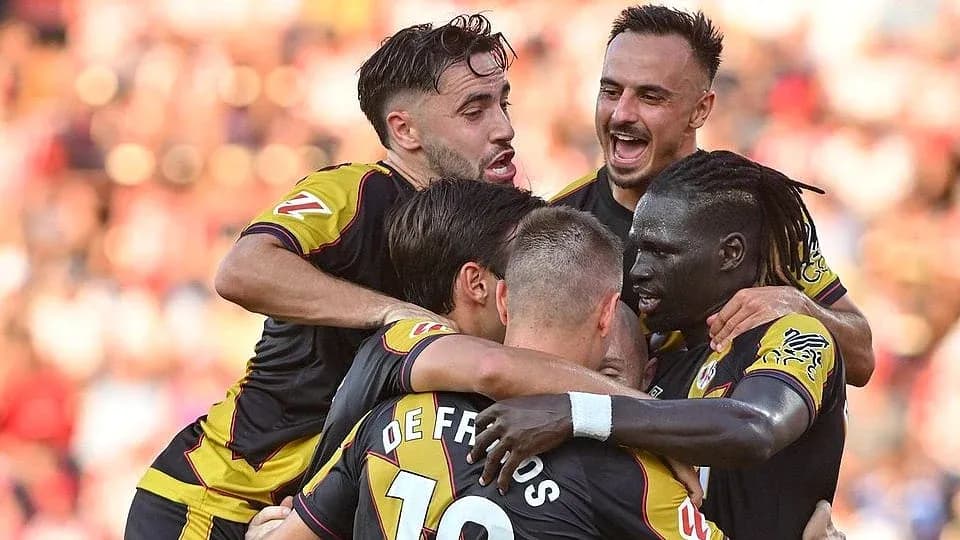
Inigo Perez set Rayo in a 4-3-3, a bolder shape than their more habitual 4-2-3-1. A. Batalla was shielded by a back four of A. Ratiu, P. Ciss, F. Lejeune and P. Chavarria. Ahead of them, P. Diaz anchored with O. Valentin and U. Lopez as twin interiors, while the front three of J. de Frutos, S. Camello and F. Perez promised width and mobility rather than a classic target man.
The shape reflected Rayo’s identity this season: compact, hard to beat at home, but not explosive. Heading into this game they had played 18 times at home, with 6 wins, 10 draws and only 2 defeats. At home they averaged 1.2 goals scored and 0.8 conceded, a profile of control rather than chaos. Eleven clean sheets overall, 7 of them at home, underlined that defensive base.
Girona, by contrast, arrived as a relegation-threatened side trying to impose a big-club structure on a fragile squad. Michel’s 4-2-3-1 put P. Gazzaniga behind a back four of A. Martinez, A. Frances, Vitor Reis and A. Moreno. In midfield, A. Witsel and F. Beltran formed the double pivot, with a technically gifted line of three – V. Tsygankov, T. Lemar and J. Roca – supporting lone forward A. Ounahi.
The system mirrored their season-long preference: 4-2-3-1 has been their most-used formation, with 19 league starts in that shape. Yet the numbers paint a fraught picture. Overall they had 9 wins, 12 draws and 14 losses from 35 games, scoring 37 and conceding 52 – 1.1 goals for and 1.5 against per match in total. On their travels, 3 wins, 8 draws and 7 defeats with 18 scored and 27 conceded told of a team that can nick something but rarely control the defensive narrative.
II. Tactical Voids – Absences and Discipline
Both managers had to navigate significant absences that shaped their tactical options.
Rayo were without I. Akhomach (muscle injury), Luiz Felipe (injury), D. Mendez (knee injury) and, crucially, I. Palazon, suspended after a red card. Palazon is not just a creator; he is one of La Liga’s most combative wide midfielders this season, with 10 yellow cards and 1 red. His 3 goals, 3 assists and 39 key passes, plus 51 fouls drawn, usually give Rayo a direct outlet and a constant source of set pieces. Without him, Perez leaned on J. de Frutos for end product and on the more workmanlike F. Perez to maintain balance.
Girona’s list was longer and more disruptive. B. Gil (yellow-card suspension), Juan Carlos (knee injury), Portu (knee injury), V. Vanat (injury), M. ter Stegen (hamstring) and D. van de Beek (Achilles tendon injury) were all missing. The absence of Portu in particular stripped Girona of one of their most vertical threats in transition, forcing Michel to trust the more technical but less explosive trio behind Ounahi.
Discipline hovered over both sides’ planning. Rayo’s season card profile shows a steady accumulation of yellows, with a particular spike between 61-75 minutes (19.39%) and 91-105 minutes (16.33%), phases where fatigue and emotional strain often bite. Their red cards are scattered but tellingly concentrated late: 33.33% between 91-105 minutes and a combined 44.44% between 61-90. This is a team that can lose its head under pressure.
Girona’s yellow-card pattern is even more extreme: a late-game surge of 39.19% between 76-90 minutes, plus 17.57% between 91-105. They finish games on the edge, and their red-card distribution – 14.29% in four separate ranges from 16-60 and 76-90, and 28.57% between 91-105 – underlines a side that frequently crosses the disciplinary line when chasing or protecting results. Michel’s risk in Vallecas was always that a tight game might tilt on a late dismissal.
III. Key Matchups – Hunter vs Shield, Engine Room
The “Hunter vs Shield” duel was embodied by J. de Frutos against Girona’s porous back line. De Frutos entered the night as Rayo’s standout attacker in La Liga 2025: 10 goals and 1 assist in 33 appearances, from 47 shots (26 on target). He is not a volume shooter alone; 27 key passes and 53 dribble attempts, with 26 successful, show a winger who can both finish and create.
Against him stood a Girona defence that, heading into this game, had conceded 27 goals away from home at an average of 1.5 per away match. Vitor Reis, one of their statistical pillars, had amassed 38 blocked shots and 30 interceptions in 33 appearances, a defender who literally throws himself in front of danger. His duel with De Frutos on Rayo’s right flank was a constant tension point: the hunter trying to open his body for the far-post curler, the shield stepping out to block.
In midfield, the “Engine Room” pitted Rayo’s blend of graft and progression against Girona’s control pair. P. Ciss, though deployed here as a defender, carries the statistical profile of a powerful ball-winner: 49 tackles, 14 successful blocks and 32 interceptions this season, plus 100 duels won from 181. In front of him, P. Diaz and O. Valentin had to decide when to press A. Witsel and F. Beltran and when to drop into a compact shell.
Witsel and Beltran, for their part, were tasked with calming a team that too often gets stretched. Girona’s overall goals-against average of 1.5, both home and away, is not just about the back four; it reflects a midfield that can be bypassed when pressed. Rayo’s 4-3-3, with U. Lopez joining the first line of pressure, aimed to exploit that, forcing Girona’s build-up wide and asking V. Tsygankov and T. Lemar to receive under pressure rather than between the lines in comfort.
IV. Statistical Prognosis – xG Shadows and Defensive Solidity
The scoreboard read 1–1, and while the raw xG numbers are not provided, the season-long data hints at why a draw always felt the likeliest outcome. Rayo’s overall goal profile – 36 scored and 42 conceded from 35 games – suggests a side whose Expected Goals for and against are likely close to parity: they do not often blow teams away, but nor do they collapse, especially at home where they have failed to score only 3 times and kept 7 clean sheets.
Girona, by contrast, play closer to the edge of their defensive xG. Conceding 52 from 35 matches overall, with just 6 clean sheets, implies a defence that allows a steady drip of chances. On their travels they have failed to score only 4 times, which explains why they so often stay in games, but the 27 away goals conceded underline why they rarely close them out.
Following this result, the tactical verdict is that Rayo’s structural solidity remains intact, but their ceiling is capped without the individual chaos of I. Palazon. J. de Frutos continues to carry a disproportionate share of their attacking threat, and opponents will increasingly tilt their defensive plans toward him.
For Girona, the draw is emotionally valuable but statistically fragile. A team conceding 1.5 goals per match overall, with such a late-game yellow-card surge (39.19% between 76-90 minutes), will always flirt with disaster in tight relegation battles. Michel’s 4-2-3-1 offers technical control, yet without Portu’s verticality and with so many absences, it lacks the punch to consistently outstrip their defensive xG.
In Vallecas, the story closed on level terms, but the underlying numbers whisper that Rayo’s mid-table calm is built on a firmer tactical foundation than Girona’s anxious scramble for survival.