Real Madrid Dominates Oviedo with Tactical Mastery
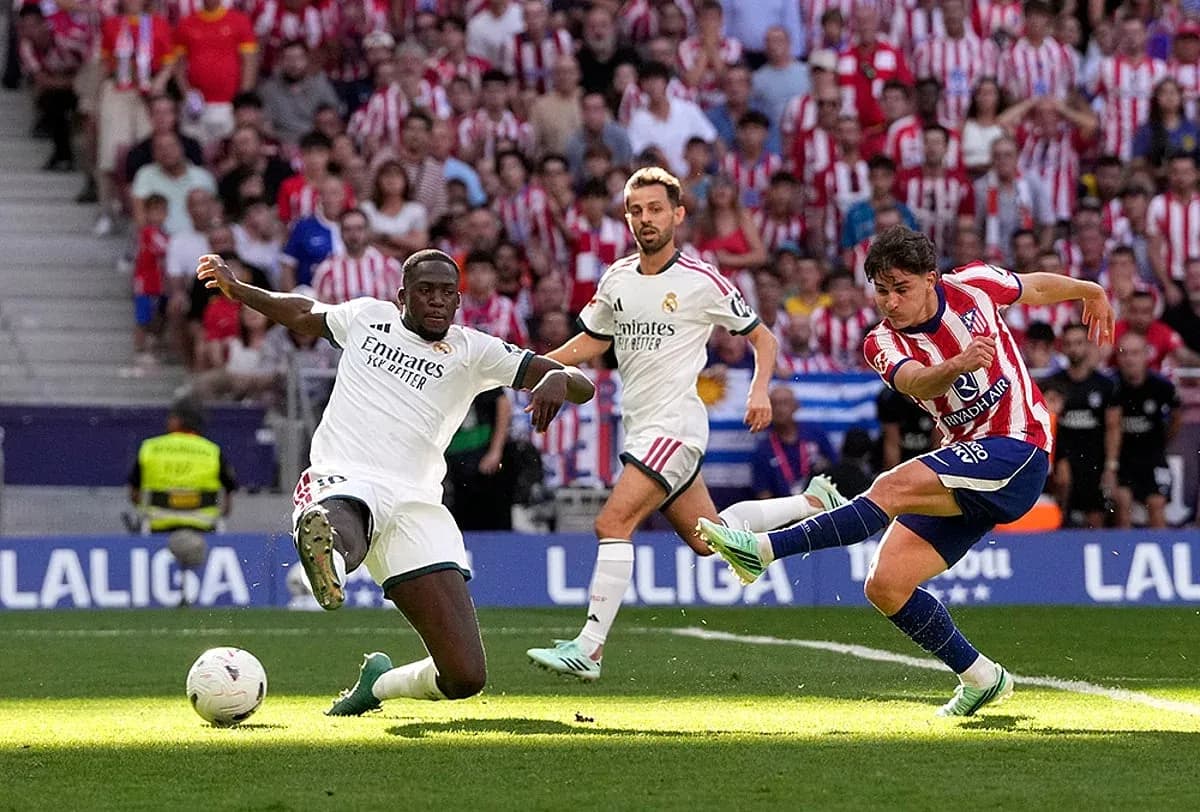
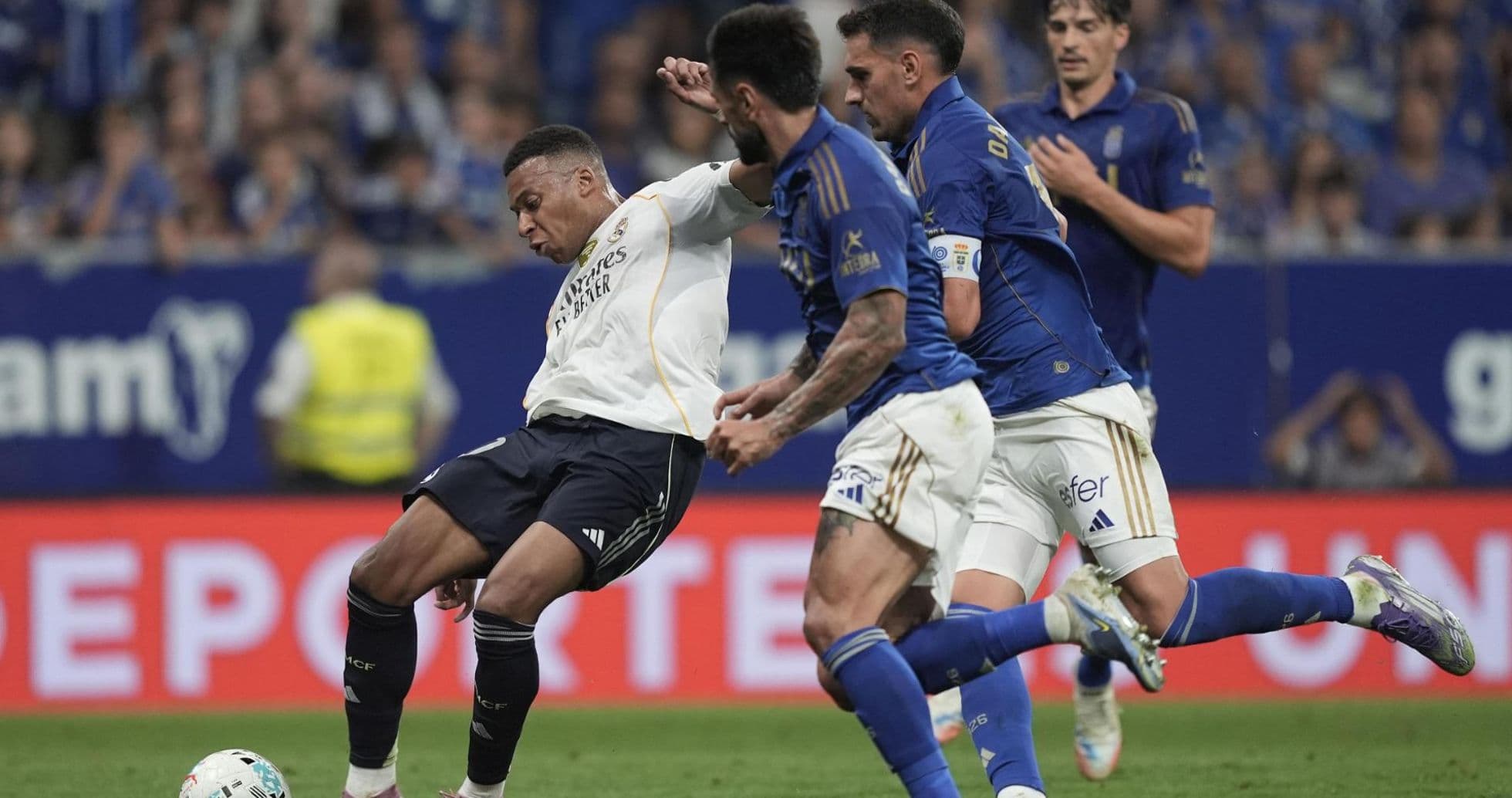
Real Madrid’s 2-0 win over Oviedo at Estadio Santiago Bernabéu was a controlled, structurally coherent performance built on territorial dominance and a clear right-sided attacking bias, rather than sheer chance creation volume. With 65% possession and a 19–9 shot advantage translating into a modest xG edge of 1.46 to 1.03, the hosts imposed their rhythm without ever needing to overextend defensively.
The 4-4-2 chosen by Alvaro Arbeloa was interpreted as a very modern, flexible shape. T. Alexander-Arnold at right-back and A. Carreras on the left pushed high and wide, effectively turning the first line of build-up into a two-plus-two structure with D. Alaba and R. Asencio holding central zones. In front of them, E. Camavinga and A. Tchouameni formed a double pivot that controlled central circulation, with F. Mastantuono and B. Diaz nominally as wide midfielders but often stepping into half-spaces to connect with the front two, G. Garcia and Vinicius Junior.
First Half
The opening goal on 44 minutes – G. Garcia finishing from a B. Diaz assist – was the clearest expression of this design. Real Madrid had spent the half dragging Oviedo’s 4-3-3 laterally, using Diaz’s drifting from the left midfield line into the left half-space to overload the interior channel between R. Alhassane and D. Costas. When the chance came, Diaz’s positioning between the lines allowed him to receive, turn, and slide a decisive ball into Garcia attacking the space behind the centre-backs. It was not an isolated pattern but the culmination of sustained pressure: 11 shots inside the box in total underline how often Madrid managed to access dangerous central zones.
Out of possession, Real Madrid’s structure was notably compact. The front two screened passes into Oviedo’s single pivot, while the wide midfielders dropped to form a flat four when the visitors tried to build. Oviedo’s 4-3-3 under Guillermo Almada Alves Jorge struggled to find clean progression through N. Fonseca and S. Colombatto; instead, they were often forced to play into the channels toward I. Chaira and T. Fernandez, where Madrid’s full-backs could engage aggressively, backed by the covering speed and anticipation of Alaba and Asencio.
Despite the visitors generating an xG of 1.03 and seven shots inside the box, T. Courtois was rarely exposed. His single recorded save, combined with 0.16 goals prevented, suggests that Oviedo’s best looks were either from poor angles or under pressure, a credit to Real Madrid’s defensive line management rather than to last-ditch heroics. The back four consistently held a medium-high line, compressing space between defence and midfield and denying Oviedo time to turn in central areas.
Second Half
The second half was shaped heavily by substitutions and game-state management. Oviedo’s first change at 54 minutes, S. Cazorla (IN) coming on for I. Chaira (OUT), aimed to introduce more technical control between the lines. This was a clear attempt to solve the problem of progression through Madrid’s compact midfield, with Cazorla tasked to receive in pockets behind Camavinga and Tchouameni. However, the structural issue remained: without consistent width and deep runs to stretch Madrid’s back line, those pockets never truly opened.
Arbeloa’s response at 64 minutes was proactive rather than reactive. D. Carvajal (IN) came on for T. Alexander-Arnold (OUT), and J. Bellingham (IN) replaced A. Tchouameni (OUT). The first change stabilized the right flank defensively, with Carvajal more conservative in his positioning, while Bellingham’s introduction shifted the midfield balance toward verticality and late box entries. Madrid effectively morphed into a 4-3-3 in possession, with Camavinga anchoring, Bellingham as a high interior, and Mastantuono or Diaz (before his substitution) tucking inside.
The 69th-minute double substitution was decisive in killing the game’s uncertainty. K. Mbappe (IN) came on for G. Garcia (OUT), adding depth and counter-threat, while Oviedo brought on H. Hassan (IN) for T. Fernandez (OUT) to refresh their front line. Mbappe’s presence immediately altered Oviedo’s defensive posture: their back four had to drop a few metres to respect his pace, which in turn opened more space between the lines for Bellingham.
At 77 minutes, C. Palacios (IN) replaced B. Diaz (OUT) and D. Yanez (IN) came on for F. Mastantuono (OUT), injecting fresh legs on the flanks and preserving the intensity of Madrid’s pressing and transition coverage. Oviedo answered with L. Ahijado (IN) for N. Vidal (OUT) and P. Agudin (IN) for N. Fonseca (OUT) at 79 minutes, effectively rebalancing their right side and central midfield, but by then Madrid’s control of tempo was entrenched.
The second goal at 80 minutes – J. Bellingham scoring from a K. Mbappe assist – captured the evolved structure. Mbappe, operating off the left and into the left half-space, exploited the deeper Oviedo line to receive on the turn and drive at the defence. With Oviedo’s midfield stretched, Bellingham arrived late from his advanced interior role, timing his run into the box to meet Mbappe’s delivery. It was a textbook example of how the substitutions reoriented Madrid’s attack: from early, more positional combinations through Diaz and Garcia to more dynamic, vertical incursions led by Mbappe and Bellingham.
Statistically, Real Madrid’s 616 passes with 570 accurate (93%) reflect their command of the ball and the security of their first and second phases. Oviedo’s 325 passes, 275 accurate (85%), underline that they were not reckless in possession but were largely confined to less threatening zones. Their five shots off target and three blocked attempts show that, while they reached the final third, Madrid’s block consistently forced suboptimal decisions or shooting positions.
The goalkeeping metrics complete the picture. Courtois’s one save and 0.16 goals prevented align with a defensive unit that largely kept Oviedo at arm’s length. At the other end, A. Escandell’s five saves and identical 0.16 goals prevented underline that Oviedo’s keeper was busier and that Real Madrid’s finishing more or less matched the quality of chances created.
In synthesis, this was a tactically mature home performance: Real Madrid used their 4-4-2 as a flexible platform to dominate territory, adjust intelligently through substitutions, and translate structural superiority into a controlled 2-0, without needing to rely on chaotic phases or high-variance defending.