Rhode Island Dominates Westchester SC in USL League One Cup
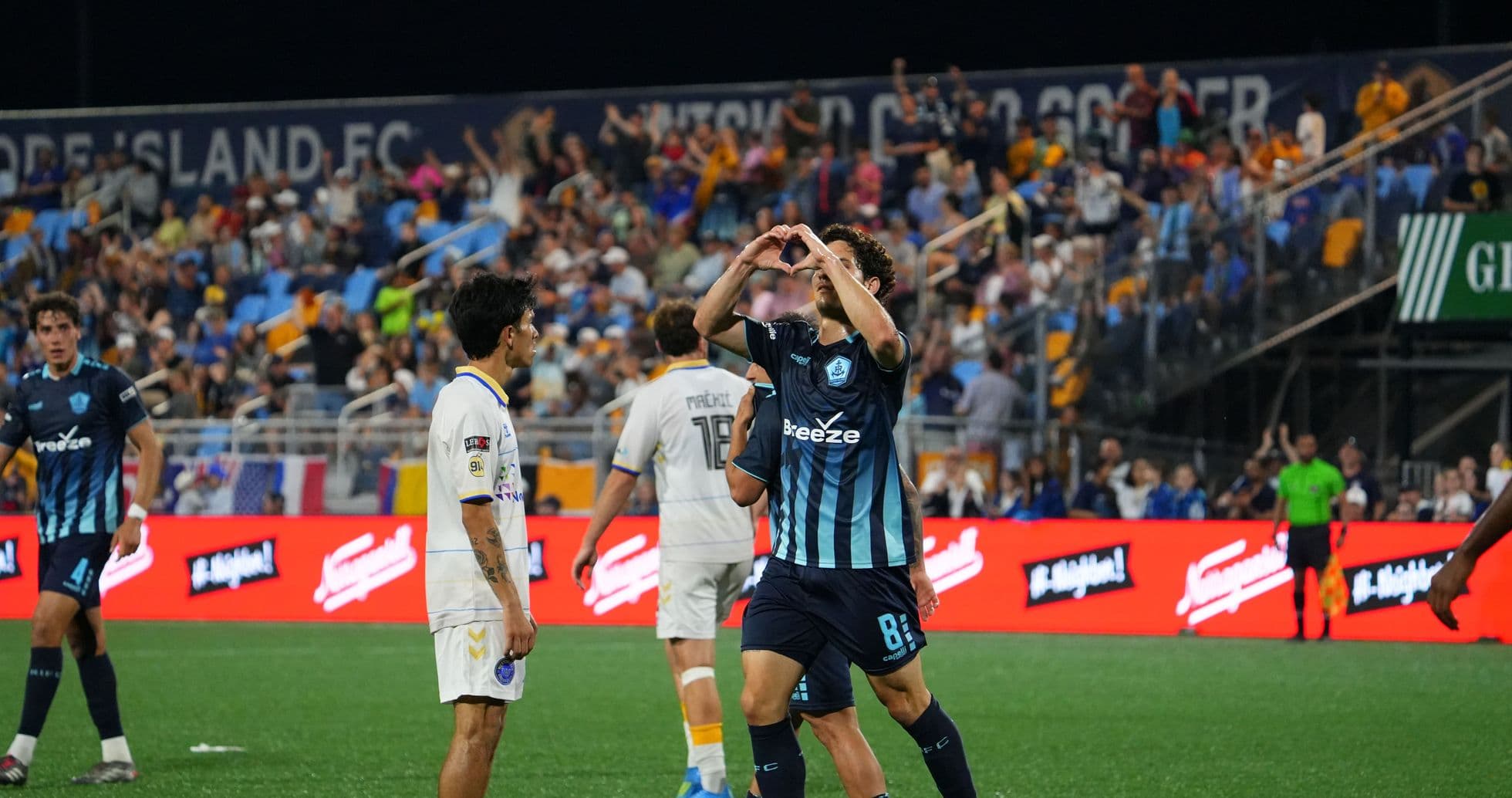
Under the lights at Centreville Bank Stadium, Rhode Island’s 3–0 win over Westchester SC felt less like a routine group-stage result and more like a statement about how this squad wants to define its identity in the USL League One Cup. Following this result, the numbers and the narrative finally align: a side that already had a sharp attacking profile on paper now has a dominant home performance to match.
I. The Big Picture – Rhode Island’s emerging blueprint
Heading into this game, Rhode Island were already a curious contradiction. In total this campaign they had scored 5 goals and conceded just 2 across 3 matches, yet their overall record was a modest 2 wins and 1 loss. At home, though, the signs were ominous for visitors: 1 match, 3 goals for, 0 against, a clean 3–0 as their biggest home win. Westchester SC arrived with the opposite story. In total this campaign they had scored 5 and conceded 8, with a porous defensive record that included 3 goals conceded on their travels in their only away outing.
The 3–0 full-time scoreline here perfectly mirrors Rhode Island’s existing home template: front-foot attacking, ruthless in the box, and structurally secure enough that their goalkeeper is rarely asked to perform miracles. It also reinforces Westchester’s away fragility: across their away fixtures in total they have now failed to score and conceded 3 goals, underlining a pattern of being stretched and exposed once they leave home.
II. Tactical Voids and Discipline – where the game tilted
There were no listed absentees, so both coaches, Khano Smith for Rhode Island and George Gjokaj for Westchester SC, had their core groups available. That meant the tactical voids were not about who was missing, but about which structural weaknesses would be targeted.
For Rhode Island, the defensive platform built around Koke Vegas and the back line of N. Scardina, K. Yao, F. Nodarse and A. Sanchez has been quietly efficient. In total this campaign they had conceded just 2 goals and collected 2 clean sheets, one at home and one on their travels. That reliability allowed Smith to lean into an aggressive, multi-line press, trusting that H. Bacharach Capdevila and A. Shapiro-Thompson could step high without leaving the back four completely exposed.
Discipline was another subtle undercurrent. Heading into this game, Rhode Island’s yellow-card distribution showed a split personality: 50.00% of their cautions arriving between 46–60 minutes and 50.00% in the 91–105 window. They tend to ride the line hardest just after half-time and in stoppage time, suggesting a side that pushes intensity when the game state is most volatile.
Westchester’s card profile told a different story: 50.00% of their yellows came between 31–45 minutes and 50.00% between 76–90. They are most vulnerable to rash decisions just before the interval and in the final quarter-hour, often precisely when control is needed. In a match where Rhode Island sought to stretch them horizontally with A. Rodriguez and N. Fuson drifting between the lines, that tendency to foul under pressure became a structural weakness, ceding set-pieces and territory.
III. Key Matchups – Hunter vs Shield, and the Engine Room
The “Hunter vs Shield” duel in this fixture was less about a single talisman and more about unit versus unit. Rhode Island’s attacking trident of A. Rodriguez (10), N. Fuson (11) and J. Williams (9) operated as a rotating front line rather than a fixed striker-plus-wingers setup. Their collective output fits the broader pattern: in total this campaign Rhode Island average 1.7 goals for per match, rising to a devastating 3.0 at home. Westchester’s defensive shield, anchored by T. Timchenko and C. Dickerson, walked into a storm: on their travels they concede an average of 3.0 goals against per match, and that trend held brutally true here.
The real battlefield, though, was the engine room. For Rhode Island, H. Bacharach Capdevila and A. Shapiro-Thompson formed the hinge between build-up and press. Their remit was twofold: screen transitions to protect the back line, and step into pockets to connect with C. Holstad and N. Fuson between lines. With Westchester’s midfield trio of S. Powder, A. Armas and B. Vasquez asked to both shield and create, they were constantly dragged into lateral shuttling, leaving gaps for Rhode Island’s interior runners.
Once Rhode Island established a 2–0 half-time lead, Westchester’s structure began to unravel. Their season-long pattern of conceding heavily—2.7 goals against on average in total, with no clean sheets—reappeared in the second half as they chased the game. The introduction of options like Leo Afonso, J. Castro or Z. Herivaux from the Rhode Island bench only deepened the control, allowing fresh legs to maintain the press and deny Westchester any sustained possession in advanced zones.
IV. Statistical Prognosis – what this result really says
Following this result, the group table confirms what the eye test suggested. Rhode Island, sitting 3rd with 5 points and a goal difference of 3 (8 scored, 5 conceded) in the standings snapshot, now look every inch a side whose underlying numbers are sustainable. They score at a healthy clip—1.7 goals for per match in total—and defend with composure, allowing just 0.7 goals against on average. Two clean sheets in three, and no fixtures in which they have failed to score, sketch the profile of a team whose Expected Goals would likely show a positive, repeatable edge at both ends.
Westchester SC, by contrast, remain a high-variance, defensively fragile outfit. In total this campaign they average 1.7 goals for, but the split is stark: 2.5 at home, 0.0 on their travels. Their 2.7 goals against per match in total, with 3.0 conceded on the road, suggests an xG-against curve that is consistently too high, especially once they are forced to open up. Even with a perfect 1-from-1 record from the penalty spot this season, their inability to generate stable attacking territory away from home leaves them dependent on moments rather than structure.
If this were a tactical preview of their next meeting, the prognosis would be clear. Rhode Island’s aggressive, balanced squad—anchored by a secure back line and a fluid front unit—matches up almost perfectly against Westchester’s away vulnerabilities. Unless Westchester can dramatically tighten their defensive spacing and find a way to carry their home attacking threat onto their travels, the metrics and the narrative both point in the same direction: Rhode Island as the more coherent, more repeatable project, and the side more likely to win the xG battle and the scoreboard again.