Roma's Tactical Mastery in Derby della Capitale Victory
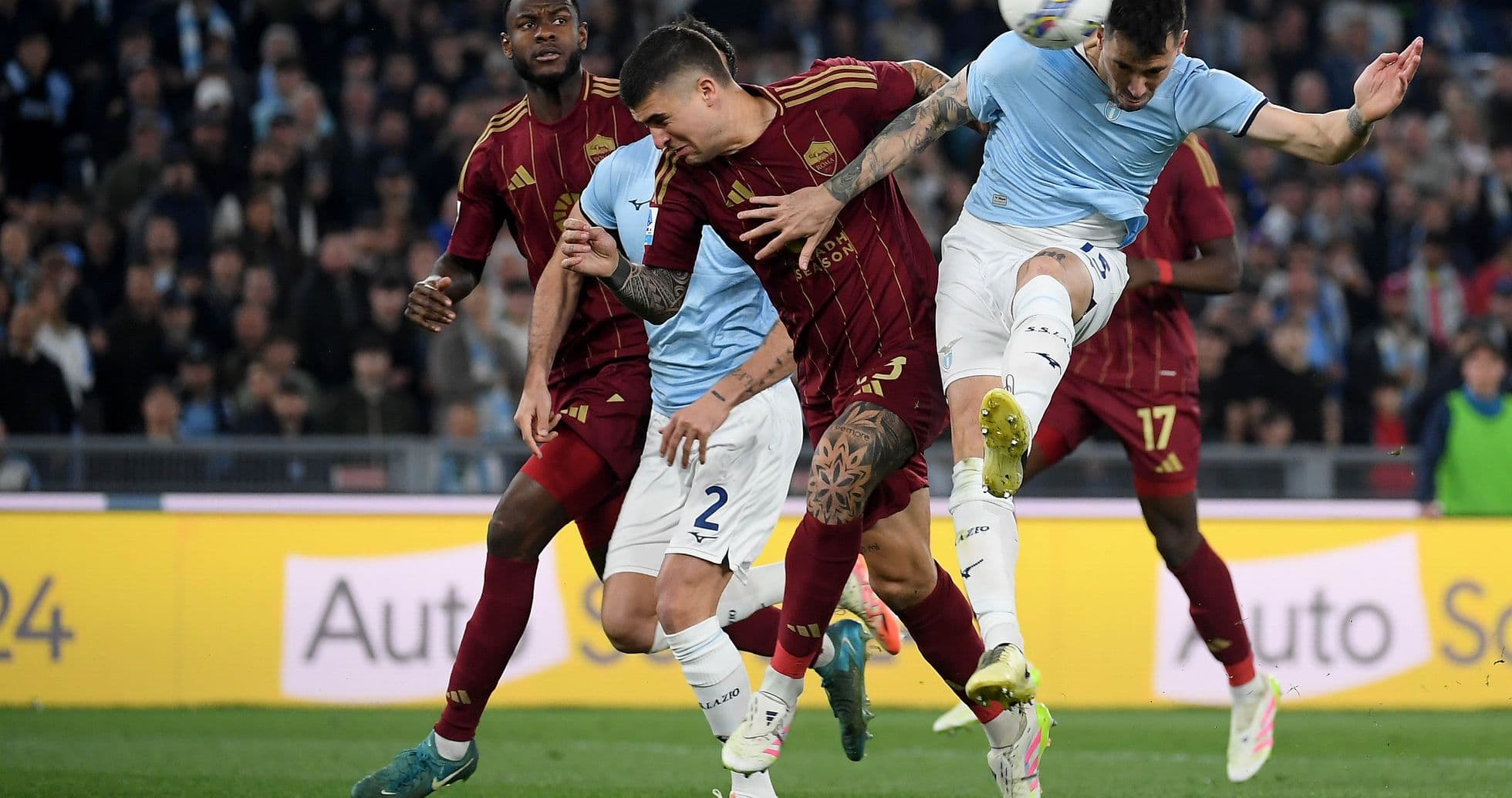
Under the May sun at the Stadio Olimpico, this Derby della Capitale unfolded as a study in control and contrast. In a Serie A season that has pushed both squads to redefine themselves, AS Roma’s 2–0 win over Lazio in Round 37 felt less like a one-off derby triumph and more like the crystallisation of an entire campaign’s tactical identity.
I. The Big Picture – Roma’s structure vs Lazio’s fragility
Following this result, Roma sit 4th on 70 points, their goal difference of 26 perfectly reflecting a campaign built on balance: 57 goals for, 31 against. At home they have been ruthless and disciplined, with 13 wins from 19, scoring 33 and conceding just 10. Lazio, by contrast, remain 9th on 51 points, their overall goal difference locked at 0 (39 scored, 39 conceded), a numerical summary of a side that has never fully tilted the season in its favour.
The tactical story of this derby began on the team sheet. Roma lined up in their now-familiar 3-4-2-1, a shape that has underpinned 29 of their league outings. M. Svilar anchored a back three of G. Mancini, E. Ndicka and M. Hermoso, with Z. Çelik and Wesley Franca as the wing-backs, and a central platform of B. Cristante and N. El Aynaoui. Ahead of them, P. Dybala and N. Pisilli floated behind lone striker D. Malen.
Lazio responded with Maurizio Sarri’s default 4-3-3: A. Furlanetto in goal, a back four of A. Marusic, Mario Gila, O. Provstgaard and N. Tavares, a midfield of T. Basic, N. Rovella and K. Taylor, and a front three of M. Cancellieri, B. Dia and T. Noslin. On paper, it was the familiar positional play of Sarri-ball; on the pitch, it was undermined by absences and a lack of vertical bite.
Roma’s seasonal DNA has been clear: at home they average 1.7 goals for and only 0.5 against, built on 11 clean sheets in 19 home matches. Lazio, away from home, average just 0.7 goals scored and 0.8 conceded, with 9 clean sheets but an alarming 11 matches in which they have failed to score on their travels. The derby scoreline – Roma 2, Lazio 0 – fitted almost too neatly into those broader patterns.
II. Tactical Voids – Absences that shaped the narrative
The missing players list read like a quiet preface to the match. Roma were without E. Ferguson and B. Zaragoza, both sidelined by injury. They have not been central pillars of this campaign’s structure, but their absence tightened the rotation options for Piero Gasperini Gian, particularly in terms of fresh attacking legs.
For Lazio, the voids were more structural. E. Motta, Patric, I. Provedel, A. Romagnoli and M. Zaccagni were all unavailable, through a mix of injury and suspension. The absence of Provedel forced Furlanetto into the spotlight; Romagnoli’s red-card suspension removed a calm, left-footed organiser from the back line; Zaccagni’s knee injury stripped Lazio of one of their most combative wide threats – a player who had drawn 82 fouls and attempted 60 dribbles this season, and who had already walked the disciplinary tightrope with 6 yellows and 1 red.
Romagnoli’s season profile underlined what Lazio were missing: 31 league appearances, 2577 minutes, 23 tackles, 19 blocked shots and 31 interceptions, with 93% passing accuracy from the back. In his place, the responsibility to hold the line and build play fell more heavily on Mario Gila, whose own numbers (46 tackles, 17 blocked shots, 25 interceptions, 90% passing) suggest a defender capable of standing up to elite pressure – but without his usual partner, the chemistry was always going to be different.
Disciplinary trends added another layer. Heading into this game, Roma’s yellow-card pattern showed a late-game spike: 23.88% of their yellows arriving between 76–90 minutes, with significant aggression also between 46–75. Lazio’s profile was even more volatile late on, with 26.32% of yellows and a striking 55.56% of their reds coming in the 76–90 window. This derby, then, was primed to become more combustible the longer it stayed alive.
III. Key Matchups – Hunter vs Shield, Engine Room battles
The most obvious “Hunter vs Shield” duel was D. Malen against Lazio’s reshaped back line. Malen came into this fixture as one of Serie A’s most efficient forwards: 13 goals and 2 assists in 17 appearances, from 46 shots (29 on target). His penalty record – 3 scored from 3 – underlined Roma’s broader reliability from the spot, with the team perfect on 5 penalties this season.
Against him, Mario Gila was asked to be both stopper and first passer. His 199 duels and 134 won show a defender who does not shy away from physical contests, while his 9 shots and 3 on target hint at set-piece threat. Yet in this match, the dynamic skewed in Roma’s favour. Malen’s movement across the front line, supported by Dybala’s drifting between lines and Pisilli’s vertical runs, repeatedly dragged Lazio’s back four into uncomfortable zones, especially with Çelik and Wesley pinning the full-backs deep.
In the “Engine Room”, Cristante and El Aynaoui faced Rovella and Basic. Roma’s season numbers tell us that in total they average 1.5 goals for and only 0.8 against, a balance built on a midfield that screens effectively and recycles possession without panic. Lazio, overall, concede and score at the same 1.1 goals-per-game rate, but their 17 total matches without scoring reveal how often their midfield fails to connect with the front line.
Wesley was a quiet fulcrum of this derby. His broader campaign – 5 goals, 53 tackles, 5 blocked shots and 23 interceptions – marks him as a two-way force. His disciplinary edge (6 yellows, 1 straight red, plus a yellow-red) matched the tone of a derby wing-back, but here his energy was channelled into pinning N. Tavares and driving Roma’s transitions down the flank.
On Lazio’s right, A. Marusic tried to offer width, but with no Zaccagni on the opposite side to stretch Roma’s back three, the 4-3-3 often flattened into a 4-5-1 without the ball. B. Dia and T. Noslin were left to feed on sporadic deliveries rather than sustained territorial pressure.
IV. Statistical Prognosis – xG echoes and defensive solidity
We do not have explicit xG figures, but the season-long shot and goal patterns allow a reasoned projection. Roma’s home average of 1.7 goals, combined with Lazio’s away average of 0.7, points towards a typical expected scoreline tilted 2–1 or 2–0 in Roma’s favour. Their defensive record at the Olimpico – 10 goals conceded in 19 matches and 11 clean sheets – strongly supports the idea that Lazio’s probability of scoring here was low, especially given their 11 away matches this season in which they failed to find the net.
Lazio’s overall defensive average of 1.1 goals conceded per match, and 0.8 away, suggested they were unlikely to be blown away, but without Romagnoli and Provedel, the margin for error shrank. Roma’s attacking core – Malen’s 13 goals, Dybala’s creative gravity, and the lurking threat of M. Soulé (6 goals, 5 assists, 45 key passes) from the bench – was always likely to carve out enough high-quality chances to justify two goals.
The final 2–0 felt like the statistical centre of gravity rather than an outlier: Roma’s structure, form (WWWWD in the league heading into this round) and home strength converging on a controlled, defensively pristine derby win. Lazio, with their season-long equilibrium of 39 scored and 39 conceded, once again hovered around balance – but in the derby, that balance tipped decisively towards Roma’s red and yellow.