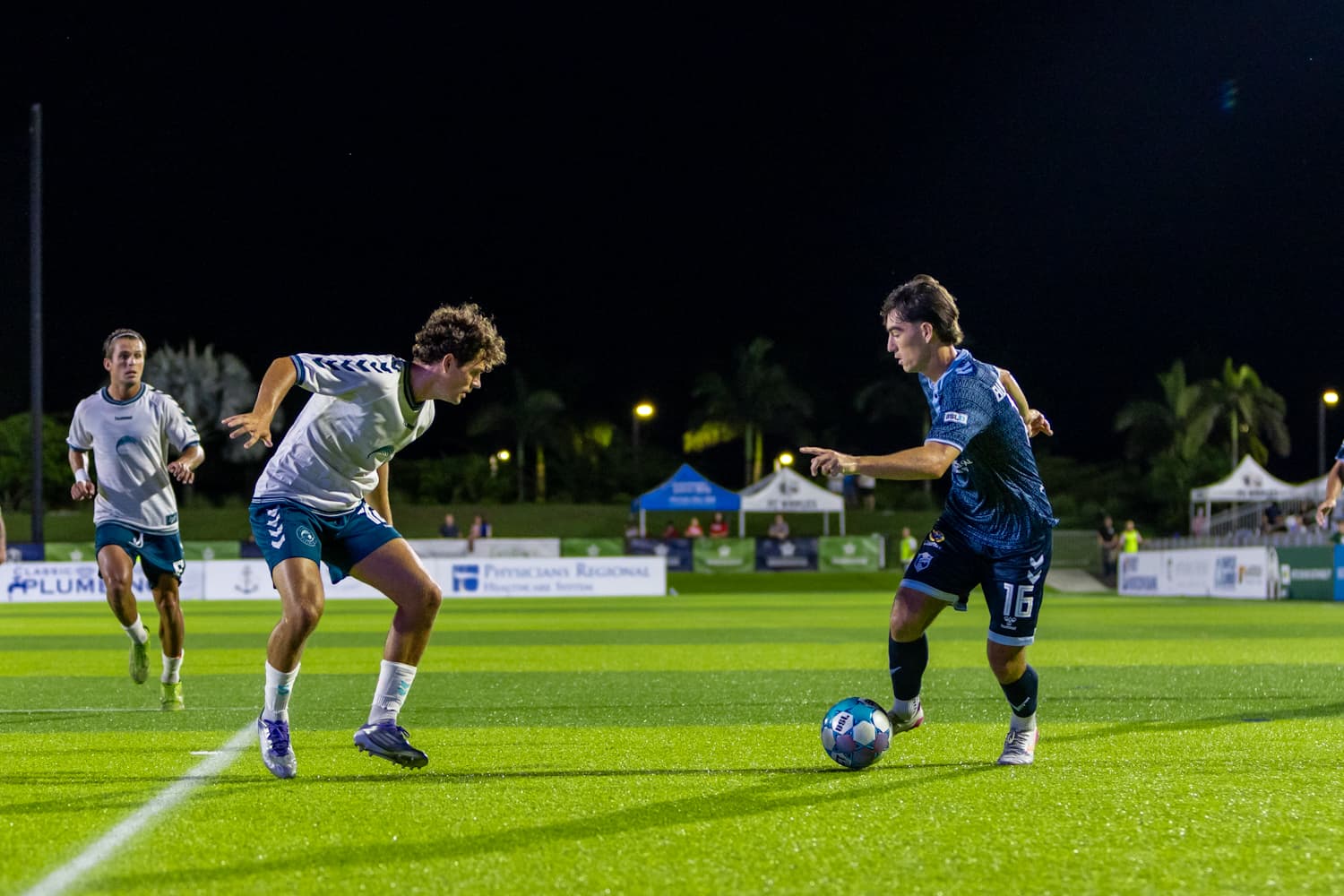
Sarasota Paradise Defeats Naples 2–0 in USL League One Cup Clash
Under the floodlights of Paradise Coast Sports Complex, Naples and Sarasota Paradise closed their USL League One Cup group campaigns in a match that felt like a tactical case study in contrasts. The scoreboard told a simple story – a 2–0 away win for Sarasota, built on a 1–0 half-time lead – but beneath that was a clash between a side still searching for balance and another finally discovering a hardened cup identity.
Heading into this game, the table framed the stakes. Naples sat 5th in Group 7 with 2 points and a goal difference of -3, having taken 1 win and 2 losses from 3 matches overall, scoring 5 and conceding 8. Sarasota Paradise were just ahead in 4th on 3 points, their own goal difference at -2 after 2 goals for and 4 against in total. Both had been inconsistent: Naples’ form line read “LWL”, Sarasota’s “LLW”. This was less a dead rubber and more an audition for what each club might become beyond the group stage.
For Naples, the seasonal DNA is clear: they are willing to trade blows, but they bleed heavily. On their travels and at home combined they averaged 1.0 goals for per game overall, but shipped 2.3 goals against overall, a fragile platform for any cup run. At home specifically, they had been more competitive: 2 goals for and 3 against across 2 matches, averaging 1.0 scored and 1.5 conceded at Paradise Coast. Yet they arrived without a single clean sheet overall and having failed to score in 1 of their 3 outings.
Sarasota Paradise, by contrast, were a low-scoring, low-conceding outfit. Overall, they averaged just 0.7 goals for per match and 1.3 against, but those numbers split interestingly by venue. On their travels they had been sturdier and more effective: 2 goals for and 2 against in 2 away matches, averaging 1.0 scored and 1.0 conceded away. That away resilience – underlined by their biggest away win, a 0–2 result – foreshadowed the control they would exert in Naples.
I. The Big Picture: Structures and Intent
With no formal formations listed, we read structure from personnel. Naples’ starting eleven – J. Grant, J. Yearwood, G. Miglietti, J. Yoder, J. Cisneros, J. Osorio, H. Gay, I. Cerro, M. Torrellas, C. Garcia and D. Bachstein – suggested a side built around fluidity between lines rather than rigid positional roles. There is a spine of ball-carriers and connectors: Osorio and Cerro as likely central pivots, Miglietti and Garcia providing vertical threat, and Grant and Bachstein offering presence between the lines and in the box.
Sarasota’s starters – R. Amedeka, R. Burlew, D. Watters, R. Valentine, H. Backstrand, A. Rodriguez, E. Bryant, J. Bender, M. Tainio, D. Brulinski and S. Karani – had a more obviously layered profile. Burlew, Watters and Valentine give them a core of defensive stability; Backstrand and Rodriguez hint at balance in the channels; Bryant, Bender and Tainio bring craft and progression; and Karani offers the explosive outlet to stretch any disorganized press.
II. Tactical Voids and Disciplinary Undercurrents
There were no officially listed absences, so both coaches, Matthew Poland for Naples and Mika Elovaara for Sarasota Paradise, had access to their full squads. The real voids were structural and psychological.
Naples’ disciplinary profile across the competition had been volatile. Overall, they had drawn 1 yellow card between minutes 31–45 (20.00% of their yellows), 2 between 46–60 (40.00%), 1 between 76–90 (20.00%) and 1 between 91–105 (20.00%). Crucially, they had also seen a red card between 46–60, with 100.00% of their reds arriving in that window. That pattern speaks of a side that can lose control just after half-time, precisely when tactical adjustments should be bedding in.
Sarasota Paradise’s bookings told a different story: 1 yellow in 16–30 (12.50%), 1 in 31–45 (12.50%), 2 in 46–60 (25.00%), 3 in 76–90 (37.50%) and 1 in 91–105 (12.50%). They are combative late on, with a pronounced surge of 37.50% of their yellows in the final quarter of normal time. That willingness to foul late is less indiscipline than a deliberate tool to manage transitions and protect leads.
III. Key Matchups: Hunter vs Shield, Engine Room vs Enforcer
Without official top-scorer data, the “Hunter vs Shield” duel becomes collective: Naples’ attacking unit versus Sarasota’s away defensive record. On their travels, Sarasota had conceded only 2 goals in 2 matches, averaging 1.0 against away, and had already posted a 0–2 away victory as their standout result. They arrived in Naples with a clear template: compress space centrally through Watters and Valentine, and trust Burlew and Backstrand to handle wide pressure.
Against that, Naples’ home attack had been modest – 2 goals in 2 home fixtures, averaging 1.0 – and critically, they had already failed to score once overall. In this match, that frailty resurfaced. Sarasota’s “shield” held, doubling down on their away identity and adding a second clean sheet overall, while Naples again left Paradise Coast without a goal.
In the “Engine Room” duel, the shapes of the midfields mattered more than any single star. For Naples, Osorio, Cerro and Torrellas likely formed the triangle responsible for tempo and vertical progression. Their task was to break Sarasota’s mid-block, where Bryant, Bender and Tainio operate as a rotating carousel of press triggers and passing angles. Bender’s presence in particular hints at a player comfortable receiving under pressure and linking into Karani and Brulinski.
The contest tilted Sarasota’s way. Their central trio not only controlled the rhythm but also protected transitions, allowing Karani and Amedeka to attack a Naples back line that has conceded 7 goals overall, with a worrying 4.0 goals against average away and 1.5 at home. Even at home, Naples’ defensive platform is too porous to sustain high-risk attacking structures.
IV. Statistical Prognosis and Tactical Verdict
Following this result, the numbers around both clubs’ identities sharpen. Naples, with 3 goals for and 7 against overall, remain a side whose 1.0 goals for per game overall is overwhelmed by a 2.3 goals against average. Their lack of any clean sheet overall and a record of having failed to score in 1 of 3 matches before this fixture foreshadowed the 0–2 outcome. The disciplinary pattern – yellows and a red clustering around the middle of games – suggests a team that struggles to manage emotional spikes when chasing deficits.
Sarasota Paradise, meanwhile, continue to be defined by defensive solidity away from home. With 2 goals for and 2 against on their travels and a 1.0 goals against average away, they had already demonstrated that they can win matches by narrow margins. Their overall clean-sheet count of 1 before this match, achieved away, pointed to a blueprint: keep games tight, lean on structure, and trust their late-game tactical fouling – 37.50% of yellows between 76–90 – to break opponents’ rhythm.
From an xG-style lens, even without explicit Expected Goals data, the profiles are clear. A Naples side averaging 1.0 goals for overall and conceding 2.3 is likely to generate chances but of lower quality, while gifting opponents high-value opportunities through structural looseness and lapses in game management. Sarasota’s 0.7 goals for overall and 1.3 against overall indicate a team comfortable in low-event football, compressing the danger zones and relying on a few carefully crafted attacks.
The tactical verdict is that Sarasota Paradise’s away blueprint is sustainable in knockout-style football: compact block, disciplined midfield, and a front line that punishes transitions. Naples, by contrast, must re-engineer their defensive mechanisms and emotional control if they are to turn their attacking promise into a platform for progression. At Paradise Coast, the group stage ended with a clear message: structure and restraint still trump chaos and courage.