Slovan Bratislava vs Celje: Tactical Analysis of a Balanced UEFA Clash
Slovan Bratislava’s 1-1 draw with Celje at Tehelne Pole Stadion in this UEFA Champions League Play-offs tie was tactically balanced in almost every measurable way, but the routes each side took to that equilibrium were markedly different. With both teams splitting possession at 50% and finishing level on the scoreboard, the game became a study in contrasting attacking structures: Slovan’s wider, shot-heavy 4-3-3 against Celje’s compact, vertical 4-2-3-1.
Yaya Toure set Slovan Bratislava up in a clear 4-3-3, with D. Takac in goal behind a back four of C. Blackman, K. Bajric, S. Markovic and S. Cruz. In front of them, P. Pokorny and A. Mustafic supported C. Martinez, who operated in the central band, linking into a front three of T. Barseghyan, R. Cerepkai and S. Camara. The structure produced territorial control and volume: 14 total shots, 9 from inside the box and 6 blocked, pointing to sustained pressure around Celje’s area and frequent shot attempts through crowded central channels.
Celje, under Vitor Campelos, answered with a 4-2-3-1 that was far more selective in its attacking output. Z. Leban started in goal, protected by a back line of P. Sirvys, D. Hrka, A. Tutyskinas and M. Avdyli. The double pivot of P. Daniel and M. Zabukovnik sat behind an attacking trio of M. Ivansek, S. Seslar and M. Kvesic, with A. Kucys at the tip. Their 8 total shots were exactly half of Slovan’s, but 4 of them were on target and evenly split between inside and outside the box (4 each), illustrating a more measured approach: fewer efforts, but higher on-target efficiency.
First Half
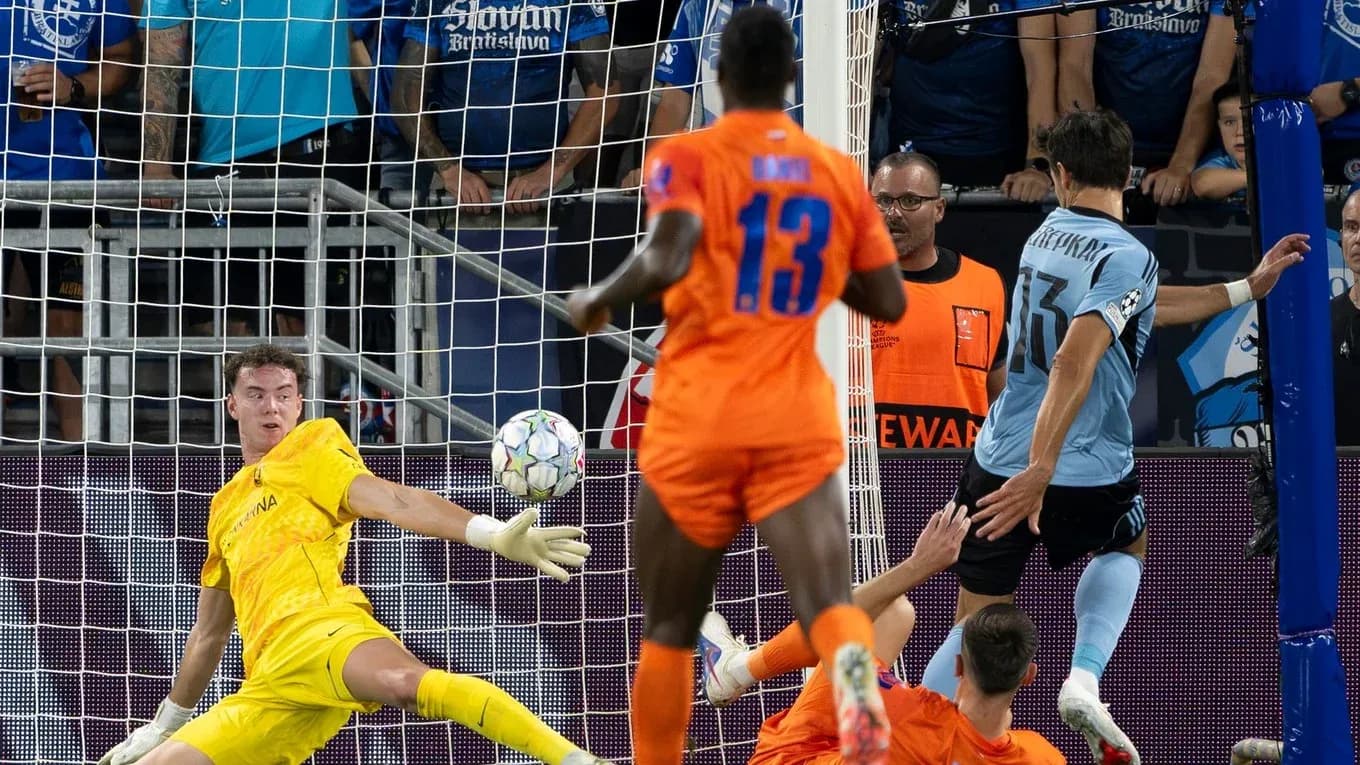
The first half illustrated Slovan’s plan clearly. With 465 total passes and 380 accurate (82%), they circulated the ball well enough to pin Celje back and create repeated shooting situations. The early goal from R. Cerepkai, assisted by C. Martinez, was the reward for that front-three orientation and the use of Martinez as a connector between midfield and attack. The high blocked-shot count (6) shows Celje often had numbers back in the box, forcing Slovan to shoot through traffic rather than into open space.
Equaliser
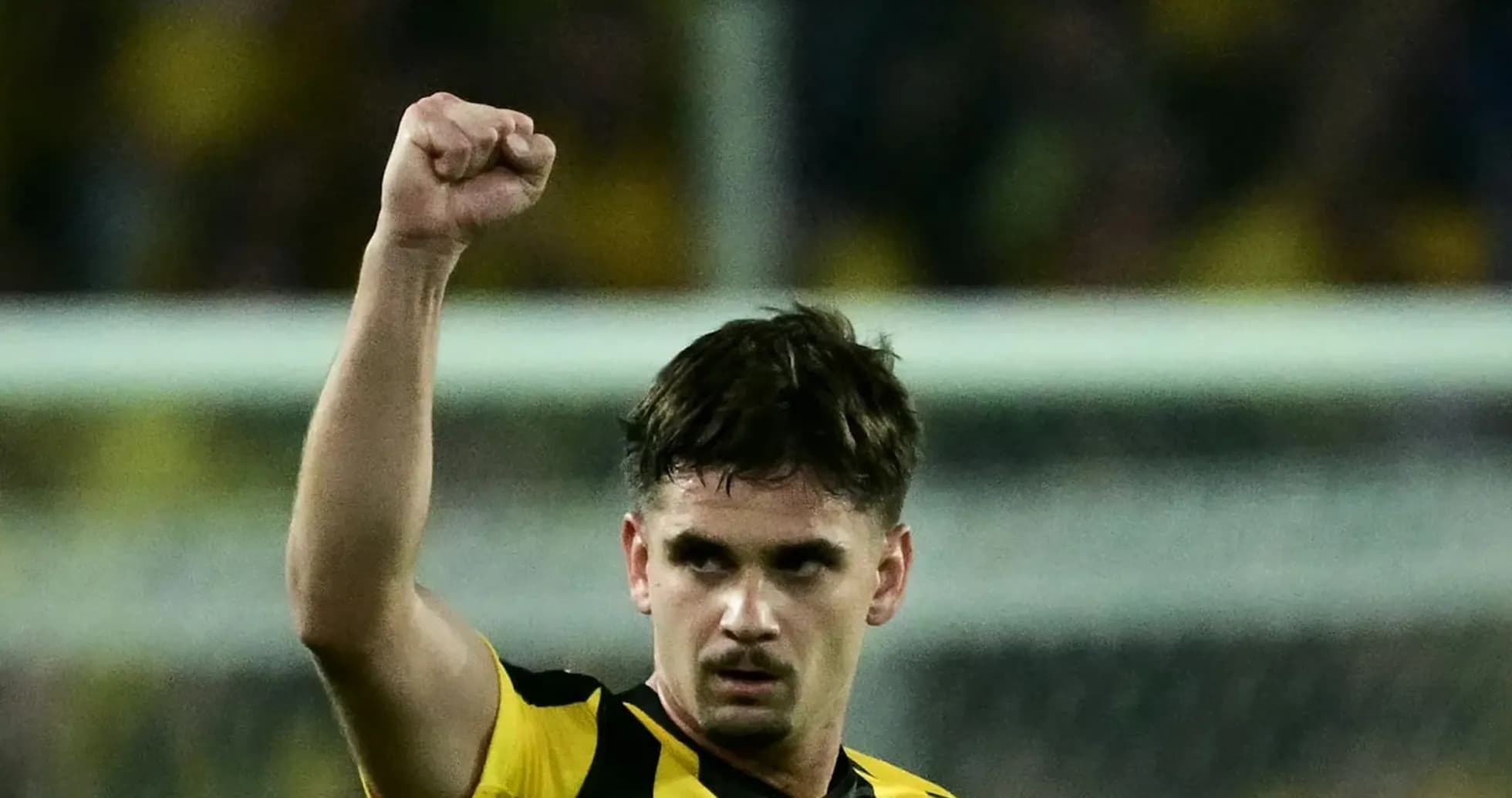
Celje’s response, culminating in M. Avdyli’s equaliser from an M. Kvesic assist, reflected the 4-2-3-1’s strength in transitional and wide overload moments. With no corner kicks won all match, Celje’s threat did not come from sustained territorial pressure or set-piece volume but from carefully constructed sequences that turned limited possession into high-quality looks. Their 487 total passes with 402 accurate (83%) actually edged Slovan in both volume and precision, suggesting that when Celje did have the ball, they used it with composure rather than rushing attacks.
Defensive Statistics
Out of possession, the foul count (13 for Celje, 12 for Slovan) and matching yellow-card totals (two each) pointed to a physically competitive but relatively controlled contest. Celje’s 5 offsides, versus Slovan’s 0, are tactically revealing: Celje repeatedly tried to spring their advanced midfielders and A. Kucys in behind Slovan’s back line, accepting the risk of the offside trap as the cost of a more vertical, line-breaking strategy. Slovan, by contrast, built more patiently and rarely gambled with runs beyond the last defender, preferring to progress through the lines and into shooting positions around the edge and inside the box.
Goalkeeping Performance
In goal, D. Takac (Slovan Bratislava) made 3 saves, while Z. Leban (Celje) was called into action only once. This inversion—Slovan having more total shots but Celje forcing more saves—highlights a key tactical nuance: many of Slovan’s 14 attempts were either off target (6) or blocked (6), whereas Celje’s 4 shots on goal from 8 total were more efficient at testing the goalkeeper. It underlines how Celje’s compact block and timing in attack produced clearer sights of goal despite conceding more territorial pressure.
Substitution Patterns
The substitution pattern further shaped the tactical picture. Campelos moved first, replacing M. Ivansek with B. Verbic and later introducing A. Kotnik and Y. Dukuly, which freshened the attacking midfield and wide channels in the 57th–86th minute window. This maintained Celje’s ability to break forward and helped sustain their off-the-ball intensity in the double pivot and wide areas. Toure’s changes—A. Yirajang for R. Cerepkai, D. Matsuoka for A. Mustafic, M. Kianga for S. Camara, then R. Ibrahim for C. Martinez and A. Sporar for T. Barseghyan—gradually reconfigured the Slovan front six. The pattern suggested a desire to inject energy and directness in the final third while preserving the 4-3-3 shape, but the underlying dynamics remained: Slovan kept volume, Celje kept clarity.
Match Statistics
Statistically, the match closes as a near-perfect equilibrium: 1-1 on the scoreboard, 50%-50% in ball possession, two yellow cards each, and similar pass success (82% vs 83%). Yet the internal balance was asymmetrical. Slovan Bratislava were the protagonists in terms of shot creation and box occupation, leaning on their 4-3-3 to generate 9 shots inside the area and 4 corner kicks. Celje, with no corners and half the shots, relied on structural compactness, vertical passing and efficient finishing patterns to extract maximum value from fewer attacks.
Tactical Verdict
In tactical verdict, Slovan’s approach prioritised territorial control and repeated shot generation, but lacked the final precision to turn dominance of volume into a decisive lead. Celje’s 4-2-3-1, by contrast, traded quantity for quality, using disciplined spacing and vertical runs—reflected in their offsides and on-target ratio—to stay level in a tie where, on the surface numbers, they might otherwise have been overrun.