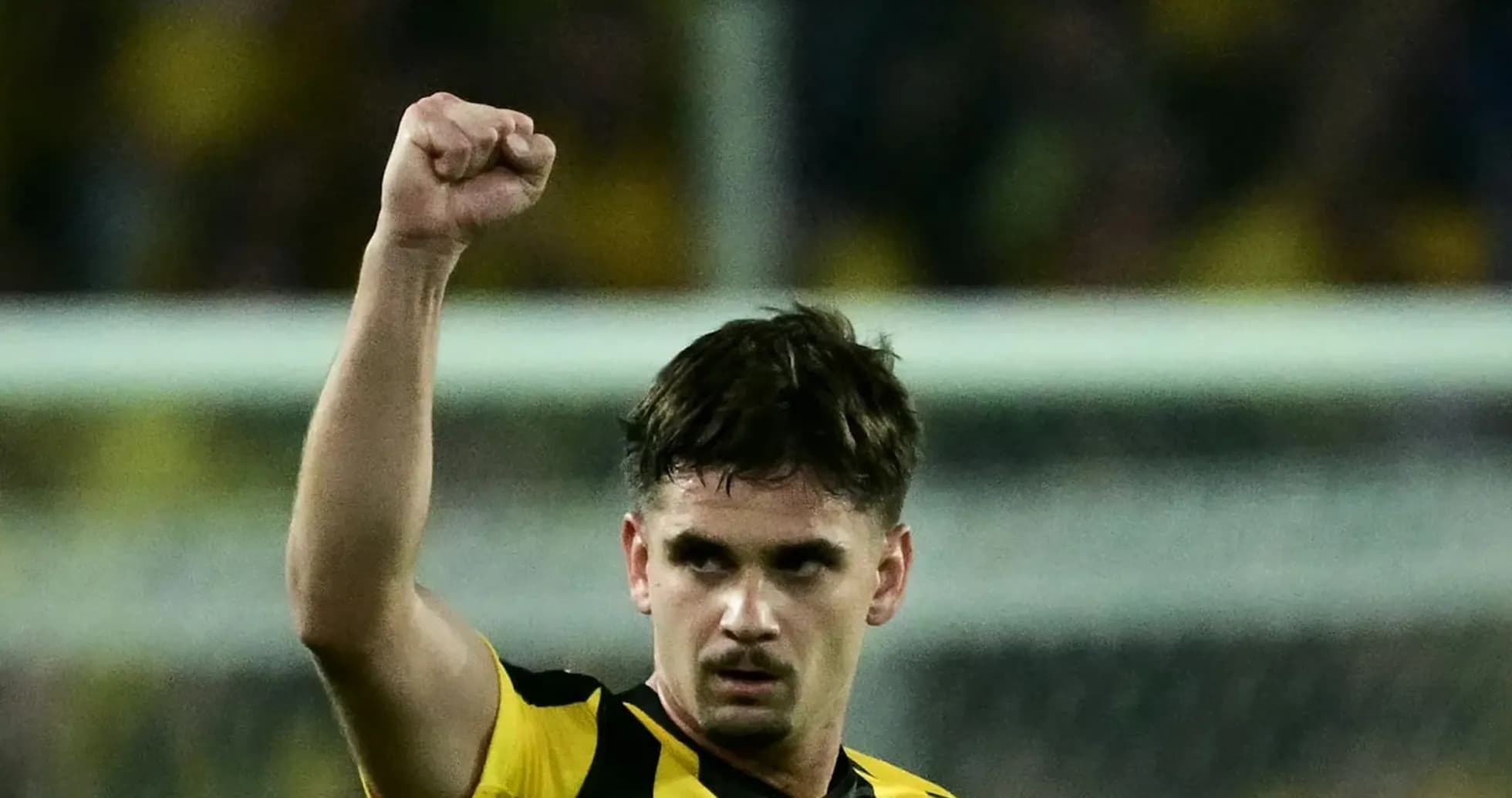
AEK Athens Triumphs Over Lask Linz in Champions League Clash
On a warm Champions League night at Allwyn Arena in Athens, AEK Athens FC and Lask Linz stepped into the new league-stage era with lineups that told you almost everything about their intentions. The scoreboard would freeze at 1–0 to the hosts, but the tactical story underneath was richer: an AEK side leaning into a well-drilled 4-4-2 identity, and a Lask team still trying to reconcile their aggressive 3-1-4-2 with the realities of elite European pressure.
I. The Big Picture – AEK’s controlled edge, Lask’s fragile ambition
Heading into this game, the standings framed it as a meeting between opposites. AEK Athens arrived with 3 points, a goal difference of +1 (1 goal scored, 0 conceded overall) and a perfect home record in the league stage: 1 home match played, 1 win, 1–0 on goals. Lask Linz, by contrast, were chasing their first point, sitting on 0 with a goal difference of -1 (0 goals scored, 1 conceded overall), their only outing so far a defeat on their travels by that same 1–0 margin.
The broader seasonal numbers deepen that contrast. Overall, AEK had played 3 Champions League matches, winning 2, drawing 1, and losing none. At home, they were flawless: 2 home matches, 2 wins, 5 goals scored and none conceded, an average of 2.5 goals for and 0.0 against at Allwyn Arena. Lask’s record was more volatile: 3 matches in total, 1 win and 2 defeats. At home they had been explosive (1 match, a 5–1 win), but on their travels they had lost both away games, scoring 0 and conceding 4, for an away average of 0.0 goals for and 2.0 against.
In that context, AEK’s narrow 1–0 win felt less like an upset and more like the natural extension of a pattern: this is a side that has not conceded a single goal in the competition so far, whether home or away, and that has turned Allwyn Arena into a clean-sheet fortress.
II. Tactical Voids – Discipline and the cost of risk
With no official absentees listed, both coaches were free to lean into their preferred structures. Marko Nikolic doubled down on AEK’s established 4-4-2, a shape they had used in all 3 Champions League outings. Dietmar Kuhbauer, meanwhile, pushed Lask into a 3-1-4-2 variant, a bolder twist on the 3-5-2 that had already featured twice this campaign.
Disciplinary trends hinted at where this match could tilt. AEK’s yellow cards this season have been spread evenly across the second half of each period: 25.00% of their cautions between 31–45 minutes, another 25.00% between 46–60, 25.00% from 61–75, and 25.00% in the 76–90 window. It paints a picture of a side that sustains intensity but rarely loses control in any single spell.
Lask’s card profile is more erratic. They tend to see yellows late: 20.00% between 31–45 minutes, 20.00% between 61–75, a spike to 40.00% from 76–90, and another 20.00% in added time (91–105). That late-game surge in cautions suggests a team that chases games aggressively and often ends up overstretched, a risk that becomes more pronounced when you are away from home and trailing.
III. Key Matchups – Hunter vs Shield, and the battle for the middle third
Hunter vs Shield: Barnabás Varga vs Lask’s back three
Even in a low-scoring contest, the presence of B. Varga loomed large over Lask’s defensive plan. Varga came into this league stage as AEK’s headline forward: 3 appearances, 2 goals in total, and an overall rating of 7.63. He had taken 4 shots, 2 on target, and won 20 of 37 duels, underlining a profile as a physically engaged, penalty-box forward who does not mind back-to-goal work.
Up against him stood a Lask back line anchored by X. Mbuyamba, J. Tornich, and A. Andrade. Collectively, Lask’s season tells you what they were up against: overall they have conceded 5 goals in 3 matches, with 4 of those on their travels. On their travels, they have been breached at an average of 2.0 goals against per game, and 60.00% of their goals conceded have come in the 16–30 minute window, with another 20.00% between 31–45 and 20.00% from 61–75.
That timing is critical. AEK are comfortable growing into games and have already recorded a 4–0 home win this campaign, their biggest home margin. With Varga’s knack for occupying central defenders and L. Jovic alongside him in the front two, AEK could target precisely the period where Lask tend to unravel – the second quarter of the first half and the early part of the second.
Engine Room: Marin and Majer vs Bogarde and Ljubicic
The heart of this match lay in midfield, where AEK’s flat four of A. Koita, R. Marin, M. Vitalis, and L. Majer squared off against a Lask line featuring M. Bogarde as the single pivot behind a band of four: G. Bello, S. Horvath, R. Ljubicic, and K. P. Molgaard Jorgensen.
AEK’s season-long defensive record – 0 goals conceded overall in 3 matches – is as much about structure as it is about back-four heroics. The double axis of Marin and Vitalis in the middle, supported by Majer’s work rate, has allowed AEK to protect the central lanes and funnel opponents wide, where full-backs L. Rota and S. Pilio can step out aggressively without exposing the centre-backs H. Moukoudi and F. Relvas.
For Lask, the creative burden fell heavily on Ljubicic and Horvath between the lines. Their overall attacking numbers are not poor – 5 goals in total across 3 matches, including a late-game edge where 20.00% of their goals arrive between 76–90 minutes and another 20.00% in extra-time periods – but the problem is that this attacking profile has not travelled. On their travels they have scored 0, and they have failed to score in 2 of their 3 matches overall, both away.
Bogarde’s role as the lone shield was especially delicate. Against a two-striker system like AEK’s 4-4-2, any mistiming in his stepping out to press Marin or Vitalis risks leaving the back three exposed to direct runs from Varga and Jovic. That risk is amplified by Lask’s tendency to concede early in halves, especially between 16–30 minutes, where 60.00% of their goals against have clustered.
Flanks and width: Koita and Bello as mirror threats
On the flanks, the duel between A. Koita and G. Bello offered a fascinating mirror: both nominally wide players in systems that depend on them to provide verticality. For AEK, Koita’s starting position on the left allowed him to isolate against Lask’s right-sided defender, often forcing Mbuyamba or Tornich to step wide and break the integrity of the back three. For Lask, Bello’s role in the line of four was to stretch AEK’s back four and test the spaces behind Pilio and Rota.
Yet AEK’s clean-sheet record suggests that their full-backs chose their moments carefully, rarely both advancing at once and always with one eye on the transition threat from M. Usor and C. Lang up front for Lask. With AEK having kept 3 clean sheets in total this campaign and failing to score only once overall, their balance between risk and control has been finely tuned.
IV. Statistical Prognosis – AEK’s structure vs Lask’s volatility
From a numbers perspective, this fixture always leaned towards AEK. Overall, they average 1.7 goals for per match and 0.0 against, with 2 home wins from 2, 5 goals scored and none conceded at Allwyn Arena. They have converted their only penalty of the campaign, with 1 penalty scored from 1 overall and no misses, underlining a clinical streak when chances arrive from the spot.
Lask, on the other hand, embody volatility. Overall they also average 1.7 goals for per match, but that is heavily skewed by a single 5–1 home win. On their travels, they have not yet scored and concede at 2.0 goals per away match. Defensively, 60.00% of their goals against arriving between 16–30 minutes signals a structural vulnerability in the early phase of each half, precisely when AEK’s front two and wide midfielders can apply concerted pressure. Their penalty record underlines the fine margins going against them: 1 penalty taken in total, 0 scored, 1 missed, a 100.00% miss rate that feeds into a narrative of squandered big moments.
Tactically, this was always likely to be a match where AEK’s compact 4-4-2, drilled through 3 consecutive Champions League outings in the same shape, would suffocate Lask’s fluid but fragile 3-1-4-2. With H. Moukoudi and F. Relvas anchoring a back line that has yet to be breached, and with the workmanlike protection of Marin, Vitalis, and Majer ahead of them, AEK had the platform to let Varga and Jovic decide the game in flashes rather than waves.
The 1–0 scoreline ultimately reflects not just a single night in Athens, but the deeper statistical and tactical currents of this campaign: AEK Athens as a quietly ruthless, structurally sound side at home; Lask Linz as a team of sharp peaks and deep troughs, still searching for a way to make their ambitious shape travel.