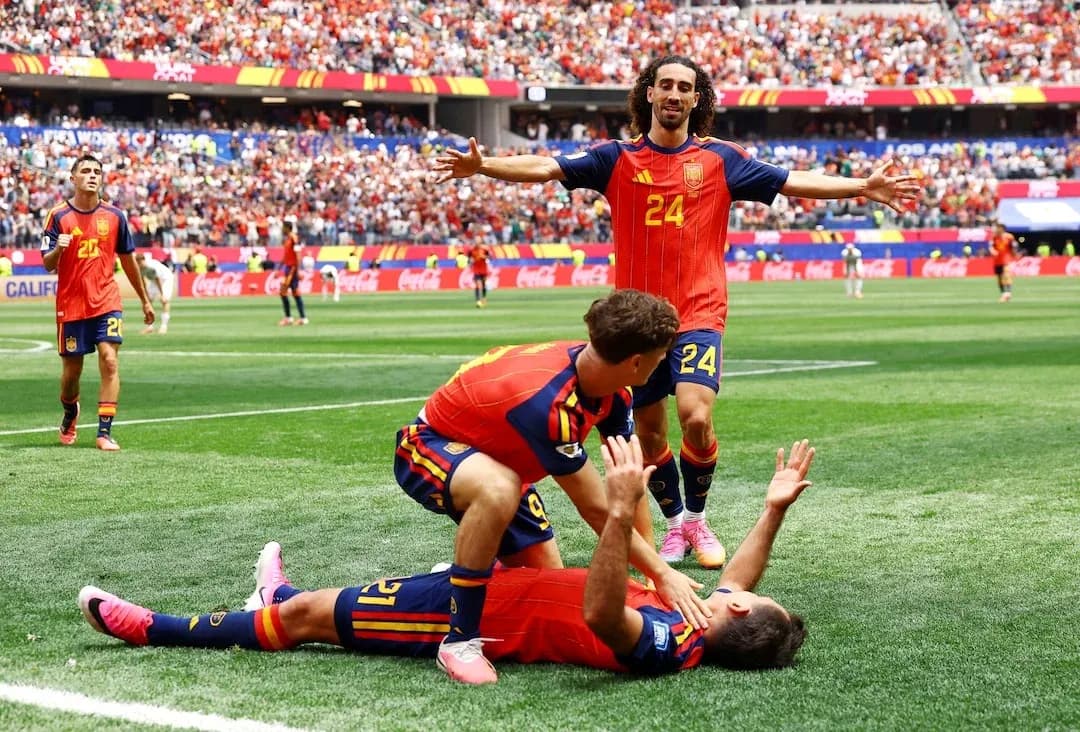
Spain Dominates Austria 3-0 in World Cup Round of 32
Spain’s 3-0 win over Austria at SoFi Stadium in this World Cup Round of 32 tie was a clinic in territorial control and structured domination. The scoreline mirrored the underlying data: Spain generated 23 shots to Austria’s 5, held 65% of the ball, and produced an xG of 2.84 against just 0.32. Austria never registered a shot on target and were pinned back for long stretches, relying almost exclusively on their defensive block and sporadic transitions.
Executive Summary
Spain imposed a high-possession, positionally disciplined game from the outset, using their technical superiority and passing rhythm to suffocate Austria. Luis de la Fuente’s side combined width from the full-backs with an interior overload led by Rodri and Pedri, while Lamine Yamal and Dani Olmo operated between the lines. Austria, under Ralf Rangnick, set up with a back line including Stefan Posch, Kevin Danso and David Alaba, plus Konrad Laimer as a defensive presence, but their pressing triggers rarely bit; Spain’s circulation simply outpaced them. The 1-0 half-time lead was a fair reflection, but the second-half surge, helped by fresh legs and Austria’s structural fatigue, turned it into a comprehensive 3-0.
Scoring Sequence & Disciplinary Log
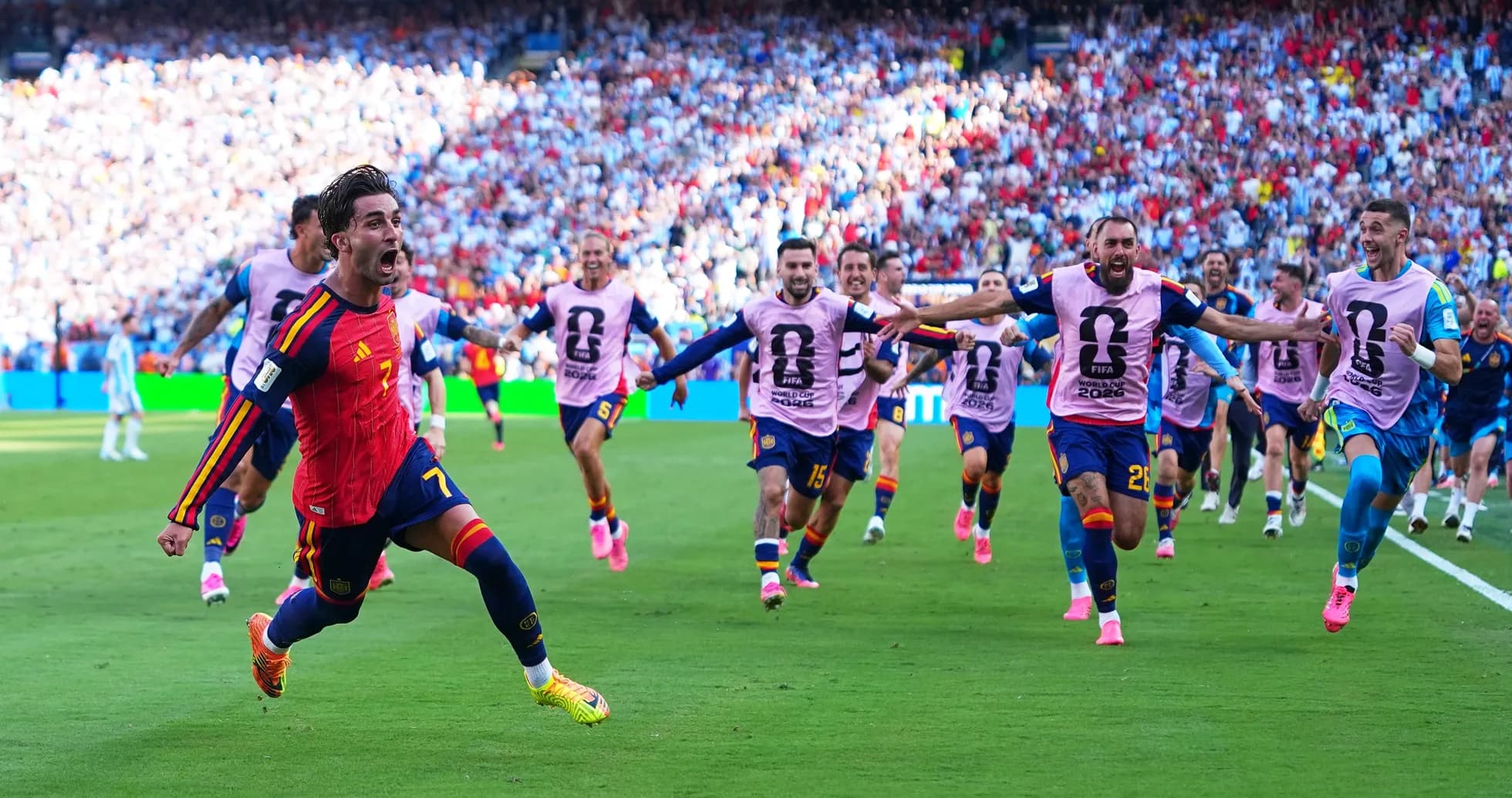
The opener came on 36': Mikel Oyarzabal (Spain) finished a Spain move, assisted by Marc Cucurella, a pattern emblematic of Spain’s wide overloads and cutbacks. Austria reached half-time at 1-0 down, having largely survived by compressing central zones but offering almost nothing going forward.
Austria’s double change at 46' — Carney Chukwuemeka (IN) came on for Nicolas Seiwald (OUT), and Florian Grillitsch (IN) came on for Xaver Schlager (OUT) — hinted at a desire for more ball security and vertical passing, but Spain’s structure absorbed the tweak. On 60', Austria added more attacking presence: Marko Arnautović (IN) came on for Michael Gregoritsch (OUT), and Saša Kalajdžić (IN) came on for Romano Schmid (OUT), moving towards a more direct, target-man approach.
Spain killed the contest on 66': Pedro Porro (Spain), advanced high from right-back, scored with an assist from Alex Baena, underlining how Spain’s full-backs were licensed to attack against a retreating Austrian block.
Luis de la Fuente then refreshed his midfield at 71': Mikel Merino (IN) came on for Dani Olmo (OUT), and Ferran Torres (IN) came on for Alex Baena (OUT), maintaining intensity and pressing from the front. Discipline finally broke for Austria on 83': Stefan Posch (Austria) — Foul — was booked after sustained defensive strain.
Further changes followed. At 85', Pablo Gavi (IN) came on for Lamine Yamal (OUT), while Austria rotated on the flank: Alexander Prass (IN) came on for Stefan Posch (OUT). Spain’s third arrived at 89': Mikel Oyarzabal (Spain) again, assisted once more by Marc Cucurella, capping a dominant display and the left-back’s influence in the final third.
Late, at 90', Marc Pubill (IN) came on for Aymeric Laporte (OUT), and Fabián Ruiz (IN) came on for Pedri (OUT), with Spain calmly closing out the 3-0.
Cards summary:
- Austria: 1 yellow (Stefan Posch — Foul)
- Spain: 0 cards
Total: 1 card
Tactical Breakdown & Personnel
Spain’s structure was classic positional play: Rodri anchored the midfield, dropping between Pau Cubarsí and Aymeric Laporte in early build-up to create a back three, allowing Pedro Porro and Marc Cucurella to push very high. With 629 total passes and 570 accurate (91%), Spain’s passing network was both dense and clean, constantly shifting Austria’s block side to side until a lane opened.
In possession, Spain often formed a 2-3-5 or 3-2-5 shape: the full-backs wide, Lamine Yamal and Dani Olmo between the lines, Pedri close to Rodri for short combinations, and Mikel Oyarzabal pinning the last line. The 15 shots inside the box highlight how effectively they penetrated the penalty area rather than settling for speculative efforts.
Austria’s plan was clearly reactive. With 35% possession and only 346 passes (284 accurate, 82%), they accepted long spells without the ball. The back four of Posch, Danso, Alaba and Laimer often collapsed into a narrow line of five as one midfielder dropped in, trying to deny central access. However, Spain’s 9 corner kicks and 7 blocked shots show how frequently Austria were forced into emergency defending inside their own box.
Pressing-wise, Austria’s higher line in early phases never truly disrupted Spain’s build-up. Once Spain broke the first line, Austria retreated quickly, but the distances between midfield and defence grew as the game wore on, especially after the 60' attacking substitutions. The attempt to add Arnautović and Kalajdžić for more aerial and direct options left fewer bodies in midfield, further ceding control.
Goalkeeper dynamics underline the territorial imbalance. Unai Simón (Spain) did not register a single save, a direct consequence of Austria failing to produce a shot on target. Conversely, Alexander Schlager (Austria) made 6 saves, and despite that workload, the goals prevented metric at -0.57 indicates Spain finished slightly above the expectation of the chances they created, but not wildly so — the finishing was clinical, not freakish.
Defensively, Spain’s 8 fouls versus Austria’s 15 illustrate how much more often Austria had to break up play. Spain’s rest defence, with Rodri screening and Laporte and Cubarsí controlling depth, limited Austria to just 5 total shots and 1 blocked shot, compressing space between lines and preventing meaningful counters.
The Statistical Verdict
The numbers align almost perfectly with the tactical story. Spain’s xG of 2.84 against Austria’s 0.32 reflects a game where one side consistently generated high-quality chances in central and half-space zones, while the other barely threatened. The 10 shots on goal for Spain versus 0 for Austria, combined with the corner count (9-0), paints a picture of near-constant Spanish pressure.
Spain’s passing superiority (629 vs 346 total passes) and higher accuracy (91% vs 82%) underscore their technical and structural control. Austria’s 15 fouls and lone yellow card for Stefan Posch — Foul — are symptomatic of a team stretched and often arriving late into duels.
With 3-0 at full time and a 1-0 half-time scoreline, Spain not only translated their dominance into goals but also managed the game’s tempo intelligently, using substitutions to maintain intensity. From a tactical and statistical standpoint, this was an authoritative Round of 32 performance that left Austria with virtually no route back into the match.