Spain's Tactical Mastery Over France in Semi-Final
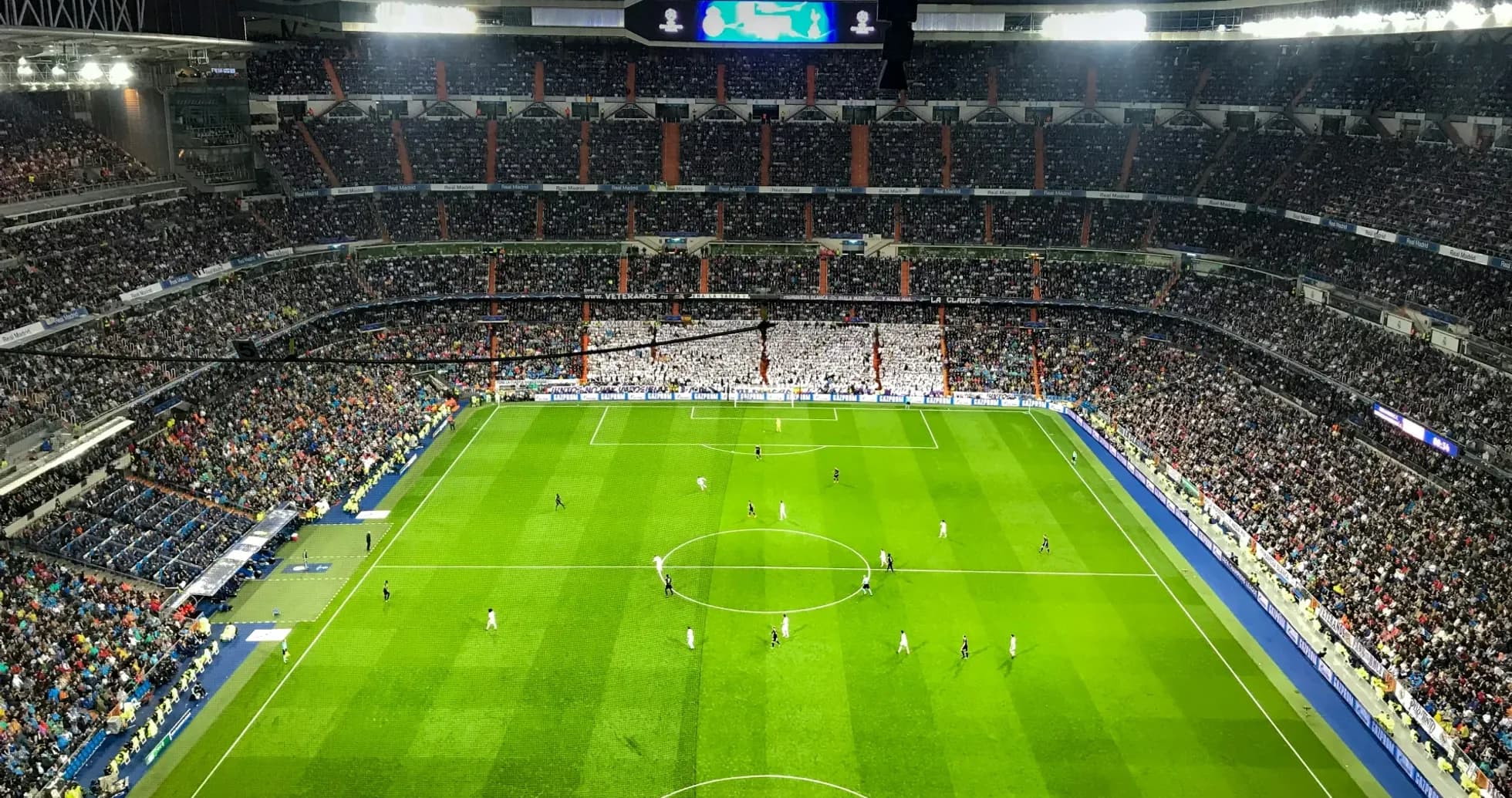
France and Spain mirrored each other structurally in a 4-2-3-1 at Dallas Stadium, but the semi-final was defined by how differently those shapes functioned with and without the ball. Spain’s 2-0 win grew out of cleaner progression through Rodri and Fabián Ruiz, more threatening occupation of the half-spaces, and a defensive block that forced France into low-quality attempts despite comparable overall volume.
Both sides finished with 10 total shots, yet the quality gap was stark: Spain generated 1.63 xG to France’s 0.3. That disparity encapsulates the tactical story. Luis de la Fuente’s side converted possession into penalty-box presence and clear shooting lanes, while Didier Deschamps’ France were repeatedly pushed into lower-probability efforts from range and wide areas.
Spain's Control
Spain’s double pivot of Rodri and Fabián Ruiz controlled the central corridor. With Spain edging possession 51% to 49%, Rodri’s positioning in front of Pau Cubarsí and Aymeric Laporte allowed Spain to build calmly against France’s first line of pressure. Lamine Yamal and Alex Baena held wide starting positions but constantly moved inside the lines, creating overloads around Dani Olmo in the No. 10 pocket. That structure was crucial in the move that led to the 22' penalty converted by Mikel Oyarzabal: Spain consistently found feet between France’s midfield and defence, forcing Jules Koundé and Lucas Digne to defend narrow and exposing the back line to late runs.
France's Reaction
France’s 4-2-3-1 was more reactive. Aurélien Tchouaméni and Adrien Rabiot were tasked with screening and pressing Spain’s pivots, but Rabiot’s early Yellow Card for “Foul” at 9' constrained his aggression. From that moment, France’s midfield line dropped a little deeper, and Spain enjoyed more uncontested circulation in the middle third. Ousmane Dembélé and Michael Olise (before his substitution) were often pinned back by Cucurella and Pedro Porro, reducing France’s ability to spring immediate counters through the wide lanes.
In possession, France’s plan centred on early progression into Kylian Mbappé’s channel and the right-sided combination of Koundé and Dembélé. However, Spain’s rest defence was well structured: Rodri sat close to Cubarsí and Laporte, and both full-backs were conservative in their starting positions, allowing Spain to manage Mbappé’s depth runs without overcommitting. France’s 4 shots inside the box compared to Spain’s 5 underline how rarely Deschamps’ side managed to access the prime central spaces.
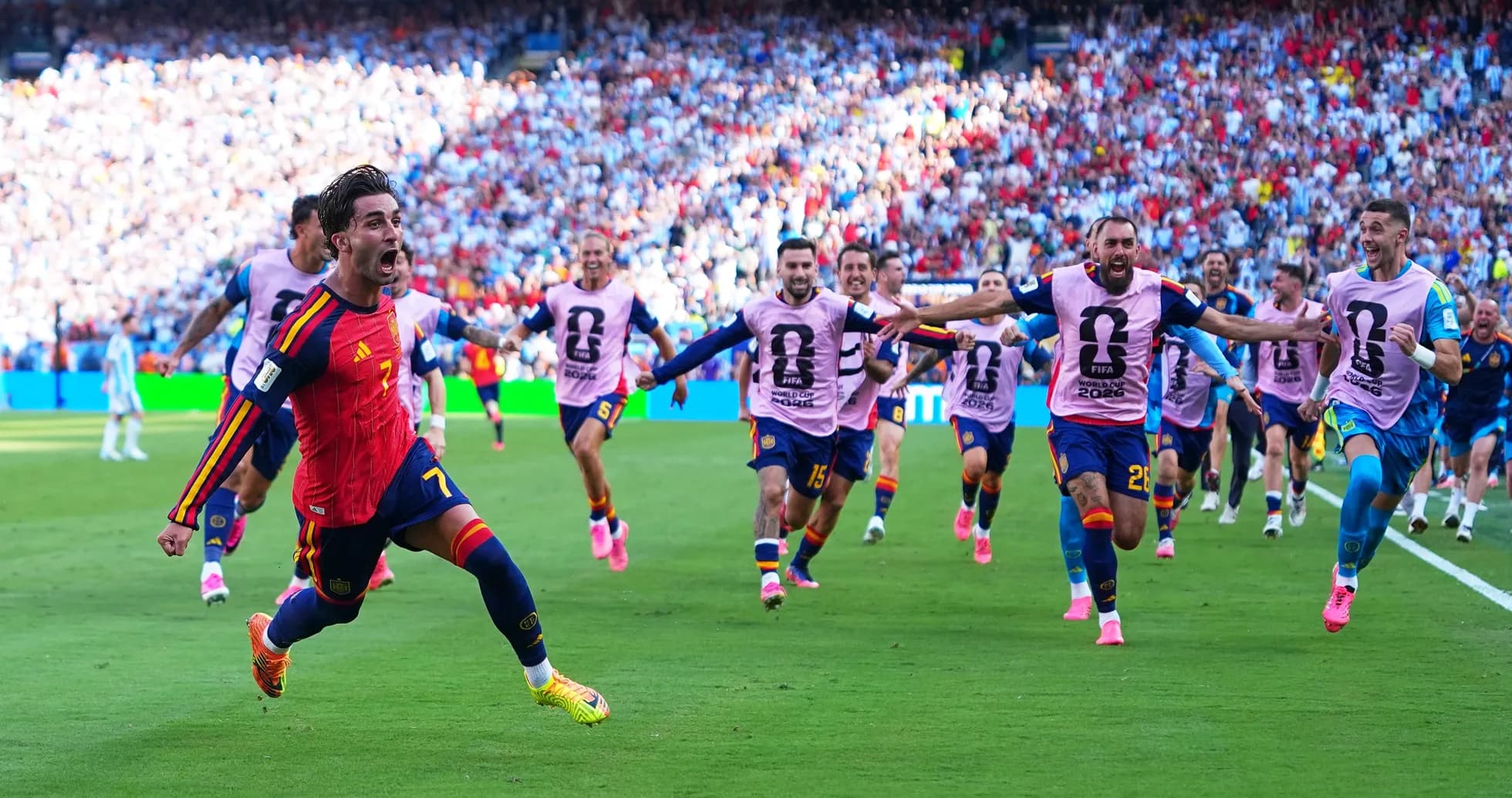
The shot profile supports this: France produced 10 shots, but with only 3 on target and an xG of 0.3, suggesting mostly speculative or well-contained efforts. Spain, with the same 10 attempts but 1.63 xG, crafted clearer chances. Pedro Porro’s 58' goal, assisted by Dani Olmo, was emblematic: Spain manipulated France’s right side, pulling Koundé and Dayot Upamecano out of line, then attacked the vacated space with a late run from the full-back. The timing of that goal, just after France’s attacking substitutions, punished Deschamps’ attempt to tilt the game.
Defensive Structures
Defensively, Spain’s back four plus Rodri formed a compact 4-5-1 block out of possession. They conceded 7 corners to France’s 1, but dealt with them through strong zonal organisation and Unai Simón’s command of the area. France’s 7 corners did not translate into high xG chances, reflecting Spain’s aerial control and second-ball structure around the box.
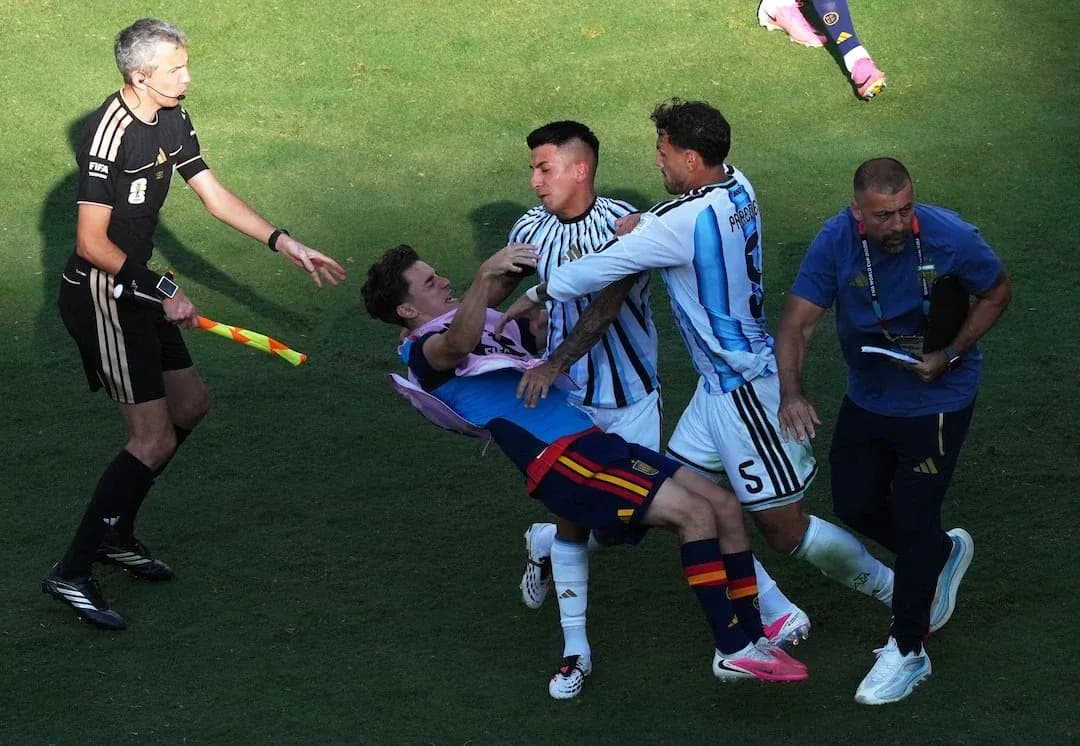
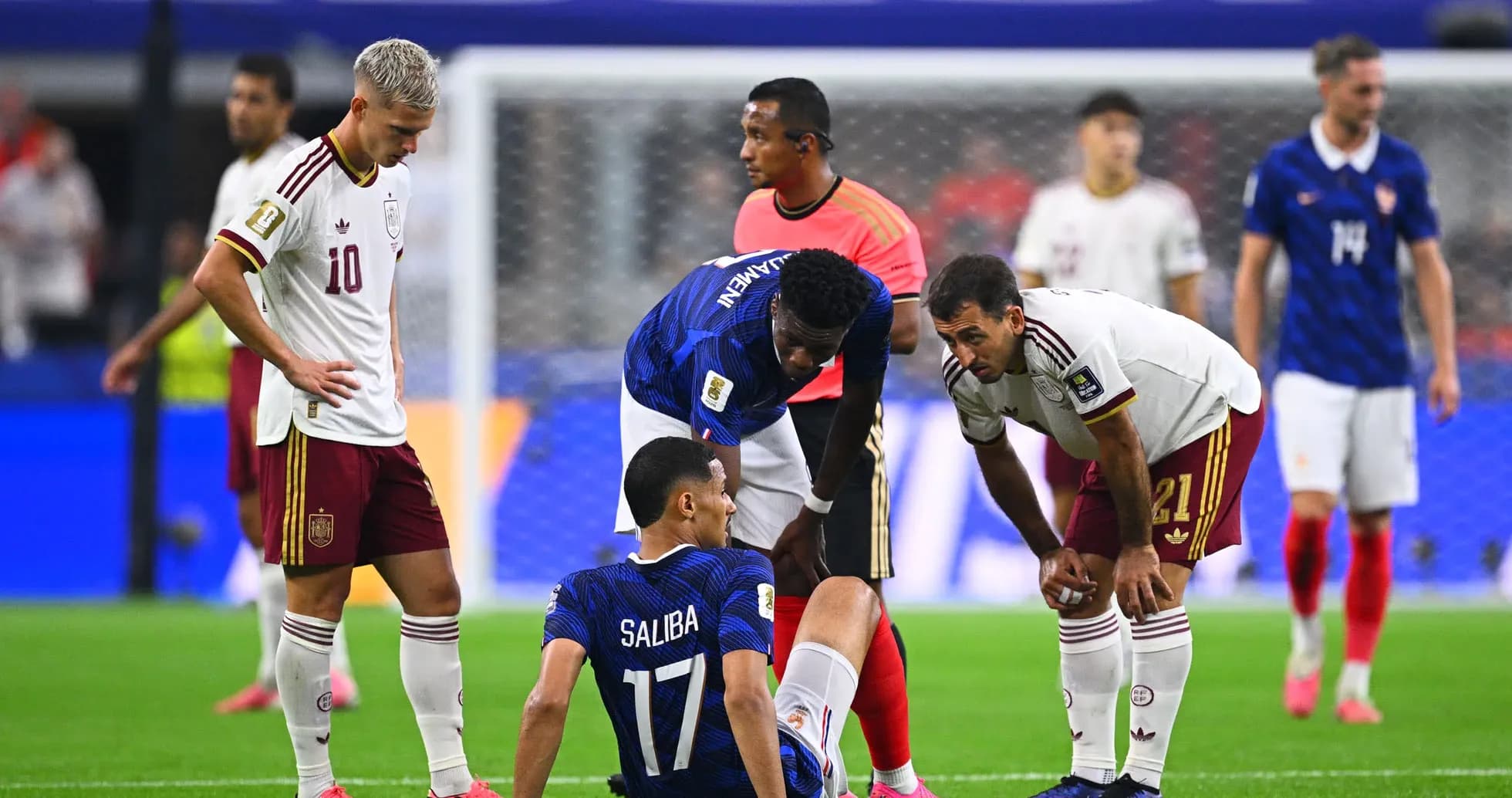
On the French side, the defensive unit never fully settled. William Saliba’s substitution for Maxence Lacroix at 30' reshaped the central pairing mid-half, which can disrupt timing on the line. France committed 11 Fouls to Spain’s 12, but the more telling detail was Kylian Mbappé’s late Yellow Card for “Violent conduct” at 86', a sign of mounting frustration rather than controlled, tactical fouling high up the pitch.
Circulation and Quality
With the ball, France attempted to compensate via circulation and volume. They completed 473 passes to Spain’s 500, but the quality of those passes diverged. France’s 396 accurate passes at 84% completion were solid, yet Spain’s 428 accurate passes at 86% pointed to slightly superior precision, especially in tight central zones. Spain’s ability to find Olmo and Yamal between the lines under pressure was a key differentiator; France’s progression often stalled into sideways recycling, with Tchouaméni and Rabiot lacking the same range of line-breaking options.
The blocked shots data further illustrates the defensive approaches: Spain registered 3 blocked shots to France’s 2. Spain’s higher figure here reflects an active, front-foot defending of the box, stepping out to engage shooters before they could pick corners. France, by contrast, were more often retreating and reacting, allowing Spain to get shots off from better body shapes and closer distances.
Set-Pieces and Goalkeeping
Set-pieces offered a potential equaliser for France, but their delivery and structure did not unsettle Spain’s line. Despite their 7 corners, the low xG total suggests that Spain successfully limited clean headers or second-phase strikes from central areas. At the other end, Spain’s limited corner count (1) was offset by their superior open-play construction.
In goal, the statistical split is telling. Mike Maignan (France) finished with 0 saves and 0.07 goals prevented, indicating that Spain’s 2 shots on target were both converted and not classified as particularly saveable within the model. Unai Simón (Spain), by contrast, made 3 saves and posted 0.07 goals prevented. Spain’s goalkeeper had fewer total shots to face in dangerous zones thanks to the block in front of him, but when called upon he preserved the clean sheet, underlining Spain’s blend of structural solidity and reliable last-line execution.
Overall, this semi-final was less about raw possession or shot counts and more about territorial control and chance quality. Spain’s slightly higher possession, cleaner central progression, and more incisive use of the full-backs turned a symmetrical formation battle into a clear tactical win, reflected precisely in the 2-0 scoreline and the underlying numbers.