Spain’s Tactical Superiority in World Cup Win Over Portugal
Portugal’s 0-1 defeat to Spain at AT&T Stadium in this World Cup Round of 16 tie was decided on fine tactical margins, with Spain’s superior control of space and tempo eventually reflected in both the xG (1.77 to 0.58) and the late scoreline. The match evolved from an initially balanced, cautious contest into a classic Spain positional play exercise against a gradually stretched Portuguese block.
Spain’s 55% possession was not overwhelming in volume, but it was dominant in structure. Luis de la Fuente’s side used Rodri as the central stabiliser, dropping between or alongside Pau Cubarsí and Aymeric Laporte to form a three-man first line in build-up. That allowed full-backs Pedro Porro and Marc Cucurella to push high and wide, pinning Pedro Neto and João Félix deeper than Portugal would have liked and forcing Roberto Martinez’s team into a 4-5-1 defensive shape around Cristiano Ronaldo.
Within that framework, Spain created clear shooting platforms: 15 total shots, 8 from inside the box and 6 on target. The volume and quality of those chances explain the 1.77 xG and underline how consistently they managed to find pockets between Portugal’s midfield and defence. Dani Olmo and Alex Baena operated as interior playmakers, rotating with Lamine Yamal and Mikel Oyarzabal to overload half-spaces and drag Rúben Dias and Renato Veiga into uncomfortable, lateral defensive movements.
Portugal’s plan was more transition-oriented. With only 45% possession and 10 shots (7 inside the box, 2 on target), they looked to spring quickly through Bruno Fernandes and Vitinha into the channels for Ronaldo and João Félix. However, Spain’s counter-press, led by Rodri and the aggressive stepping of Cubarsí, repeatedly smothered these outlets. Portugal’s passing numbers – 426 total passes with 357 accurate at 84% – show a technically competent display, but they struggled to progress through Spain’s compact 4-3-3/4-2-3-1 press, often forced into longer, lower-percentage balls.
The territorial and structural superiority is also visible in Spain’s passing: 531 total passes, 467 accurate at 88%. This accuracy, combined with 7 corners to Portugal’s 3, illustrates how Spain kept Portugal pinned back for long spells, especially in the second half. Spain’s shot map profile – a balanced mix of 8 efforts inside the box and 7 from outside – reflects both their patience in working the ball into dangerous central areas and their willingness to shoot from range when Portugal’s low block held firm.
Defensively, Portugal were resilient for long stretches. They recorded 3 blocked shots, matching Spain’s 3, showing that their back line and midfield tracked runners and closed shooting lanes reasonably well. The decisive difference came in goalkeeping impact. Diogo Costa (Portugal) made 5 saves and, crucially, posted 0.87 goals prevented, a figure that underlines how exposed Portugal were at times and how much they relied on him to keep the game level. Unai Simón (Spain), by contrast, faced only 2 shots on target and made 2 saves, with Spain’s collective structure doing most of the preventative work in front of him.
The late substitution pattern sharpened the tactical contrast. Martinez’s changes – Nélson Semedo (IN) for Nuno Mendes, Diogo Dalot (IN) for João Cancelo, Rafael Leão (IN) for João Félix, Bernardo Silva (IN) for Vitinha and Francisco Conceição (IN) for Pedro Neto – signalled a shift towards more direct wing threat and fresh legs for overlapping runs. The idea was to stretch Spain’s back line horizontally and attack the space behind Cucurella and Porro. However, because Spain continued to control central zones through Rodri and fresh midfield energy from Mikel Merino and Fabián Ruiz, Portugal rarely established sustained pressure; their late surge remained sporadic rather than structural.
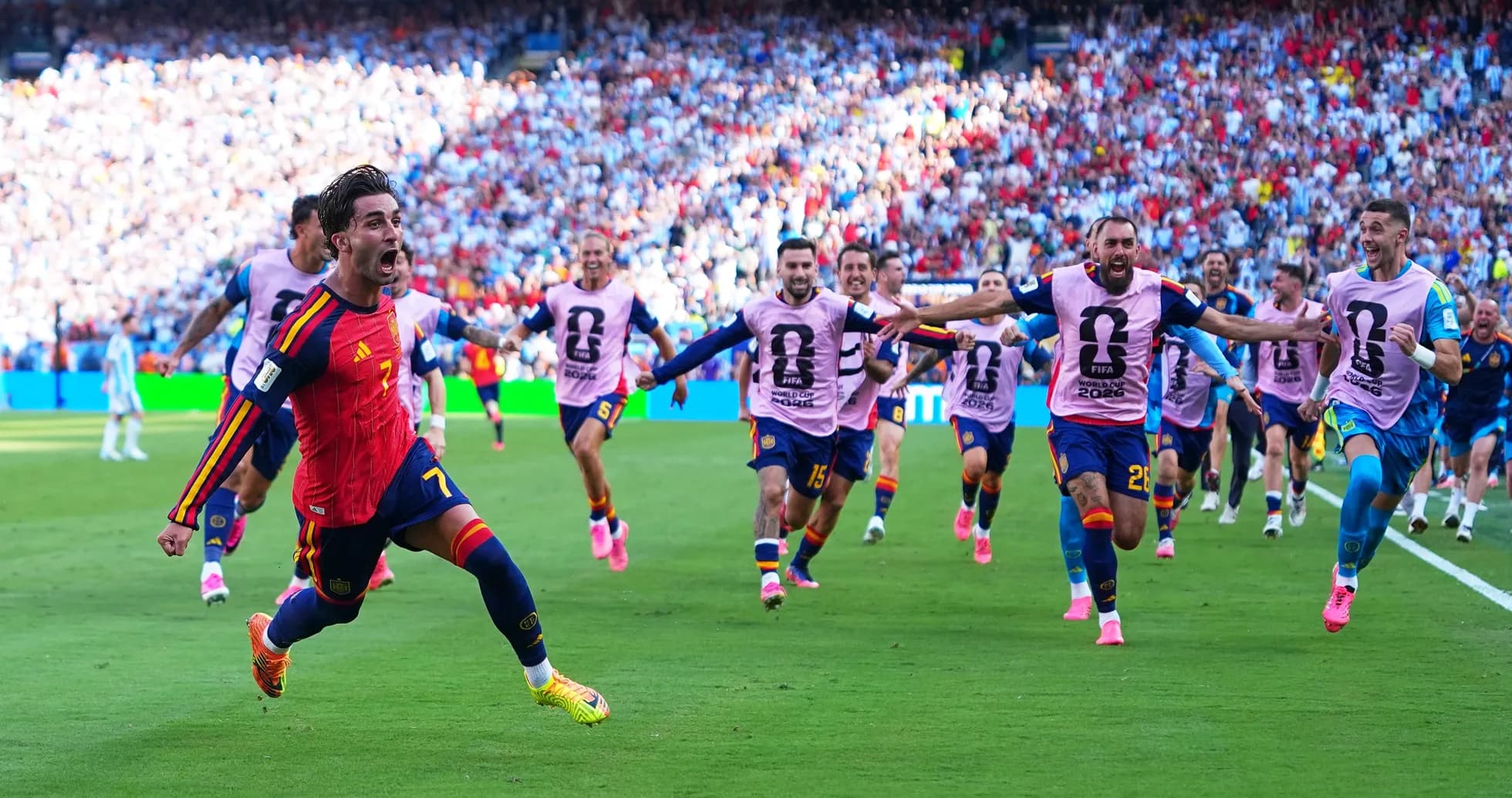
Spain’s own substitutions were tactically decisive. Ferran Torres (IN) for Alex Baena added a more vertical, penalty-box oriented presence from the right, while Merino and Fabián Ruiz injected height, physicality and fresh pressing intensity in midfield for Dani Olmo and Pedri. This altered Spain’s attacking profile: instead of purely intricate combinations, they gained a stronger late-arriving runner into the box (Merino) and a winger capable of both stretching the line and combining (Ferran). The winning goal at 90+1’ was the logical outcome of that recalibration, with Spain finally converting their territorial and xG superiority into a tangible lead.
Discipline-wise, the pattern of fouls – 13 by Spain, 9 by Portugal – reflects how Spain were more proactive in stopping transitions, often through tactical infringements high up the pitch. The three yellow cards (two for Portugal, one for Spain) came late, coinciding with the game’s emotional peak as Portugal chased an equaliser and Spain protected their advantage. Yet, despite the increased intensity, neither side descended into chaos; the defensive structures broadly held, and the match remained tactically coherent to the final whistle.
In statistical verdict, Spain’s edge in possession, passing accuracy, total shots and xG all align with the eye-test narrative of a side in control of territory and tempo. Portugal’s lower xG and shot volume, combined with Diogo Costa’s high goals prevented figure, indicate a game where they were largely reactive and reliant on moments rather than sustained patterns. Spain’s ability to translate structural dominance into a late, deserved winner encapsulated the tactical story: a controlled, patient dismantling of a disciplined but ultimately overstretched Portuguese block.