Brazil vs Norway: World Cup 1/8 Final Showdown
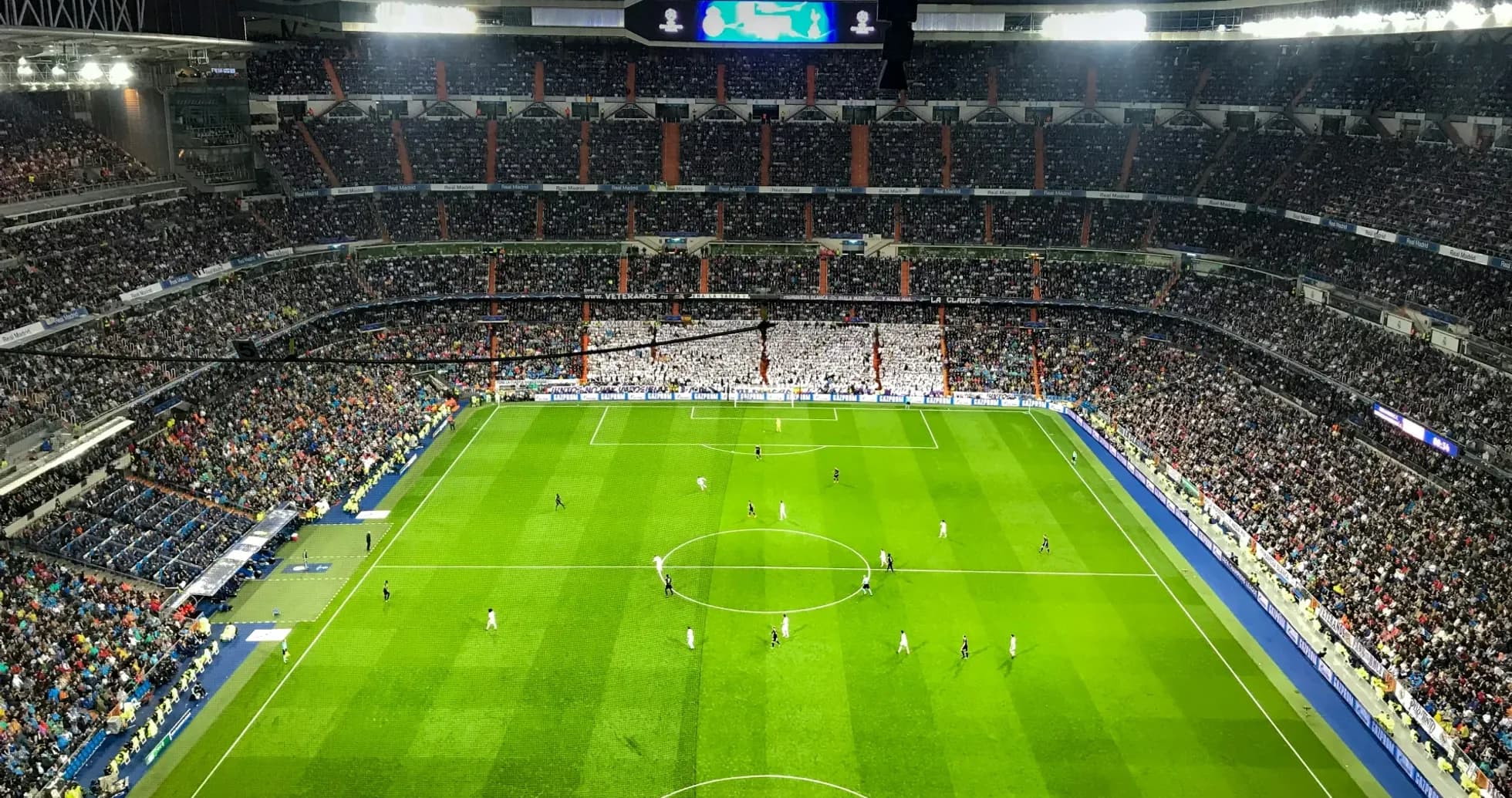
MetLife Stadium in East Rutherford stages a collision of footballing ideologies: Brazil’s expansive, possession-heavy game against Norway’s brutally direct, Haaland‑led punch. It is the 1/8 final of the World Cup, a phase where reputations are either confirmed or shattered. Brazil arrive as group winners from Group C, with 7 points and a goal difference of 6 after scoring 7 and conceding just 1 in their three group matches. Norway, second in Group I with 6 points and a goal difference of 1 (8 scored, 7 conceded), come in as the tournament’s great disruptors.
Heading into this game, Brazil’s season profile is that of a controlled heavyweight. Across the campaign they have played 5 matches in total, winning 3, drawing 1 and losing 1. At home they have played 4 times, with 2 wins, 1 draw and 1 defeat; on their travels they have 1 win from 1. Overall they have scored 10 goals and conceded 4, a total goal difference of 6 that mirrors their group-stage dominance. At home they average 1.8 goals for and 1.0 against; away they have averaged 3.0 scored and 0.0 conceded. There is a quiet ruthlessness here: they have failed to score in none of their fixtures and already kept 2 clean sheets in total.
Norway’s numbers tell a different story: volatility and chaos, but with a cutting edge. In total they have played 5 matches, with 4 wins and 1 defeat, no draws. At home they have 1 win and 1 loss from 2 games; away, a perfect 3 wins from 3. Across the tournament they have scored 12 and conceded 9, for an overall goal difference of 3. At home they average 2.0 goals for and 3.0 against; away they average 2.7 scored and 1.0 conceded. They have yet to keep a clean sheet in any venue, and yet they have also failed to score in none of their matches. This is a side that lives in high‑scoring territory.
Carlo Ancelotti’s Brazil line up in a 4‑4‑2 that is more fluid than it appears on paper. Alisson anchors the back, shielded by a back four of Danilo, Marquinhos, Gabriel and Douglas Santos. In front, a midfield line of Rayan, Bruno Guimarães, Casemiro and G. Martinelli offers both control and incision, while M. Cunha partners Vinicius Junior up front in what often morphs into a 4‑2‑3‑1 when Vinicius drifts wide and Martinelli pushes high.
The absences matter. Raphinha is officially ruled out with a hamstring muscle injury, as is Lucas Paquetá with the same issue. Both would normally add verticality and creativity between the lines. Their absence pushes even more creative responsibility onto Bruno Guimarães and increases the load on Vinicius Junior to break lines off the dribble.
Norway, under Stale Solbakken, are set in a 4‑3‑3 that is built around Erling Haaland’s gravity. O. Nyland starts in goal, with a back four of J. Ryerson, K. Ajer, T. Heggem and D. Wolfe. The midfield trio of M. Ødegaard, S. Berge and P. Berg balances control and physicality, while the front three of A. Sorloth, Haaland and A. Nusa threatens in every channel.
I. Tactical Voids and Discipline
Brazil’s season‑long disciplinary pattern is revealing. Their yellow cards are spread across the game, but there is a notable spike: 25.00% of their yellows have come between 31‑45 minutes, and another 25.00% between 61‑75 minutes, with a further 12.50% in the closing 76‑90 window and 12.50% in added time between 91‑105. Casemiro embodies that edge: across the tournament he has 2 yellow cards, 14 tackles, 4 successful blocks and 6 interceptions. Danilo is similarly combative, with 2 yellow cards, 7 tackles and 7 interceptions. This Brazil side will step into duels, and against Norway’s direct front line that aggression will be tested.
Norway’s card profile is lean but front‑loaded. Overall, 50.00% of their yellows have arrived in the opening 15 minutes and 50.00% between 46‑60 minutes. They rarely see cards in the final half hour, which suggests a team that starts games at full emotional tilt, then regains control. In a knockout tie, that early edge could either unsettle Brazil or gift them dangerous set‑pieces around the box.
Both sides carry penalty scars. Brazil have won 2 penalties in total, but have scored only 1, missing 1 for a 50.00% conversion rate. Bruno Guimarães has already missed from the spot this tournament, a psychological note if the game tightens. Norway are even more fragile from 12 yards: they have been awarded 1 penalty in total and missed it, leaving them with a 0% conversion rate and 100.00% of their penalties squandered.
II. Hunter vs Shield
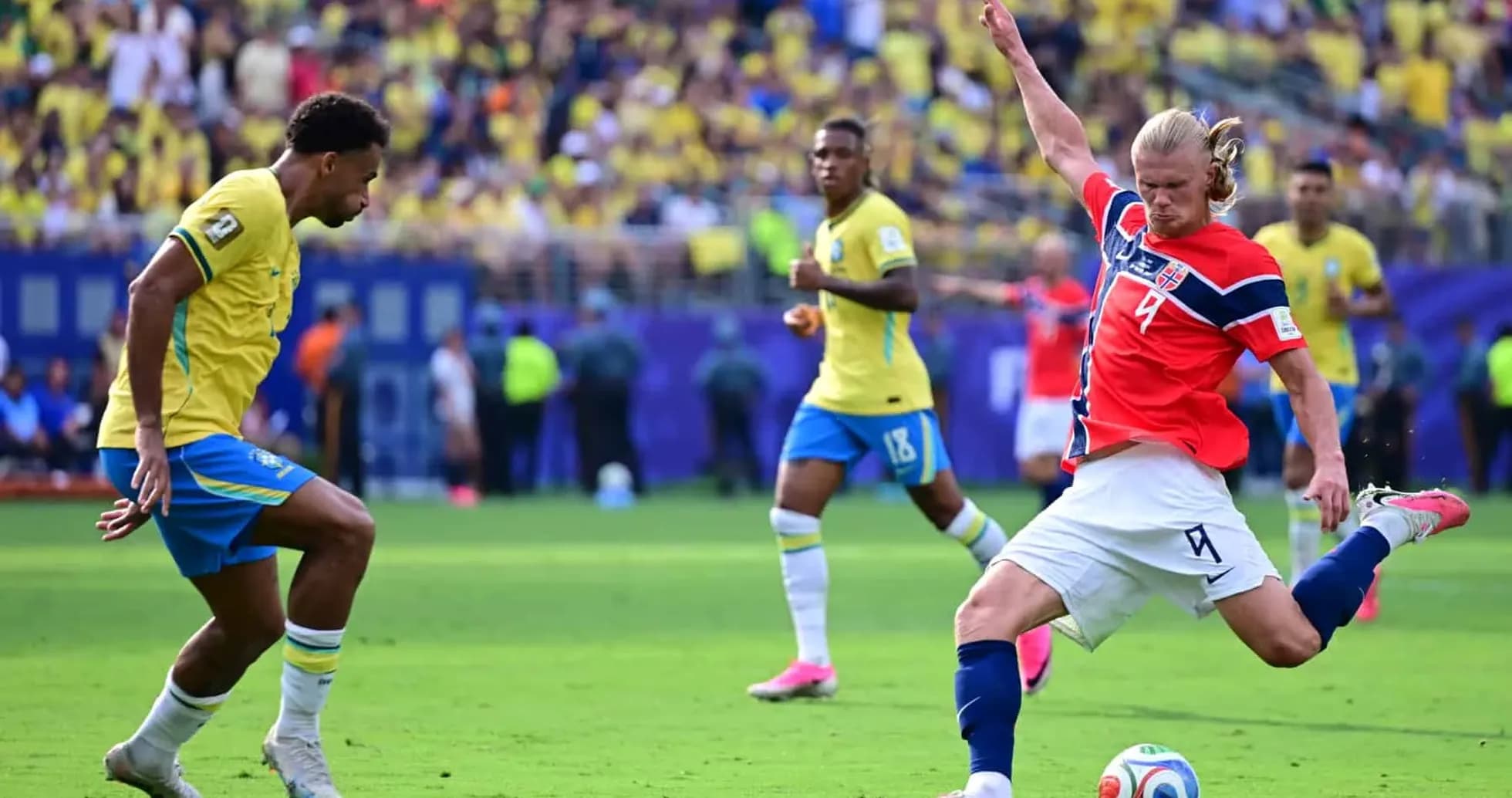
The headline duel is stark: Erling Haaland, the competition’s most devastating finisher, against Brazil’s defensive shield. Haaland has 7 goals in total from 4 appearances, all as a starter, with an average rating of 8.3. He has taken 15 shots, 12 on target, and won 18 of 37 duels. He is not just finishing chances; he is generating them through movement and physical dominance.
Brazil’s overall defensive record is formidable: only 4 goals conceded in 5 matches, and none on their travels. Marquinhos and Gabriel form a central pairing that has so far limited clear chances, aided by Casemiro’s reading of danger. Casemiro’s 14 tackles and 6 interceptions underline his role as the first line of resistance in front of the back four. If Brazil can keep Haaland’s supply lines narrow, they have the structure to absorb his presence.
Yet Norway’s attack is not one‑dimensional. M. Ødegaard arrives with 3 assists in total, 263 completed passes at 90% accuracy and 4 key passes. He is the architect who drifts between the lines, combining with S. Berge and P. Berg to pull markers out of shape. Off the bench, A. Schjelderup offers a different creative threat with 3 assists in 183 minutes and 5 key passes. Even if Brazil manage to contain Haaland’s finishing, the variety of Norwegian creators can still bend the game.
On the other side, Brazil’s own “hunter” is Vinicius Junior. With 4 goals and 1 assist in total, 14 shots (11 on target) and 36 attempted dribbles with 16 successful, he is the chaos agent who can unpick Norway’s back four in isolation. His duel volume is huge – 61 duels contested, 29 won – and he will likely run at Ryerson and Ajer repeatedly, testing their timing and discipline. Behind him, Bruno Guimarães is the quiet conductor: 4 assists in total, 191 passes at 86% accuracy, 10 key passes and 11 tackles. He is both playmaker and enforcer, the one who must dictate tempo and also help Casemiro in transitions.
Norway’s “shield” is more collective than individual. K. Ajer’s physical presence, S. Berge’s screening and the work rate of Sorloth and Nusa in wide defensive zones are crucial. But the numbers are unforgiving: 9 goals conceded in 5 matches, with no clean sheets and an overall average of 1.8 goals against per game. Even on their travels, where they have been better, they still concede 1.0 goal on average. Against a Brazil that has failed to score in none of their fixtures, that fragility looms large.
III. Engine Room: Bruno vs Ødegaard
The midfield battle is a duel of stylists. Bruno Guimarães operates as Brazil’s metronome and advanced connector. His 10 key passes and 4 assists show his capacity to thread balls into the front line, while his 11 tackles and a successful block underline his willingness to dirty his boots. Casemiro beside him adds bite and aerial presence, while Rayan and G. Martinelli provide width and vertical runs that stretch Norway’s midfield three.
M. Ødegaard, for Norway, is the technical leader. With 3 assists, 4 key passes and 263 completed passes at 90% accuracy, he orchestrates from the half‑spaces, constantly scanning for Haaland’s runs and Nusa’s bursts off the left. S. Berge offers height and ball‑winning, while P. Berg knits short combinations and supports the first phase. The question is whether this trio can handle Brazil’s press and the physicality of Casemiro and Bruno over 90 minutes.
IV. Statistical Prognosis
From a pure numbers standpoint, this is a meeting of an elite defence with a prolific attack. Brazil’s overall average of 2.0 goals scored and 0.8 conceded per match, combined with 2 clean sheets, suggests a side that controls game states and limits volatility. Norway’s 2.4 goals scored and 1.8 conceded per match overall point to high‑event football in both boxes.
The critical intersection lies in Norway’s defensive vulnerability against Brazil’s multi‑layered attack. Norway concede heavily at home and more modestly away, but across all venues they have yet to demonstrate the ability to close games out defensively. Against Vinicius Junior’s dribbling volume and Bruno Guimarães’ service, that weakness is likely to be exposed, especially as Norway’s yellow cards often arrive early in each half, potentially softening their defensive line with caution.
Conversely, Haaland’s form and Ødegaard’s supply mean that even Brazil’s robust back line is unlikely to stroll through this tie. Norway have failed to score in none of their fixtures and have already produced an away win by a 4‑1 margin, showing they can hurt teams even when they concede.
Balancing the data, the tactical structure and the individual form lines, the statistical prognosis leans toward Brazil having the deeper, more balanced squad and the sturdier defensive platform. Norway, however, possess the single most decisive individual in Haaland and enough creative support to turn any lapse into a goal. Expect Brazil to control territory and chances, Norway to remain dangerous in transition, and the margin between order and chaos to be razor‑thin in East Rutherford.