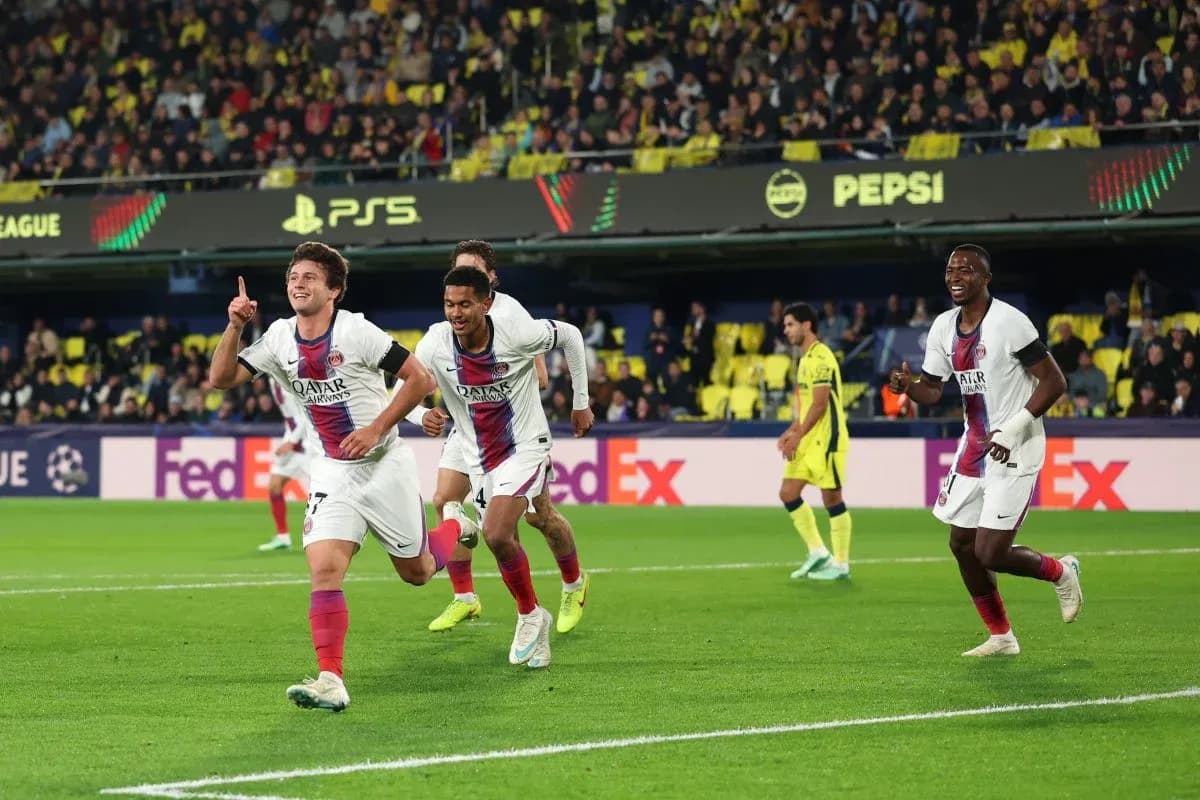
Villarreal vs PSG: Champions League Clash Preview
Under the floodlights of Estadio de la Cerámica, this UEFA Champions League League Stage clash arrives with the feel of two clubs living in different universes. Villarreal come into Round 4 wounded and searching, 28th in the overall standings with 3 points from 4 matches and a goal difference of -6, their European campaign oscillating between brave intent and brutal punishment. Paris Saint Germain, by contrast, travel as the competition’s early juggernaut: 1st overall, 12 points from 4, 20 goals scored and only 5 conceded, a goal difference of +15 that underlines their dominance.
The numbers sketch the contrast starkly. Villarreal have scored 8 goals in total this campaign but conceded 14, leaking an average of 3.5 goals per game both at home and on their travels. At home they have been split in two: one win and one heavy defeat, 3 goals scored and 7 conceded, the 0-6 loss already etched into their “biggest defeats” column. Paris Saint Germain, meanwhile, carry a perfect record: 4 wins from 4, 20 goals for and 5 against, averaging 5.0 goals per match both at home and away. On their travels they have been ruthless, winning both away fixtures with a combined 10-2 scoreline, including a 0-6 away victory that mirrors Villarreal’s heaviest home loss.
Tactical Setup for Villarreal
Iñigo Pérez responds to this imbalance with a pragmatic 4-4-2, a shape designed as much to survive as to strike. P. Gulácsi stands as the last line, shielded by a back four of Carlos Romero and A. Freeman in the full-back roles, with S. Mouriño and Renato Veiga as the central pairing. In front of them, Santi Comesaña and C. Macia are tasked with knitting together transitions and protecting the half-spaces, while P. Gueye and T. Buchanan patrol the flanks, asked to shuttle relentlessly between supporting full-backs and feeding the front two. Up top, N. Pépé and Ayoze Pérez form a strike partnership that must be both out-ball and finishing edge.
The tactical voids for Villarreal are significant. The absence of G. Moreno removes their most natural penalty-box reference and a leader in high-stakes European nights. J. Foyth’s muscle injury deprives Pérez of a seasoned, combative defender who thrives in duels against elite wide forwards, while I. Akhomach’s absence strips some verticality and unpredictability from the right side. These are not merely missing names; they are missing escape routes and stabilisers in a match where Villarreal will be under sustained pressure.
PSG's Tactical Advantage
On the other side, Luis Enrique’s 4-3-3 has become the tournament’s most coherent attacking machine. M. Safonov anchors a back line of A. Hakimi and L. Hernández as the full-backs, with I. Zabarnyi and W. Pacho forming a physically imposing central duo. The midfield three is where control is asserted: João Neves as the metronome, Vitinha as the connector and carrier, and Fabián Ruiz as the high-end all-rounder. Ahead of them, M. Akliouche, Senny Mayulu and D. Doué stretch the pitch, rotate positions and attack the box with relentless movement.
Even with their own absentees, PSG’s depth is frightening. O. Dembélé, K. Kvaratskhelia, Marquinhos and N. Mendes all miss out, stripping away star quality on the wings and leadership in defence, but the structure holds. The spine is intact, and the replacements are not downgrades so much as different flavours of threat. Crucially, this is a side that has already stared down adversity: in total this campaign they have been awarded 1 penalty and missed it, a reminder that their scoring avalanche has not been inflated by spot-kicks but built through open-play superiority.
Key Individual Battles
The “Hunter vs Shield” duel is embodied by Fabián Ruiz against Villarreal’s porous defensive record. Fabián arrives as one of the Champions League’s standout midfielders: in total this campaign he has 4 goals and 1 assist, with 13 shots (7 on target), 322 completed passes at 90% accuracy and 6 key passes, all from a deeper role. He is not a classic number 10, but his late arrivals and clean striking make him a constant second-wave threat. Against a Villarreal side conceding 3.5 goals per match overall and already scarred by a 0-6 home defeat, his ability to step into unguarded zones around the box could be decisive.
Around him, D. Doué sharpens the blade. In total this season he has 3 goals and 2 assists, with 10 shots (7 on target) and 9 key passes, all while winning 14 of 23 duels and blocking 3 shots. He is both hunter and first presser, capable of forcing errors from Mouriño and Veiga, then punishing them himself. M. Akliouche, with 1 goal and 3 assists and 12 key passes, is the creative hinge on the flank, constantly drifting inside to overload Villarreal’s double pivot of Comesaña and Macia.
Engine Room Battle
For Villarreal, the “Engine Room” battle is about containment and clarity. Comesaña’s job is to disrupt Fabián’s rhythm, to deny him the time to lift his head and pick vertical passes. Macia must stay close enough to prevent PSG’s midfield three from carving triangles around them. P. Gueye’s physicality on the inside-left lane will be vital in slowing Hakimi’s overlaps and Doué’s inward runs, while Buchanan must track L. Hernández and Akliouche on the opposite side. If the wide midfielders are dragged too deep, Villarreal’s 4-4-2 risks becoming a flat 6-2-2, isolating Pépé and Ayoze Pérez and leaving them to feed on hopeful clearances.
Discipline will be non-negotiable. Villarreal’s yellow-card distribution this season shows a clear spike before the break: 45.45% of their cautions arrive between 31-45 minutes, with another 18.18% in each of the 61-75 and 76-90 ranges. That pattern suggests a side that tightens up under pressure, especially as halves draw to a close. Against a PSG team that often accelerates in those very windows, late-half lapses could be fatal. Paris Saint Germain, by contrast, have collected their only yellow card between 61-75 minutes, a late-game phase where they are usually already in control.
Statistical Prognosis
From a statistical prognosis, the direction of travel is hard to ignore. PSG’s total average of 5.0 goals scored per match, combined with only 1.3 conceded, points towards another high-output performance, even away from home where they still average 5.0 scored and 1.0 conceded. Villarreal’s total average of 2.0 goals for and 3.5 against suggests they can threaten in moments but are structurally fragile over 90 minutes. With no clean sheets at home or away, and having already failed to score once, they walk a tightrope.
Tactically, Villarreal’s path to survival lies in compressing the central channels, forcing PSG wide and trusting Gulácsi to deal with crosses, while hoping that Pépé’s one-v-one quality and Ayoze Pérez’s movement can exploit any rare transition. But the weight of evidence, from form to firepower, tilts heavily towards Luis Enrique’s side. Even allowing for variance in xG and the occasional off-night, Paris Saint Germain’s balance of control, creativity and finishing power makes them overwhelming favourites to extend their perfect run and tighten their grip on the top of the Champions League landscape.