Manchester United's Thrilling Comeback Against AS Roma
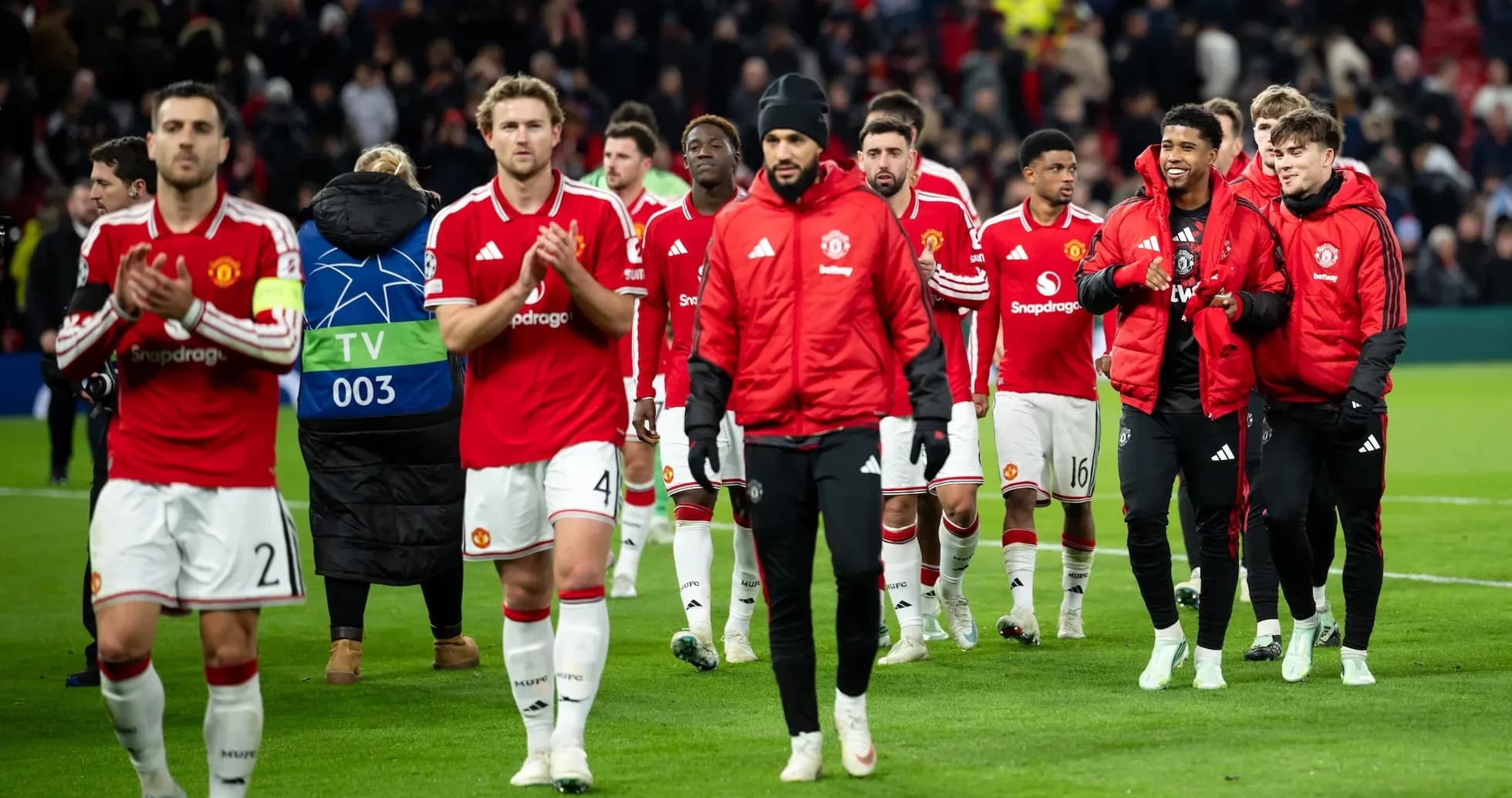
Old Trafford under lights, a 20:00 UTC kick-off, and a Champions League League Stage campaign balanced on a knife-edge: this was Manchester United’s night to either fold or announce themselves. They did the latter, turning a 0-2 half-time deficit into a 3-2 win over AS Roma that felt like a character reference as much as a result.
I. The Big Picture – A Tale of Two Halves and Two Identities
Heading into this game, the numbers already hinted at United’s split personality. Overall they had scored 8 and conceded 8 in 4 matches, a goal difference of 0 that neatly captured their volatility. At home, though, they were a different animal: 2 wins from 2, 7 goals for and only 2 against, averaging 3.5 goals scored and 1.0 conceded. On their travels they were fragile, with 1 goal for and 6 against across 2 defeats.
Roma arrived as something of a mirror image. Overall they had 10 goals for and 8 against from 4 games, a goal difference of 2, but their threat was spread more evenly between home and away: 7 goals at home and 3 on their travels. Their defensive record was symmetrical too, 4 conceded at home and 4 away, an overall average of 2.0 goals against per match.
The fixture pitted Michael Carrick’s 4-2-3-1 against Gian Piero Gasperini’s 3-4-2-1 – structurally, a classic confrontation between a narrow attacking three and a wide, fluid box midfield. The first 45 minutes belonged to Roma, who went into the break 2-0 up. The last 45 belonged entirely to Old Trafford, as United rode the emotional wave and their underlying home metrics to flip the scoreline.
II. Tactical Voids – Injuries and Discipline Shape the Chessboard
Both managers were forced to redraw their plans by absences. United were without P. Dorgu (hamstring), M. Rashford (hip), B. Sesko (leg), L. Shaw (injury) and M. Ugarte (knee). That cluster of injuries removed a natural left-back, a key ball-winner, and two direct forwards, pushing Carrick towards a more improvised back line and a creative, rather than pace-led, front four.
AS Roma’s voids were equally significant: P. Dybala (calf), M. Kone (muscle), L. Pellegrini (thigh) and M. Svilar (toe) were all missing. Deprived of Dybala and Pellegrini, Gasperini had to lean heavily on M. Soulé and Rodrigo Mora as his advanced creators behind D. Malen, shifting more responsibility for final-third invention onto younger shoulders.
Discipline had been a pre-match subplot. United’s season card map showed yellow cards clustering late: 33.33% between 76-90 minutes, and their reds split between 61-75 and 91-105 minutes. Matheus Cunha and Leny Yoro had already seen red in this Champions League campaign, underlining the risk baked into United’s aggression. Roma, by contrast, had no reds and a more evenly spread yellow profile, with 25.00% of their cautions arriving in each of the 31-45, 46-60 and 76-90 ranges.
On the night, those trends framed the tension. United’s second-half surge had to be balanced with emotional control; the memory of previous dismissals hung over every tackle. That they came back from 0-2 to 3-2 without another meltdown was as tactically important as any substitution.
III. Key Matchups – Hunter vs Shield, Engine Room vs Enforcer
Hunter vs Shield: D. Malen vs United’s defence
D. Malen entered as Roma’s spearhead and one of the competition’s standout forwards: 4 goals and 2 assists in 4 appearances, 13 shots with 8 on target, and 2 penalties scored from 2. His movement and efficiency made him the clear “Hunter” in this tie.
He was up against a United back four that, at Old Trafford, had conceded just 2 in 2 Champions League games but had shown a worrying vulnerability in specific windows. Overall, 37.50% of United’s goals against had come in the opening 0-15 minutes and 25.00% between 46-60, with another 25.00% in the 76-90 range. Early lapses and post-interval disorganisation were the danger zones.
Carrick’s choice of S. Lammens behind a line of Diogo Dalot, L. Yoro, H. Maguire and A. Heaven was a statement of trust in youth and distribution. Yoro’s profile – 138 passes at 89% accuracy, 5 tackles, 2 blocked shots and 8 interceptions in the competition – marked him as the proactive defender tasked with stepping into Malen’s path. Malen’s own defensive contribution, including 2 blocked shots, hinted at a forward comfortable in chaotic, transition-heavy games.
Engine Room: Bruno Fernandes & K. Mainoo vs B. Cristante & M. de Roon
If Malen vs the United back line was the headline duel, the game’s true hinge lay in midfield. United’s double pivot of K. Mainoo and C. Baleba had to screen transitions while feeding a creative axis of A. Diallo, Bruno Fernandes and Matheus Cunha behind B. Mbeumo.
Opposite them, Roma’s central quartet of Wesley, M. de Roon, B. Cristante and D. Rensch formed a sliding box that could become a back five or a double pivot plus two tens. De Roon and Cristante were the “Enforcers”, tasked with disrupting Bruno’s rhythm and blocking Cunha’s lanes between the lines.
Cunha’s Champions League numbers underlined his dual threat and volatility: 3 goals from 9 shots (7 on target), 104 passes at 77% accuracy, 6 tackles, 2 blocked shots and 8 fouls committed alongside 6 drawn. He was both creator and chaos agent, and his previous red card meant every press and counter-press carried disciplinary jeopardy.
IV. Statistical Prognosis – Where the Game Was Always Going to Tilt
The deeper metrics pointed towards a match decided in waves rather than by slow control. United’s goals for minute distribution showed a strong mid-to-late game profile: 25.00% of their goals between 31-45 minutes, another 25.00% from 76-90, and 12.50% in each of 46-60 and 61-75. They are a side that builds into contests and finishes with a surge.
Roma’s goals for pattern was even more striking: 36.36% of their goals came between 46-60 minutes and 27.27% between 16-30, with 18.18% in the 31-45 window. They tend to explode around half-time. But their defensive minute map carried a fatal flaw: 62.50% of their goals against arrived between 76-90 minutes. In other words, Roma’s biggest defensive weakness overlapped almost perfectly with United’s late attacking strength.
Overlay those curves and the script almost writes itself: Roma fast and incisive around the interval, United relentless in the final quarter-hour. That is precisely how the night unfolded. Roma’s 2-0 half-time lead reflected their early and mid-phase punch; United’s 3-2 full-time triumph reflected their superior late-game power and Old Trafford’s attacking gravity.
From an xG and defensive solidity perspective, the prognosis before kick-off would have leaned towards a high-event contest. Both teams averaged 2.0 goals against per match overall. United’s home attack (3.5 goals per game) against Roma’s tendency to collapse late was always likely to generate chances in volume, even if the precise xG values are not listed here.
In the end, the numbers and the narrative converged. United’s home identity – front-foot, emotionally charged, and statistically potent late on – overwhelmed a Roma side whose structural strengths could not mask a chronic vulnerability in the dying minutes. For Carrick, the comeback offers a blueprint: trust the 4-2-3-1, lean into the late surge, and harness players like Cunha, Bruno Fernandes and Mbeumo as the tip of an aggressive, risk-tolerant system. For Gasperini, the lesson is harsher: until Roma can close the 76-90 minute wound, even Malen’s brilliance will not be enough to keep them safe on Europe’s biggest nights.