Atletico Madrid vs Bayern München: A Clash of Styles in UEFA Champions League
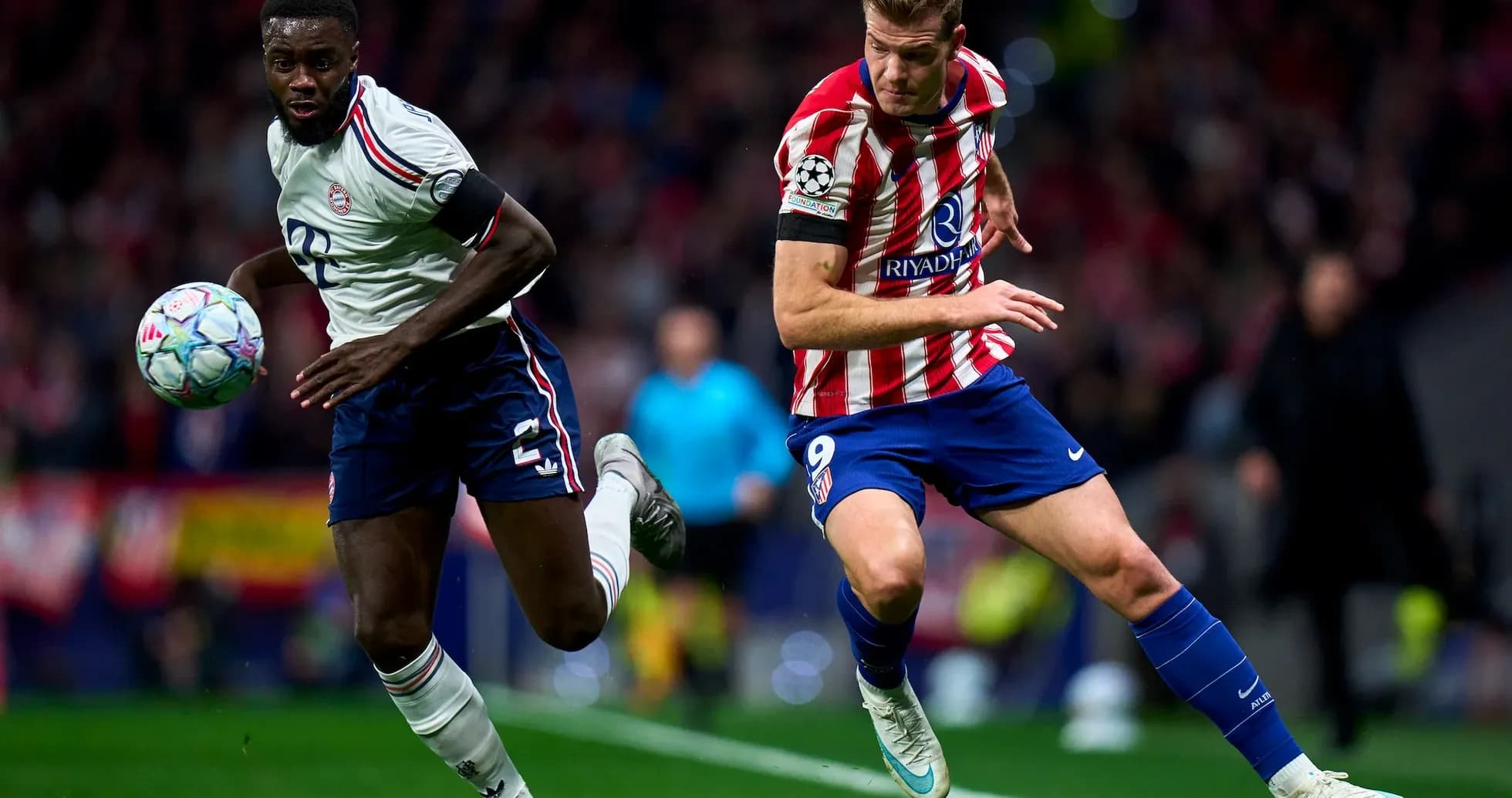
Under the lights of the Riyadh Air Metropolitano, this League Stage - 4 fixture in the UEFA Champions League brought together two clubs whose seasonal identities could not be more sharply contrasted. Atletico Madrid arrived as a side still searching for balance in Europe; Bayern München stepped in as a machine already humming at near full power. The 2–0 away win for Bayern confirmed the gap that the numbers had hinted at long before kick-off.
Heading into this game, Atletico sat 23rd in the league standings with 4 points from 4 matches. Their overall goal difference was -1, correctly mirroring 4 goals scored and 5 conceded. At home they had split their fortunes: 1 win, 1 defeat, 2 goals scored and 2 conceded. Bayern, by contrast, were 13th with 8 points from 4, unbeaten and boasting a goal difference of +7 from 12 goals for and 5 against. On their travels they had already shown authority: 1 win, 1 draw, 5 goals scored and 3 conceded.
I. The Big Picture – Styles Colliding
Diego Simeone doubled down on Atletico’s traditional steel, naming a 4-4-2 that was more about structure than spectacle. Jan Oblak anchored a back four of Marc Pubill, Robin Le Normand, Dávid Hancko and Álex Grimaldo. In front of them, G. Simeone, Pablo Barrios, Marcos Llorente and Álex Baena formed a hard-running, combative midfield line, leaving A. Sørloth and J. Álvarez as a physically imposing front two.
The selection made sense in the context of Atletico’s European season. Overall they had scored 4 goals in 4 matches, an average of 1.0 both at home and on their travels. Their attacking pattern was evenly spread: 25.00% of their goals came in each of the 0–15, 16–30, 46–60 and 76–90 minute windows. Yet the real story lay at the other end. Atletico conceded 5 goals overall, an average of 1.0 at home and 1.5 away. Crucially, 40.00% of those goals arrived between 31–45 minutes and another 40.00% between 46–60, marking a dangerous vulnerability either side of half-time.
Bayern, under Vincent Kompany, arrived with a 4-2-3-1 that has become their European signature. Manuel Neuer stood behind a back four of Konrad Laimer, Dayot Upamecano, Jonathan Tah and Josip Stanišić. Joshua Kimmich and T. Bischof patrolled the double pivot, with Michael Olise, L. Karl and Alphonso Davies supporting Harry Kane as the lone striker.
Their numbers underlined why this shape is so difficult to contain. Bayern had scored 12 goals overall, averaging 3.5 at home, 2.5 on their travels and 3.0 in total. Their offensive storm typically broke after the interval: 33.33% of their goals came between 46–60 minutes and another 33.33% between 61–75, with a further 25.00% in the 76–90 window. This is a side that ramps up pressure relentlessly in the second half.
Defensively, Bayern had conceded 5 goals overall, mirroring Atletico’s record, with the same averages: 1.0 at home, 1.5 away, 1.3 in total. But their weakness was different: 40.00% of their goals conceded came late, in the 76–90 minute window. If you were going to hurt Bayern, it was usually by surviving the middle stretch and striking late.
II. Tactical Voids – Who Was Missing, What Was Lost
Atletico entered this fixture shorn of three important options: J. Cardoso (thigh injury), M. Hjulmand (suspended after a red card) and C. Romero (muscle injury). Hjulmand’s absence was particularly symbolic. He had already collected a red card in this Champions League campaign, his aggressive profile underlined by 5 fouls committed and 3 drawn across 96 minutes. Without him, Simeone lost a natural enforcer in midfield, the kind of player who might have disrupted Bayern’s rhythm in that crucial 46–75 minute zone.
Bayern were also without creative and one‑v‑one threats. L. Diaz, S. Gnabry, J. Musiala and I. Saibari all missed out through muscle or ankle injuries. On paper, those absences stripped Kompany of some of his most direct dribblers and line‑breaking talents. In practice, the structure and timing of Bayern’s attacks, rather than individual chaos, have defined this European run, and the starting XI still bristled with pace and intelligence.
Disciplinary trends also shaped the tone. Atletico’s yellow cards in this competition had clustered late: 75.00% of their bookings came between 76–90 minutes, with the remaining 25.00% between 46–60. They had also seen a red card between 61–75. Bayern, meanwhile, concentrated their cautions in the heart of the second half: 33.33% of their yellows between 46–60, 50.00% between 61–75, and a red card also in that 61–75 band. This was always likely to be a contest where the middle third of the match became a storm of tackles, transitions and cards.
III. Key Matchups – Hunter vs Shield, Engine vs Engine
The headline duel was always going to be Harry Kane against Atletico’s defensive block. Kane came into the night as one of the Champions League’s most complete forwards: 4 goals and 3 assists in 4 appearances, supported by 16 shots (7 on target) and 9 key passes from 103 total passes at 82% accuracy. He had also converted 2 penalties from 2 attempts, with no misses, confirming a perfect record from the spot so far this campaign.
Facing him were Le Normand and Hancko, shielded by Barrios and Llorente. Atletico’s season data suggested they were comfortable defending in spells but vulnerable in concentrated bursts, particularly around half-time. Against a Bayern side that does most of its scoring between 46–75 minutes, the intersection was ominous: Atletico’s softest window overlapped perfectly with Bayern’s most ruthless one.
In midfield, the engine‑room battle paired Kimmich and T. Bischof against Barrios and G. Simeone. Kimmich’s role as metronome and first line of counter‑press was essential to prevent Atletico’s wide midfielders, Baena and Llorente, from driving transitions into the channels. With Bayern averaging 3.0 goals overall and having failed to score in none of their matches so far, control of those second balls and loose clearances around the centre circle was non‑negotiable.
Out wide, Davies’ advanced role on the left asked serious defensive questions of Pubill, while Olise’s creativity and movement between the lines probed the gaps between Atletico’s midfield four and back four. For Simeone’s side, the plan was clear: Grimaldo and Baena had to provide enough progressive threat to push Laimer and Stanišić backwards, preventing Bayern’s full-backs from hemming Atletico in.
IV. Statistical Prognosis – Why Bayern’s Structure Prevailed
Even before a ball was kicked, the probability map tilted heavily towards Bayern. They entered unbeaten, with 2 wins and 2 draws overall, and clean sheets both at home and on their travels. Atletico, by contrast, had only 1 win in total, 1 draw and 2 defeats, with just 1 clean sheet overall and 1 match in which they failed to score at home.
Atletico’s biggest win in this Champions League campaign, a 2–0 result at home, showed they could produce a complete defensive performance in front of their own fans. But their biggest home defeat, 0–2, and their away loss of 2–1 revealed a pattern: once they fell behind, their structure frayed. Against a Bayern side that tends to pile on goals in the 46–75 window and concedes late, the script was almost pre‑written. If Bayern scored first, Atletico would be forced to open up in precisely the period where their defensive numbers were most fragile.
Bayern’s penalty record added another layer of inevitability. With 2 penalties taken and 2 scored, and Kane perfect from the spot so far, any clumsy challenge in the box threatened to turn a tight game into a mountain.
The 2–0 full-time scoreline at the Metropolitano ultimately reflected the deeper currents of this European campaign. Atletico’s 4-4-2 offered grit and moments of thrust through Llorente, Baena and the physicality of Sørloth and Álvarez, but without Hjulmand’s bite and Cardoso’s control, the midfield lacked the disruptive edge needed to derail Bayern’s second‑half surge. Bayern’s 4-2-3-1, anchored by Kimmich and lit up by Kane’s all‑round influence, played directly into the statistical weaknesses of their hosts.
Following this result, the numbers will only harden the narrative: Bayern as a ruthless, second‑half heavyweight with a +7 goal difference already in their pocket; Atletico as a side whose European identity is still caught between the old defensive certainties and a new, more open reality. At this level, that hesitation is often the difference between survival and submission.