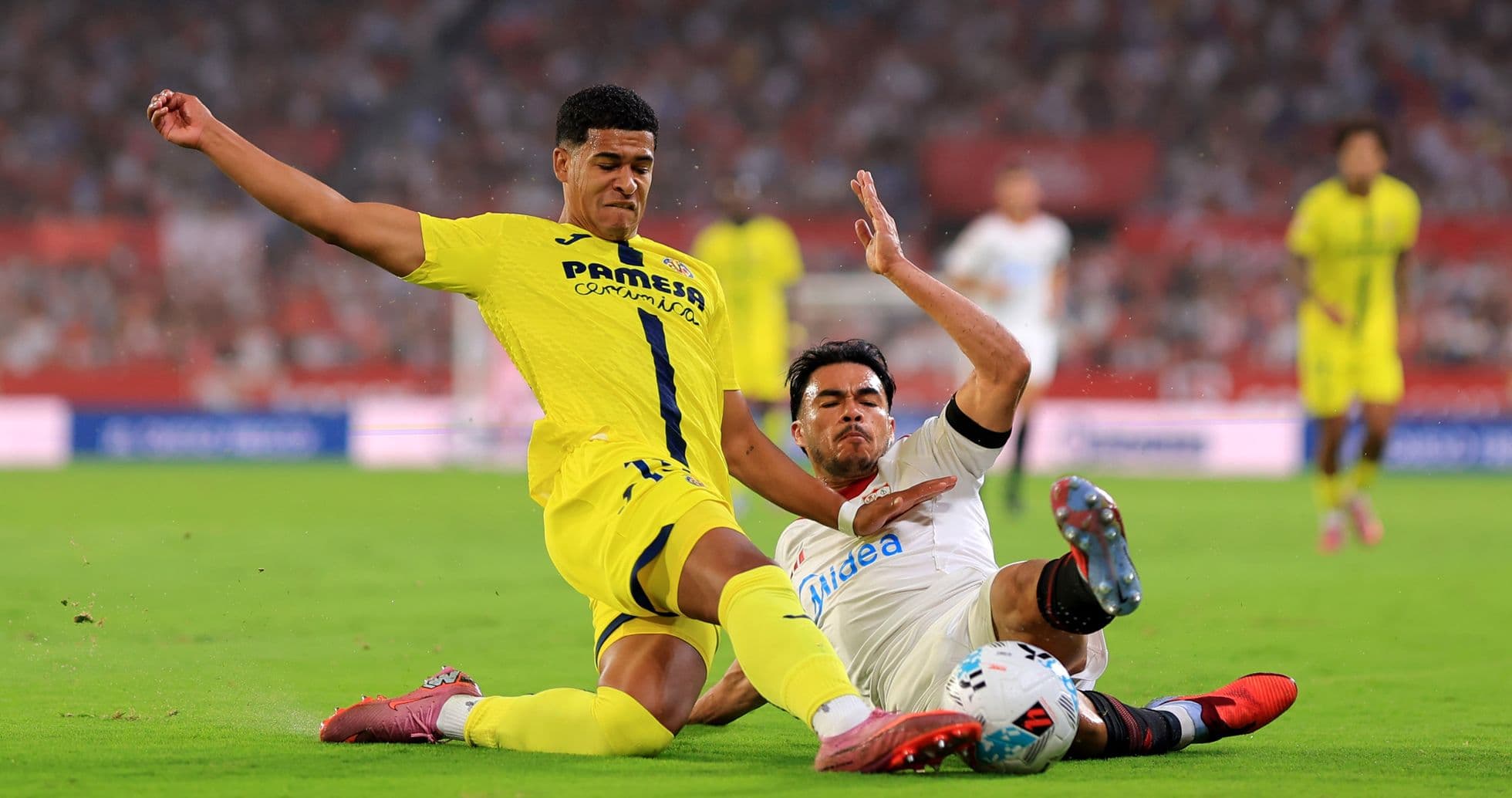
Villarreal vs Sevilla: Tactical Analysis of La Liga Showdown
Under the floodlights of Estadio de la Ceramica, a Champions League-chasing Villarreal side met a wounded but dangerous Sevilla in Round 36 of La Liga’s regular season. The table framed the narrative starkly: Villarreal, 3rd with 69 points and a goal difference of 24 (67 scored, 43 conceded overall), had turned their home ground into a fortress. Sevilla, 12th with 43 points and a goal difference of -12 (46 for, 58 against overall), arrived as unpredictable spoilers, capable of both heavy defeats and statement wins.
Following this result, a 3-2 Sevilla win after a breathless 2-2 first half, the story of the match was one of structural contrast. Villarreal leaned into their season-long identity: proactive, front-foot, and especially ruthless at home, where they had scored 43 goals in 18 matches, an average of 2.4 per game, while conceding only 18 at 1.0 per match. Sevilla, by contrast, brought the scars of an away campaign marked by fragility — 22 goals scored and 34 conceded on their travels, an average concession rate of 1.9 per away game — but also the tactical chameleon nature of a side comfortable shifting systems.
Marcelino doubled down on Villarreal’s staple 4-4-2, the shape they had used in 35 league outings. A. Tenas anchored a back four of A. Pedraza, Renato Veiga, P. Navarro, and A. Freeman. Ahead of them, a technically rich midfield band of A. Moleiro, P. Gueye, D. Parejo, and N. Pepe fed a dual spearhead: captain G. Moreno alongside the prolific G. Mikautadze, who had arrived with 12 league goals and 6 assists in total this campaign.
Luis Garcia Plaza answered with a compact 5-3-2 for Sevilla, leaning into defensive density to blunt Villarreal’s home power. O. Vlachodimos stood behind a back five of Oso, G. Suazo, K. Salas, C. Azpilicueta, and the combative J. A. Carmona. In midfield, R. Vargas, L. Agoume, and D. Sow formed a hard-running, ball-winning trio, tasked with linking to a mobile front two of A. Adams and N. Maupay.
Tactical Voids and Discipline
Both sides entered with key absences that subtly reshaped the chessboard. Villarreal were without J. Foyth and P. Cabanes, stripping Marcelino of a natural defensive specialist on the flank and a depth option. That absence made the decision to start A. Freeman and rely on Renato Veiga’s versatility even more significant. Veiga, who had already shown his defensive value this season with 30 blocked shots and 24 interceptions overall, was again asked to balance build-up composure with last-ditch defending.
Sevilla’s injury list was heavier: M. Bueno, Marcao, and Isaac Romero all missing. Without Marcao’s presence in the back line and Isaac’s vertical threat, Garcia Plaza leaned more heavily on K. Salas and C. Azpilicueta for defensive leadership, while A. Adams carried an even greater share of the attacking burden. Adams came in with 10 league goals in total, supported by 3 assists, and a perfect penalty record of 3 scored from 3.
Disciplinary undercurrents were always likely to shape the rhythm. Heading into this game, Villarreal had shown a pronounced tendency to collect yellow cards late, with 25.64% of their cautions coming between 76-90 minutes, plus another 8.97% in added time. Sevilla, meanwhile, spread their yellows more evenly but also leaned into late-game chaos, with 18.63% of their yellows between 76-90 and a striking 20.59% in 91-105. Red cards were not strangers either: Villarreal’s season included dismissals for Santi Comesaña and Renato Veiga, while Sevilla’s Isaac had seen red once and even missed a penalty, underlining that their high-intensity edge can tip into self-damage.
Key Matchups – Hunter vs Shield, Engine Room
The headline duel was “Hunter vs Shield”: Villarreal’s attacking axis against Sevilla’s often brittle away defence. At home, Villarreal’s 2.4 goals per game met a Sevilla back line that had conceded 34 away goals, 1.9 per away match. G. Mikautadze, with 51 total shots and 29 on target, is a volume shooter who thrives on quick combinations. Paired with G. Moreno’s movement, he constantly tested the spaces between K. Salas and C. Azpilicueta. Sevilla’s response hinged on narrowing the central corridor, forcing Villarreal wide and trusting Oso and G. Suazo to absorb crosses.
On the flip side, Sevilla’s own “hunter” was A. Adams. His 10 goals and physical profile made him the natural focal point against a Villarreal defence that, for all its home solidity, still concedes 1.0 goal per match at Estadio de la Ceramica. His duel with Renato Veiga was pivotal: Veiga’s 19 tackles and 30 successful blocks this season showed in the way he stepped out of the line to meet Adams early, trying to prevent him from turning and running at A. Tenas.
The “Engine Room” battle was equally compelling. D. Parejo, still Villarreal’s metronome, orchestrated from deep with P. Gueye’s legs beside him and A. Moleiro’s line-breaking energy ahead. Moleiro’s 10 goals and 5 assists overall, combined with 36 key passes, made him the primary conduit between midfield and attack. N. Pepe, with 6 assists and 55 key passes, stretched Sevilla horizontally, constantly forcing L. Agoume and D. Sow to make difficult choices between protecting the half-spaces and stepping wide.
For Sevilla, L. Agoume was the enforcer and distributor rolled into one. Across the season he had amassed 66 tackles and 47 interceptions, and his duel with Moleiro was a running subplot: Agoume stepping in aggressively, Moleiro trying to spin away and carry Villarreal upfield. R. Vargas added a creative twist from midfield, his 6 assists and 25 key passes making him the natural link into Adams and Maupay whenever Sevilla broke Villarreal’s first press.
Wide zones were a constant battleground. A. Pedraza’s raids from left-back tried to overload J. A. Carmona’s flank, but Carmona brought his own edge — 63 tackles, 36 interceptions, and 13 yellow cards across the season. That disciplinary profile shaped the tone: Sevilla’s right side walked a tightrope between necessary aggression and the risk of leaving the back five undermanned.
Statistical Prognosis and Tactical Verdict
From a statistical lens, this fixture always promised goals. Villarreal’s overall scoring rate of 1.9 per match, combined with Sevilla’s 1.3, and the visitors’ porous away record (34 conceded) pointed to an open contest. Villarreal’s defensive numbers at home suggested they would normally control the xG balance, limiting Sevilla to lower-quality chances while generating consistent volume through Mikautadze, Moleiro, and Pepe.
Yet Sevilla’s structural shift to a 5-3-2, and their reliance on transition through Vargas and Adams, offered a clear counter-script: soak pressure, strike in moments. Their season-long ability to still score 1.2 goals per away game despite defensive frailty hinted that, if they could survive the early Villarreal waves, they would carve out enough high-value breaks to tilt the Expected Goals story.
Following this result, the narrative is of a Sevilla side that executed that plan with rare precision. Villarreal’s aggressive 4-4-2 produced the expected offensive threat but left just enough space for Sevilla’s front two and late-arriving midfielders to punish them. On balance, the underlying profiles suggest Villarreal likely edged raw xG through volume and territory, but Sevilla’s more clinical finishing and better exploitation of transitional windows allowed them to bend the numbers in their favour.
In tactical terms, this 3-2 away win reads as a triumph of structural discipline and counter-punching over a high-octane, possession-heavy side. Villarreal’s season-long strengths remained visible; Sevilla simply found a way, on this night, to weaponise their underdog status and turn their away-day volatility into a decisive edge.