Anderlecht vs PAOK: UEFA Europa League 3rd Qualifying Round Showdown
At Lotto Park in Anderlecht, this second leg of the UEFA Europa League 3rd Qualifying Round between Anderlecht and PAOK carries direct seasonal weight: progression to the play-off round and a step closer to the group stage. With no league-table context available yet, the entire early European campaign for both clubs pivots on overturning, defending, or building on the first-leg score, making this a gateway fixture for both their European revenues, coefficient points, and competitive calendar in 2026.
Head-to-Head Tactical Summary
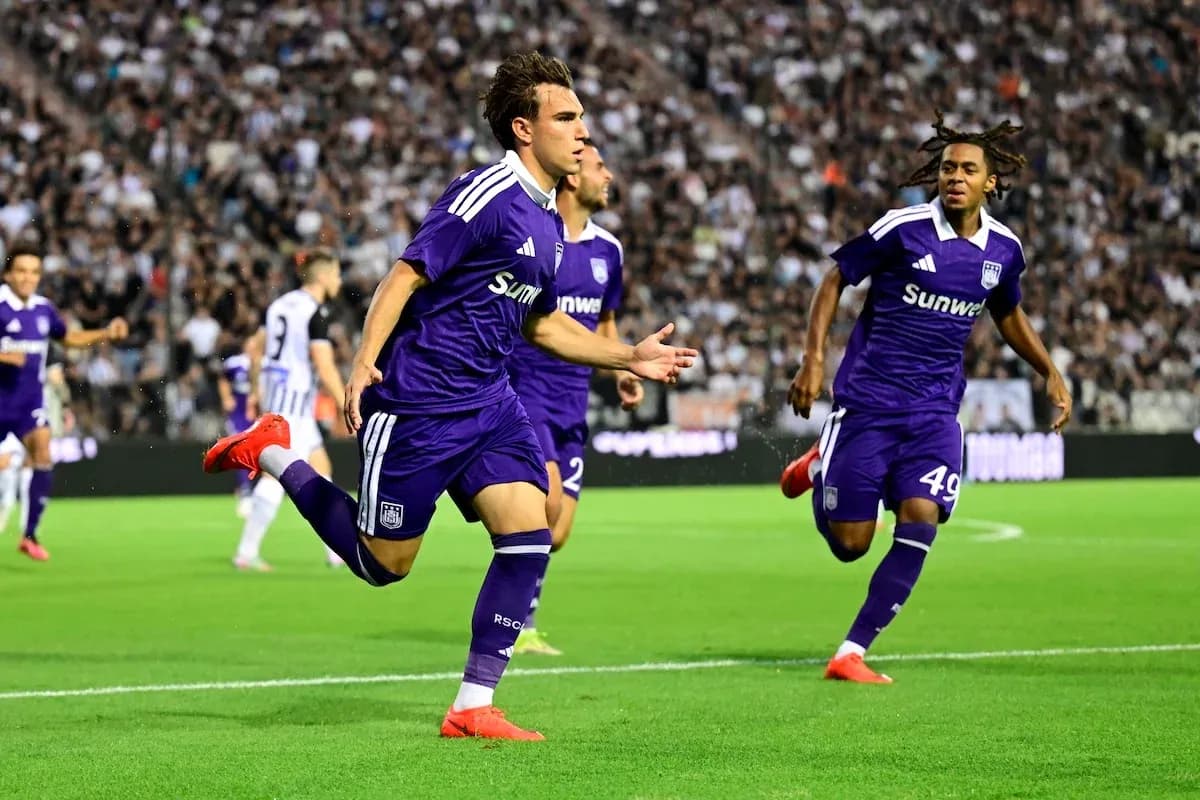
The only recent meeting in the data is the first leg on 6 August 2026 at Toumba Stadium in Thessaloniki, where PAOK hosted Anderlecht in the same Europa League 3rd Qualifying Round. Anderlecht won 1-0 away, leading 1-0 at half-time and preserving that margin to full time. Tactically, the key takeaways are Anderlecht’s ability to score on the road and then protect a narrow lead, and PAOK’s difficulty in breaking down a compact visiting side despite home advantage.
Global Season Picture
- League Phase Performance: There is no standings data provided yet for either Anderlecht or PAOK in this Europa League campaign, so goals for, goals against, and points in a group or league phase cannot be quantified from the current snapshot. The competitive picture is therefore defined entirely by this qualifying tie rather than a running table.
- Season Metrics: In the league phase of this Europa League campaign, Anderlecht have played 3 matches, winning 2 and drawing 1, scoring 5 goals and conceding 2. They have not failed to score in any match and have kept 1 clean sheet, but they have also shown a disciplinary edge with multiple yellow cards spread across all phases of the game and 1 red card late in matches. PAOK have also played 3 matches, with 2 wins and 1 loss, scoring 5 and conceding 3. They have 1 clean sheet but have failed to score once, indicating a slightly more volatile attacking output. Both sides show similar scoring averages (1.7 goals for per match), but Anderlecht’s goals conceded rate (about 0.7 per game) is marginally tighter than PAOK’s (about 1.0 per game), hinting at a slightly more stable defensive structure over this short sample.
- Form Trajectory: Anderlecht’s form string of “DWW” shows an upward curve: an opening draw followed by back-to-back wins, suggesting growing cohesion and confidence heading into this decisive home leg. PAOK’s “WWL” indicates a strong start with two consecutive wins before the setback against Anderlecht; that recent loss at home introduces pressure and tests their resilience under knockout-like conditions away from Thessaloniki.
Tactical Efficiency
Across this early Europa League phase, both teams display comparable attacking efficiency in raw output, each averaging roughly the same goals scored per match. Anderlecht’s profile leans toward controlled risk: they maintain scoring consistency while keeping goals conceded relatively low and managing game states effectively, as evidenced by protecting a 1-0 away lead in Thessaloniki. Their card distribution, including a late red, suggests an aggressive edge that can help disrupt opponents but also risks undermining control in tight knockout ties.
PAOK’s attack has shown the capacity to score multiple goals, particularly in their 2-3 away win earlier in the campaign, but their concession rate is slightly higher and they have at least one match where they failed to score. That combination points to a more variable tactical efficiency: capable of high-output performances but less reliable when facing organised defensive blocks like Anderlecht’s in the first leg. In a second-leg scenario where PAOK must chase the tie, this variance becomes critical: they need to convert their attacking potential into end product without overexposing a defense that has already shown it can be punctured by this opponent.
The Verdict: Seasonal Impact
The outcome of this match will largely define both clubs’ European trajectories in 2026. For Anderlecht, protecting or extending their first-leg advantage would secure progression to the next qualifying stage, keeping the path to the Europa League group stage open and reinforcing a positive early-season narrative built on an unbeaten run and improving form. Failure to advance, despite an away first-leg win, would be a significant missed opportunity, raising questions about game management under pressure at home.
For PAOK, overturning the deficit in Brussels would reframe the first-leg loss as a temporary setback and confirm their capacity to win high-stakes matches away from home, sustaining their European relevance and revenue stream for the year. Another defeat, or even a draw that leads to elimination, would abruptly end their continental campaign, concentrating all seasonal objectives back onto domestic competition and reducing their margin for error in terms of club finances, squad morale, and player retention. In short, this tie is less about a title race or relegation battle and more about binary European survival: win the aggregate and keep the season multi-front; lose it and accept an early contraction of ambition to domestic targets only.