Anderlecht's Tactical Superiority in 3-0 Victory Over Kairat Almaty
The 3-0 scoreline at Central Stadium reflected a clear tactical superiority from Anderlecht, built on structure, control and ruthless exploitation of Kairat Almaty’s weaknesses. With 67% possession and a 4-3-3 base shape, Vitor Bruno’s side dictated tempo from the first minutes, forcing Kairat’s 4-4-1-1 into deep, reactive defending and eventually into structural collapse after the red card.
Kairat's Initial Plan
Kairat’s initial plan in a 4-4-1-1 was conservative: a flat back four shielded by a narrow midfield line, with M. Gual supporting Edmilson as the lone striker. The idea was to compress central spaces and invite Anderlecht wide, then spring counters through the front pair. However, Anderlecht’s midfield trio of L. Ambros, E. Llansana and M. Kana quickly took control of the central corridor. With Kairat seeing only 33% of the ball and producing just 2 shots on goal, they were rarely able to convert defensive regains into sustained attacks.
Early Goals and Tactical Shifts
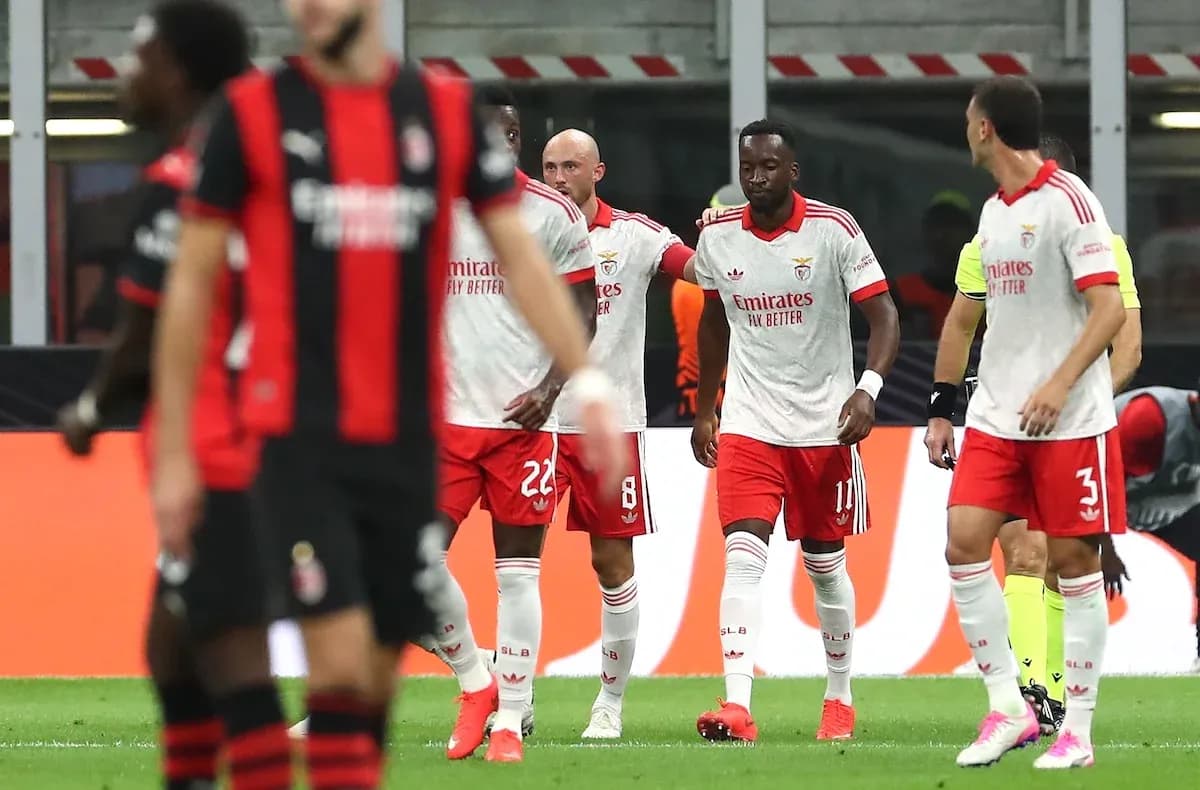
The early own goal from J. Oksanen in the 2nd minute was emblematic of Kairat’s structural discomfort under pressure. Anderlecht’s high starting positions and aggressive occupation of the half-spaces forced Kairat’s back line to defend facing their own goal, increasing the risk of errors. From there, Anderlecht could manage the game, using their back four of L. Augustinsson, G. Biancone, L. Petrot and A. Maamar as a stable platform to recycle possession and keep Kairat penned in.
Ambros was the key tactical fulcrum. Nominally part of the midfield three, he consistently advanced into the right half-space, creating a 4-2-3-1 in possession. His 24th-minute goal came as a direct reward for this positioning: late arrivals into the box from midfield were not tracked effectively by Kairat’s second line, particularly with G. Mendonsa and O. Jukkola struggling to balance width and compactness. The fact that Anderlecht finished with 5 blocked shots, compared to Kairat’s 1, underlined how often the Belgian side were able to generate shooting opportunities in and around the box, forcing last-ditch interventions.
Red Card Impact
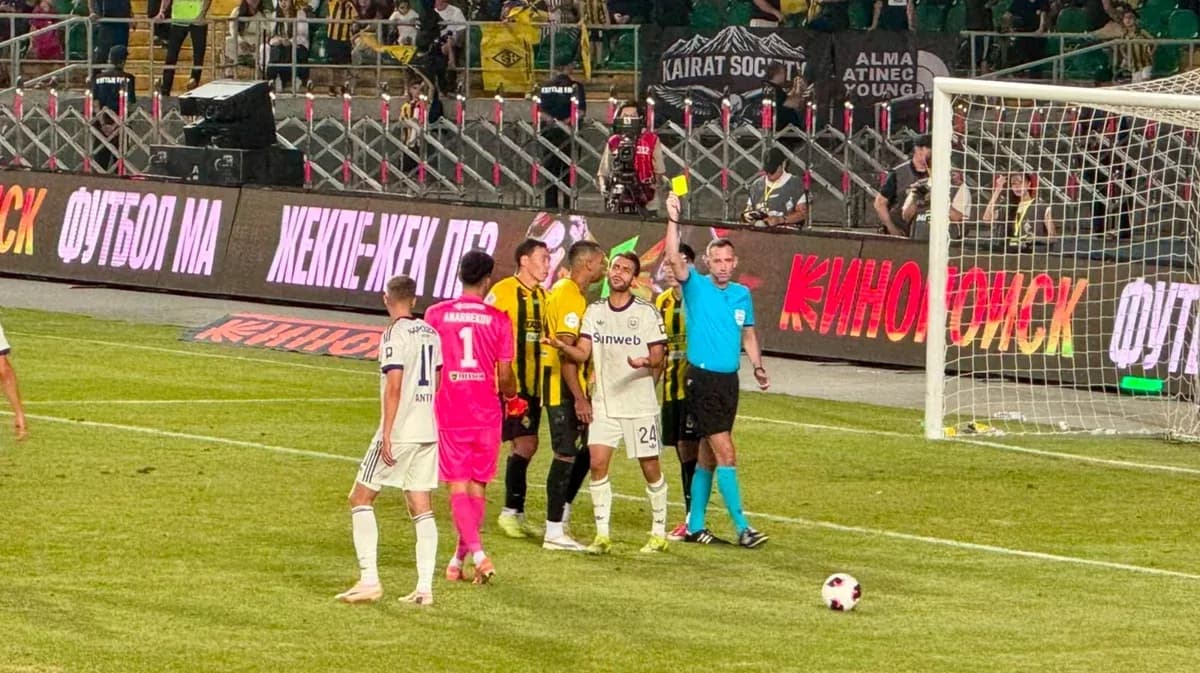
The decisive tactical break came in the 39th minute with Aleksandr Shirobokov’s red card. Already under territorial pressure, Kairat’s 4-4-1-1 effectively became a 4-4-1, removing any realistic capacity to press Anderlecht’s first phase. From that point, Kairat’s defensive line had to drop even deeper, and the midfield flattened out completely to protect the central zone. The cost was total offensive isolation for Edmilson and Gual; Kairat’s 2 shots on goal were never going to be enough to threaten a comeback.
Anderlecht's Advantage
Anderlecht, by contrast, managed the numerical advantage intelligently. They did not overcommit recklessly; instead, they used their 67% possession to stretch Kairat horizontally and vertically. Full-backs Augustinsson and Maamar pushed high and wide, pinning Kairat’s wingers back and turning the visitors’ 4-3-3 into a de facto 2-3-5 in long attacking phases. The 45th-minute goal from D. Sikan, assisted by Ambros, encapsulated the pattern: sustained pressure, circulation around the block, and a well-timed run into space that a tiring, shorthanded defence could not track.
Discipline and Fouls
Discipline also shaped the tactical narrative. Anderlecht committed 17 fouls to Kairat’s 11, an indicator of their proactive counter-press and willingness to stop transitions early. Kairat’s single yellow card for Jaakko Oksanen at 64’ contrasted with the four bookings for Anderlecht (Mihajlo Cvetković, Ali Maamar, Giulian Biancone, Enric Llansana), suggesting the visitors operated on the edge to maintain their high-intensity structure. Crucially, however, none of Anderlecht’s cards escalated into a dismissal, preserving their numerical superiority and allowing them to continue suffocating Kairat’s build-up.
Substitutions and Tactical Trajectories
Substitutions confirmed the tactical trajectories. At 46’, Kairat introduced O. Baybek for A. Mrynskiy, and Anderlecht brought on T. Degreef for M. Cvetkovic. For Kairat, this was about injecting fresh legs and some ball-carrying from midfield, but the red card limited any systemic change; they remained primarily in a low block, trying to survive. Anderlecht’s change maintained their attacking structure while rotating personnel, keeping intensity high in the advanced line.
On the hour, Kairat’s double change — A. Tuyakbaev for M. Gual and I. Bekbolat for Edmilson — signalled a shift towards fresh forwards to chase longer balls and press sporadically, but with so little possession and no structural adjustment behind them, these were largely like-for-like swaps in a system still pinned deep. Anderlecht’s 63’ substitution, O. Antman for J. Nga Kana, and later Winkler, N. Ojea and A. Bertaccini for Maamar, Llansana and Sikan, were about game management: rotating the front and midfield lines without sacrificing the 4-3-3 spacing that had controlled the match.
Territorial Dominance
The corner count — 8 for Anderlecht to Kairat’s 2 — further illustrated territorial dominance. Anderlecht repeatedly forced Kairat back, finishing attacks in the final third rather than being countered. Kairat’s single offside and 1 recorded offside for Anderlecht highlight how the home side rarely pushed a high line or attempted to spring runners in behind; instead, they were mostly camped in their own half, trying to limit damage.
Conclusion
In tactical terms, this was a match where structure, possession and game-state management aligned perfectly for Anderlecht. The early own goal and Shirobokov’s dismissal magnified their advantages, but those advantages were already visible in the possession share, shot profile and set-piece volume. Kairat’s 4-4-1-1 never evolved into a proactive plan once they fell behind; it became purely damage limitation, and against a well-organised 4-3-3 with clear roles and rotations, that was never going to be enough to alter the outcome.