Antonio Conte and the Future of the Azzurri: A Test of Leadership
Antonio Conte stands once again at the edge of the Azzurri dugout, but this time the question is less about tactics and more about politics.
The Italy job is vacant after Gennaro Gattuso walked away in the aftermath of the World Cup play-off final defeat to Bosnia-Herzegovina, a loss that detonated what little credibility remained around the Italian Football Federation. The pressure that had been building for months finally burst, and with it came calls for a complete reset of the system – and for a heavyweight to take charge of the national team.
Conte’s name was always going to surface. It is what happens in Italian football when the house is on fire.
Conte, the familiar saviour?
The 55-year-old has been here before. He took over the national side in 2014 after leaving Juventus, dragging a limited squad to punch above its weight. Across 25 matches with the Azzurri, he delivered 14 wins and only five defeats, building a fiercely competitive group that went out of Euro 2016 on penalties to Germany in the quarter-finals. Italy left that tournament with regret, but not shame.
Since then, Conte has only burnished his reputation. A Premier League title with Chelsea. A Scudetto with Inter. A turbulent spell at Tottenham. And most recently, the man who guided Napoli to the title last season, restoring chaos and brilliance to a club that had lost its way.
So when the Azzurri bench opened up again, the rumours wrote themselves.
De Laurentiis opens the door – with conditions
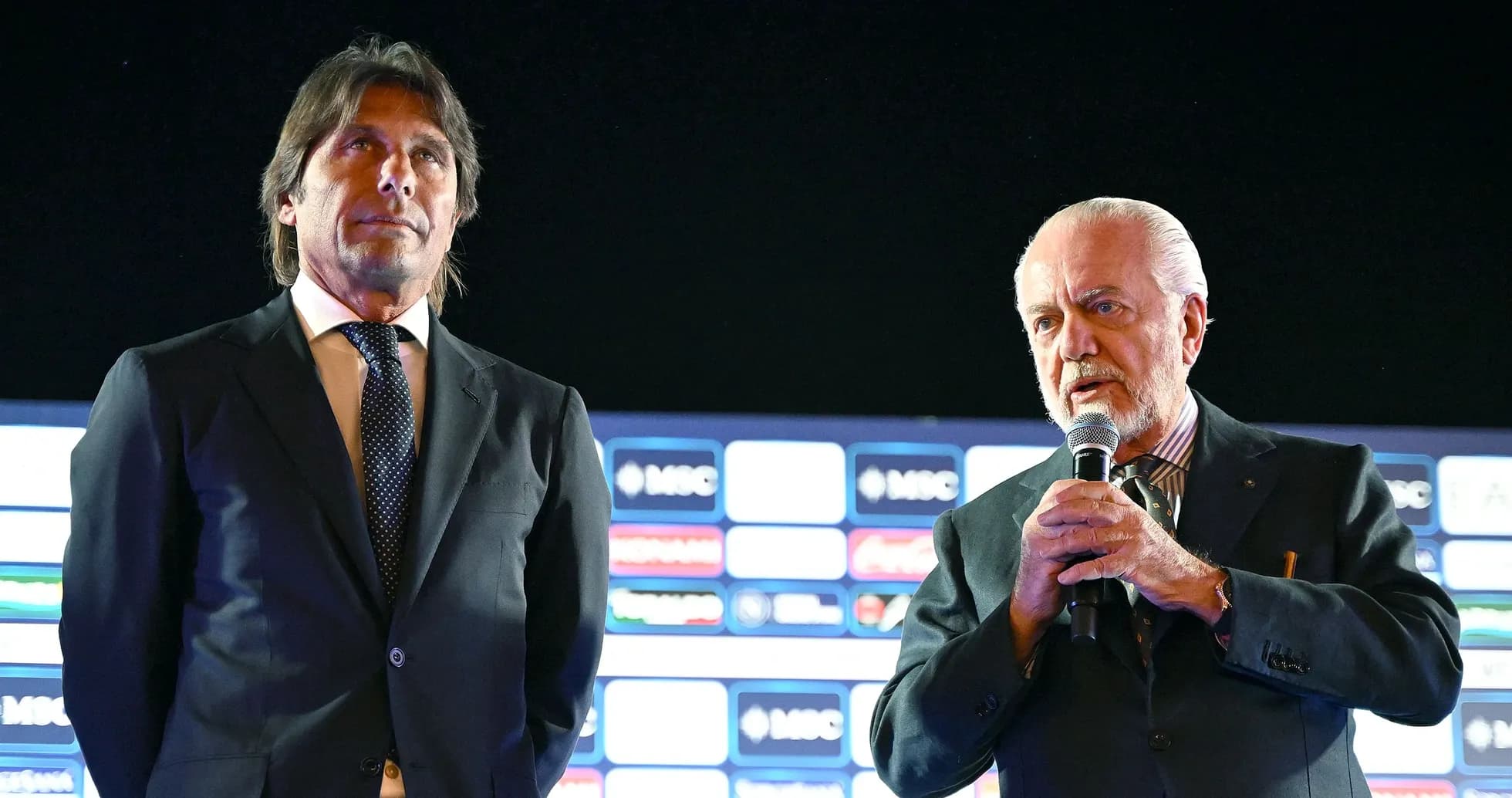
Napoli president Aurelio De Laurentiis did nothing to cool the speculation. Speaking to CalcioNapoli24, he made it clear that if Conte wanted the national team job, Napoli would not stand in his way.
“Conte new coach of the national team? If Antonio asked me, I think I would say yes,” De Laurentiis said, before immediately turning his fire on the federation itself.
His approval came with a sharp dose of realism. He described Conte as “very intelligent” and questioned why such a coach would walk into what he sees as a shambles.
“As long as there is no serious interlocutor, and up to now there have been none, I believe he would desist in imagining himself at the head of something completely disorganised,” he argued.
In other words: Conte might be willing. But not for this FIGC.
A federation in ruins
The latest collapse has pushed Italian football to a historic low. Defeat to Bosnia-Herzegovina in the play-off capped a disastrous qualification campaign that began under Luciano Spalletti and ended with Gattuso parachuted in for a desperate rescue mission.
Gattuso’s record on paper is not disastrous: eight matches, six wins. But the two that mattered most – against Norway in the final group game and then Bosnia-Herzegovina in the play-off – turned his brief tenure into a cautionary tale. Those defeats did more than end a campaign. They deepened a crisis.
Italy will now miss the World Cup in 2018, 2022 and 2026. Three consecutive absences from the biggest stage in the sport. For a four-time world champion, it is not just a failure. It is an indictment.
The fallout was swift. FIGC president Gabriele Gravina resigned. Delegation chief Gianluigi Buffon, a symbol of Italian football for two decades, followed him out. The sense is not of a team that lost a match, but of an institution that lost its way.
Power, money and a “Cinderella” Serie A
De Laurentiis has used the chaos to push for sweeping change. He has been one of the loudest voices demanding a restructuring of how Italian football is governed, and he did not stop at vague complaints.
He publicly backed Giovanni Malagò, the current CONI president, as the man to step in as commissioner and then, ultimately, as FIGC president. In De Laurentiis’ view, Malagò has the stature and authority to rebuild a broken federation.
At the heart of his anger lies the balance of power – and money. De Laurentiis painted a stark picture of a system that, in his eyes, punishes the very clubs that keep it alive.
“Italian football is Serie A which is considered like a Cinderella, it only has 18% in terms of the federation, while the amateurs and the players have the majority,” he said. “This is an absurdity considering that without Serie A the federation would not exist and considering that we finance it with a good €130 million a year.”
It is a brutal assessment: the top division, he argues, bankrolls the system yet holds a minority stake in the decisions that shape it.
Will Conte walk back into the storm?
This is the landscape into which Conte is being invited – or perhaps dared – to return. A national team stripped of certainty, a federation in transition, and a governance model under open attack from one of the most influential club presidents in the country.
De Laurentiis has, in effect, cleared the path for Conte to leave Napoli for the Azzurri. But his words also serve as a warning: until the FIGC proves it has serious leadership and a coherent project, why would a coach of Conte’s stature tie his reputation to “something completely disorganised”?
Italy needs a strong figure on the bench. It also needs one in the federation’s corridors of power. The question now is not just whether Conte wants the national team again, but whether he believes the institution behind it is finally ready to match his ambition.