Arsenal's Tactical Mastery Against Brighton's Dominance
Arsenal’s low-possession control and Brighton’s sterile dominance
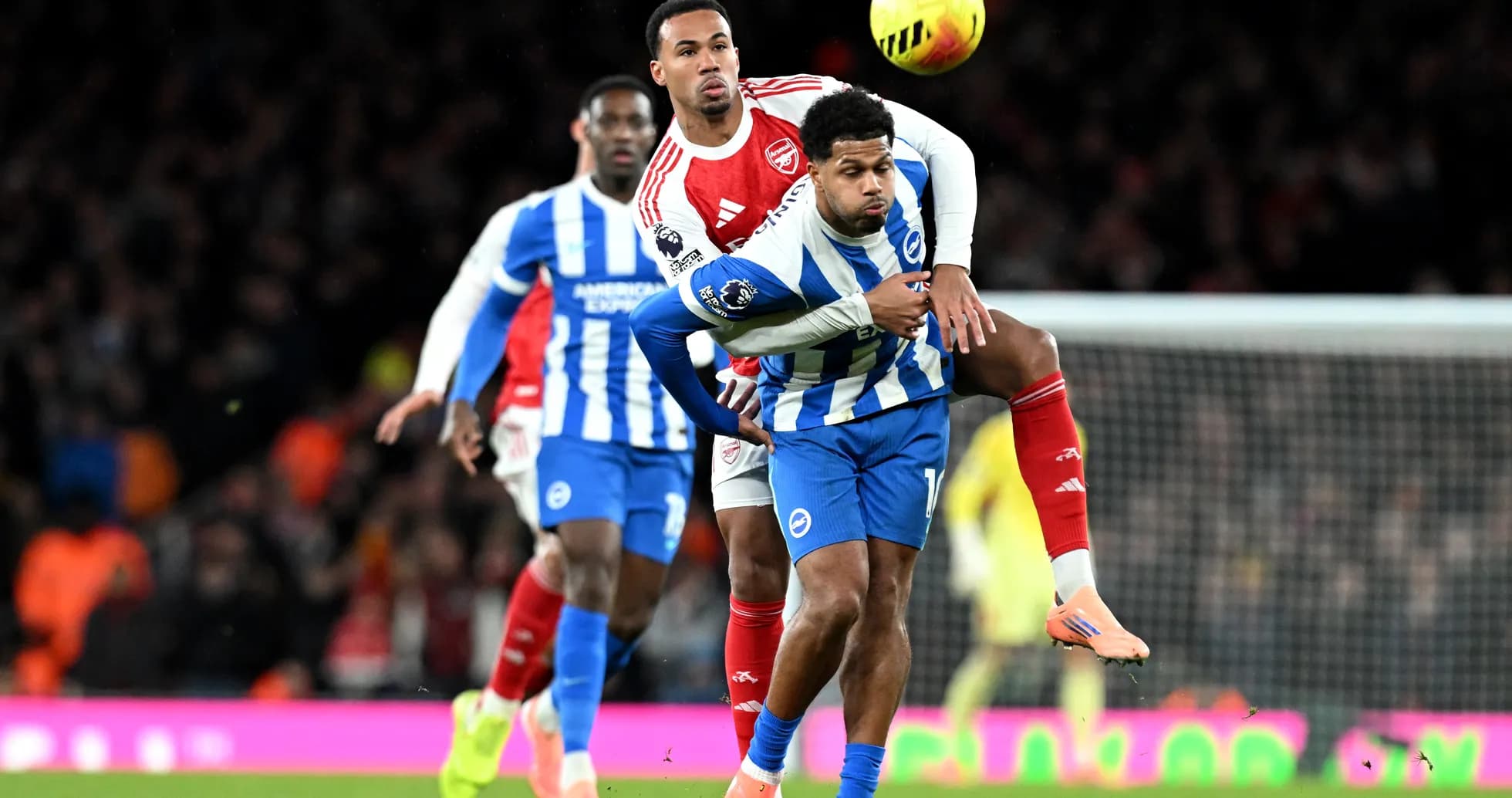
The battle for control was paradoxical. Brighton held 60 percent of the ball, completed 470 passes at 82 percent accuracy and set up in a 4-2-3-1 designed to progress through Pascal Gross and Carlos Baleba. Arsenal, mirroring the 4-2-3-1, accepted just 40 percent possession and a lower pass completion of 70 percent (322 passes), but translated early territory into the only goal on 9 minutes via Bukayo Saka from a Jurriën Timber assist. From that point, Arsenal’s plan became about game-state management rather than ball dominance.
In terms of efficiency, the numbers underline how both sides created little, but Arsenal maximised their moment. Brighton generated 0.82 xG from 11 shots, Arsenal only 0.47 xG from 7 attempts. The scoreline therefore slightly flatters Arsenal in chance quality terms, but the gap is marginal; neither side produced sustained high-value opportunities. Brighton’s 3 shots on target from 11 attempts suggest a lot of sterile circulation around Arsenal’s block. Arsenal’s 2 shots on target were enough given the early breakthrough and the visitors’ willingness to turn the game into a defensive exercise.
Offensively, Brighton’s structure aimed to overload the central lane behind Arsenal’s double pivot, with Jack Hinshelwood and Diego Gomez starting as advanced midfielders and Kaoru Mitoma wide. Yet Arsenal’s compact 4-2-3-1, anchored by Declan Rice and Martín Zubimendi, forced many attacks into low-percentage areas. Crucially, Arsenal’s defensive line density is captured by the blocking data: Brighton had 5 shots blocked by Arsenal, a clear sign of a crowded box and well-timed pressure on the release. Conversely, Arsenal had only 1 shot blocked by Brighton, reflecting that Arsenal rarely committed numbers forward after going ahead and chose their moments selectively.
Defensive intensity was also visible in the foul and card profile. Brighton committed 14 fouls to Arsenal’s 12, but Brighton’s 4 yellow cards (Diego Gomez for a foul on 52, Olivier Boscagli for argument on 80, Ferdi Kadioglu for an off-the-ball foul on 82, Yasin Ayari for a foul on 90+4) show a side increasingly stretched and frustrated while chasing the game. Arsenal picked up a single booking, Cristhian Mosquera for a foul on 11, then managed the rest of the match with greater discipline. In goal, Bart Verbruggen made only 1 save, while David Raya made 2, underlining how few truly dangerous moments either keeper had to handle; the decisive action was Arsenal’s finishing rather than goalkeeping heroics.
Substitutions reinforce the tactical narrative. Brighton’s double wave between 69 and 78 minutes (Danny Welbeck for Hinshelwood at 69, Joël Veltman for Mats Wieffer and Harry Howell for Diego Gomez at 77, Yasin Ayari for Baleba at 78) was an attacking gamble: extra forward presence and fresh legs in advanced zones, at the cost of some stability in midfield and at full back. Earlier, Yankuba Minteh for Mitoma at 46 had already signalled a desire for more direct one‑v‑one threat.
Arsenal’s changes were the opposite: Viktor Gyökeres off for Kai Havertz on 59, Gabriel Martinelli for Leandro Trossard on 60, Mosquera for Riccardo Calafiori on 64, and Zubimendi for Christian Nørgaard on 80. This sequence gradually traded vertical running and front-line pressing for control, fresh defensive legs, and game management in midfield.
Overall, the data points to a classic “score early, then compress” away performance. Brighton controlled the ball but not the spaces that matter; Arsenal controlled risk, protected their box with a high volume of blocks, and accepted a low-event game that converted a marginal xG edge into three points.