Arsenal W Dominates Liverpool W in FA WSL Clash
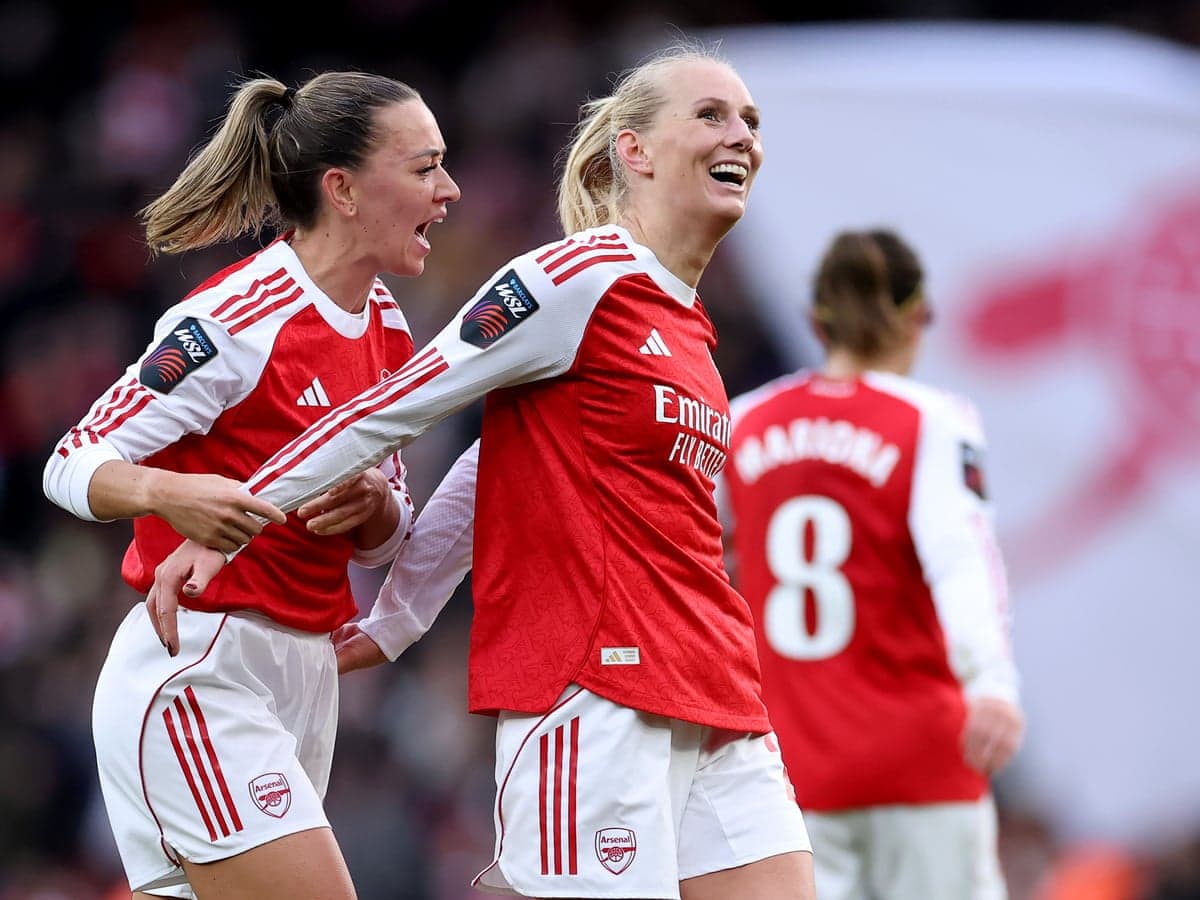
Anfield felt like a stage split between realities. On one side, Liverpool W, 11th in the FA WSL and fighting through a season of attrition. On the other, Arsenal W, the title-chasing machine sitting 2nd, arriving on Merseyside with 51 points and a goal difference of 39 built on ruthless consistency. By full time, the league table’s logic had largely held: Arsenal’s 3-1 win, secured by a devastating first-half blitz, underlined the gulf between a side clinging to safety and one accustomed to dictating the tempo of the division.
Following this result, the story of the season still frames both squads. Overall, Liverpool W have played 22 league games, winning 4, drawing 5 and losing 13. They have scored 21 and conceded 34, for a goal difference of -13. At Anfield, their profile is marginally stronger: 3 wins, 3 draws and 5 defeats from 11, with 13 goals for and 15 against. They are a team that can compete in moments, but rarely for the full 90.
Arsenal W, by contrast, embody control. Overall, they have 15 wins, 6 draws and just 1 defeat from 22, with 53 goals scored and 14 conceded, giving them that imposing +39 goal difference. On their travels, they have been almost as dominant as at home: 7 away wins, 3 draws and 1 loss, scoring 25 and conceding only 8. This is a side that expects to impose its structure wherever it goes.
Lineups
The lineups told their own tactical tale. Liverpool W’s starting XI – J. Falk, A. Bergstrom, J. Clark, G. Fisk, A. Bernabe, K. MacLean, F. Nagano, M. Enderby, D. O’Sullivan, A. Josendal and B. Olsson – hinted at a blend of graft and youthful ambition. The spine leaned heavily on Grace Fisk’s defensive authority and the energy of Mia Enderby between the lines, with Beata Olsson carrying the attacking threat that has already brought her 4 league goals and 2 assists.
On the bench, G. Bonner’s presence was notable not just for experience but for edge; her disciplinary record this season includes 1 red card, and she remains a defender who will step into duels aggressively. Alongside her, options like C. Kapocs and R. Shimizu offered late-game legs and structural flexibility rather than proven end product.
Arsenal W’s starting group, meanwhile, looked every inch a contender’s: D. van Domselaar in goal behind a back line marshalled by C. Wubben-Moy, L. Codina and K. McCabe, with E. Fox providing width. Ahead of them, the creative and transitional burden fell on M. Caldentey, V. Pelova and C. Foord, while the frontline of B. Mead, S. Blackstenius and A. Russo promised variety in movement and finishing.
Statistics
The numbers behind those names are telling. Alessia Russo, with 6 goals and 2 assists in 21 appearances, has been Arsenal’s reference point in the final third. She is not merely a finisher; 16 key passes and 32 dribble attempts speak to a forward who drops in, links play and destabilises defensive lines. Alongside her, Stina Blackstenius has 5 goals and 2 assists in 19 league games, thriving particularly as a runner off the shoulder or a late-arriving option when Russo occupies centre-backs.
Even Arsenal’s depth carries threat. Olivia Smith’s 4 goals and 2 assists from midfield, plus 19 tackles and 1 blocked shot, make her a true two-way engine. Smilla Holmberg, nominally a defender, has already delivered 4 assists and 2 goals, underlining how aggressively Arsenal’s full-backs and wide defenders are encouraged to join attacks.
For Liverpool, the attacking burden rests more narrowly. Olsson’s 4 goals and 2 assists, from limited shot volume, mark her as the clearest “hunter” in this squad. Enderby, with 3 goals and 2 assists and a strong duel success rate, offers drive and ball-carrying but is still learning how to turn territory into decisive moments. Structurally, Liverpool’s season-long use of shapes like 4-1-4-1 and 4-2-3-1 reflects a team trying to stay compact first, then break in small numbers.
Defensively, the “shield” on the home side is embodied by Grace Fisk. Across the campaign she has made 15 tackles, 9 successful shot blocks and 15 interceptions, all while completing 708 passes at 87% accuracy. She is both stopper and first passer, crucial in a side that averages only 1.0 goals for and 1.5 goals against per game overall. Her margin for error is minimal; every mistimed step risks exposing a back line that has kept just 4 clean sheets in total.
On Arsenal’s side, the shield is more collective than individual. Conceding only 14 goals overall – 6 at home and 8 away – with an away average of 0.7 goals against, they defend in layers. Wubben-Moy and Codina offer aerial and positional stability, while McCabe and Fox balance aggression with recovery pace. The fact that Arsenal have 11 clean sheets overall underlines how rarely their structure is broken in open play.
Discipline and Game Management
Discipline and game-state management also separate the two. Liverpool’s yellow-card distribution shows a worrying pattern of stress late in games: 35.48% of their yellows arrive between 61-75 minutes, and another 25.81% between 91-105. Their red cards have come between 16-30 and 61-75 minutes, suggesting that when the tempo lifts or fatigue bites, they can lose control. Arsenal, by contrast, spread their cautions more evenly, with a noticeable cluster (25.00%) between 76-90 minutes – the mark of a team willing to take tactical fouls to protect leads, rather than chasing lost causes.
In a “Hunter vs Shield” sense, this fixture always tilted towards Arsenal’s attack. Russo and Blackstenius, supported by creators like Caldentey and Pelova, were confronting a defence that, at home, concedes 1.4 goals per game and has already suffered heavy defeats (their biggest home loss being 1-4). Liverpool’s own hunter, Olsson, was running into an away unit that allows only 0.7 goals per game and has kept 5 clean sheets on their travels.
The “Engine Room” battle was equally asymmetrical. Liverpool’s midfield, anchored by F. Nagano and energised by Enderby and D. O’Sullivan, had to cope with Arsenal’s carousel of Pelova, Caldentey and potentially, from the bench, the likes of O. Smith or F. Leonhardsen-Maanum. The visitors’ creators arrive with numbers behind them: Smith alone has 19 key passes and 21 dribble attempts, while Russo’s 16 key passes from the front blur the line between striker and playmaker.
From a statistical prognosis standpoint, the 3-1 scoreline at Anfield felt like the logical extension of season-long trends. Arsenal’s overall attacking average of 2.4 goals per game, combined with Liverpool’s overall concession rate of 1.5 and their tendency to wobble in the final third of matches, always pointed towards the visitors finding multiple goals. Even without explicit xG values, the shot and chance-creation metrics embedded in Russo’s, Blackstenius’ and Smith’s profiles suggest a side that regularly generates high-quality opportunities.
Liverpool, for their part, did find a goal – consistent with their home average of 1.2 – but lacked the sustained pressure to truly bend the contest. Their season remains defined by narrow margins and sporadic sparks, rather than sustained control.
Following this result, the narrative of both squads sharpens. Arsenal W look every inch a Champions League-bound force, with depth, structure and star power aligned. Liverpool W, anchored by the industry of Fisk, the promise of Enderby and the finishing of Olsson, must translate flashes into a more robust identity if they are to climb from 11th and close the chasm that Anfield laid bare.