Atalanta's Fragility Exposed in 3-0 Defeat to Parma
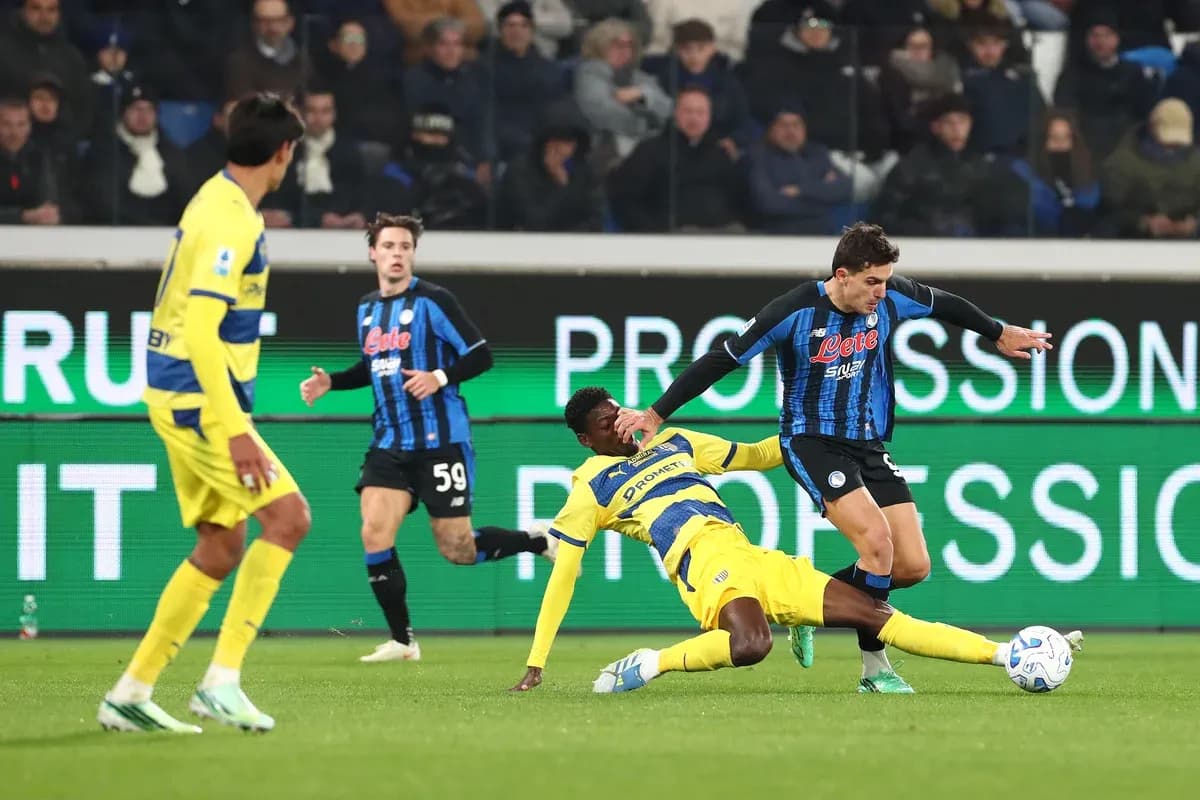
Under the Bergamo lights at the New Balance Arena, this was supposed to be a stabilising home night for Atalanta. Instead, a 3–0 defeat to Parma in Serie A’s Regular Season - 10 underlined just how fragile M. Sarri’s project currently is, and how ruthlessly A. Gilardino’s side can punish structural weaknesses when their 3-5-2 clicks.
I. The Big Picture – Two wounded sides, one ruthless response
Heading into this game, the table already painted a story of unease. Atalanta sat 13th with 11 points from 10 matches, their overall goal difference at -4 after scoring 16 and conceding 20. The New Balance Arena had been more forgiving: at home they had 3 wins from 6, 11 goals scored and 11 conceded, a chaotic balance but at least one tilted towards entertainment.
Parma arrived in Bergamo 15th with 8 points from 10 games, their overall goal difference even worse at -7 (8 for, 15 against). On their travels they had been brittle: 1 win and 4 defeats from 5 away fixtures, scoring 5 and conceding 9. Yet this night, Gilardino’s 3-5-2, a variation on the 3-4-2-1 that had been his most-used shape this season, found a perfect opponent in an Atalanta side stretched by absences and short on defensive control.
II. Tactical Voids – Atalanta’s missing spine and disciplinary shadows
Sarri’s team sheet betrayed how hard the injury list is biting. A full defensive and midfield spine was unavailable: R. Bellanova, G. Gaetano, I. Hien, F. Kessie, S. Kolasinac, O. Kossounou, T. Kristensen, G. Raspadori and G. Scamacca were all ruled out. That is not just depth; it is leadership, ball-winning and penalty-box presence stripped from a squad that already had only 1 clean sheet at home this season.
The response was a 4-2-3-1 built on a youthful and makeshift back four: D. Zappacosta, G. Scalvini, R. Obrić and L. Bernasconi shielding M. Carnesecchi. In front of them, Éderson and Mario Pasalic formed the double pivot, with an attacking trio of N. Zalewski, C. De Ketelaere and J. Rowe supporting lone striker N. Krstović.
The risk in this construction was always going to be defensive exposure. Atalanta’s home defensive numbers had already been alarming: 11 goals conceded in 6 matches at home, an average of 1.8 per game. With their overall defensive average at 2.0 goals against per match, the margin for error was tiny. Add to that a disciplinary profile that shows 33.33% of their yellow cards arriving between 61-75 minutes and another 33.33% between 76-90, plus red cards clustered late (50.00% between 76-90 and 50.00% between 91-105), and you get a side that tends to unravel just when games become chaotic.
On the bench, E. Elmas – already with a red card to his name this season – offered drive but also risk. Sergej Levak, L. Samardžić and K. Sulemana added attacking options, but there was no like-for-like replacement for a true holding midfielder of Kessie’s profile or a dominant centre-back like Hien or Kossounou.
Parma, by contrast, arrived with a fuller deck. Only A. Bernabe (inactive) and L. Valenti (coach’s decision) were listed as missing. Gilardino could lean into his preferred back-three logic: G. Daffara in goal behind a trio of E. Del Prato, M. Troilo and D. Drobnic; a five-man midfield of S. Britschgi, G. Fabbian, V. Sierro, M. Keita and E. Valeri; and a front two of E. Touré and S. Lontani.
Troilo’s presence was especially significant. One of Serie A’s most carded defenders this season, he has 3 yellow cards and features among the leading yellow-carded players, yet his defensive output is immense: 14 tackles, 8 successful blocks and 18 interceptions, plus 43 duels won from 74. He is both risk and remedy in one frame – the sort of defender who can tilt a high-line game either way.
III. Key Matchups – Hunter vs Shield, Engine Room vs Press
The headline duel was always going to be N. Krstović against Parma’s back three. Krstović has been one of Serie A’s most efficient forwards this season: 6 goals and 2 assists in 10 appearances, with 27 shots (13 on target) and a rating of 7.13. He is not just a finisher; 6 key passes and 4 blocked shots underline his work both in creating and in defending from the front.
Yet he ran into a defensive unit designed to smother central zones. Troilo, flanked by Del Prato and Drobnic, formed a compact triangle whose job was to deny Krstović the half-spaces where he typically spins off the shoulder. With Parma conceding an overall average of 1.8 goals away from home, the question was whether their structure could finally hold under pressure. On this night, the answer was emphatic.
Behind Krstović, the creative burden fell heavily on C. De Ketelaere and N. Zalewski. De Ketelaere has been one of the league’s most influential playmakers: 3 assists and 1 goal from 10 appearances, 24 key passes, 322 total passes at 74% accuracy, and a rating of 7.16. Zalewski mirrors that creative profile with 3 assists, 8 key passes and 84% pass accuracy in fewer minutes. The plan was clear: pull Parma’s wing-backs and outside centre-backs into wide duels, then feed Krstović in the box.
Opposite them, Parma’s midfield five was built to clog the “engine room”. V. Sierro and G. Fabbian offered legs and pressing, while M. Keita and E. Valeri could collapse inward to form a dense block in front of Troilo. The idea was to deny De Ketelaere the time to thread passes between the lines and to trap Zalewski when he drove inside from the flank.
In possession, Parma’s front two of E. Touré and S. Lontani were tasked with running the channels behind Zappacosta and Bernasconi, exploiting the space left by Atalanta’s advanced full-backs. With Atalanta’s overall goals-against average at 2.0 and their biggest home defeat already a 0-3 scoreline, the script for a counter-punching away performance was already written in the numbers.
IV. Statistical Prognosis – A result that fits the trend
Following this result, the 3–0 scoreline felt less like an anomaly and more like a brutal confirmation of existing patterns. Atalanta’s home scoring average of 1.8 goals could not compensate for the same 1.8 they concede at home when their key finishers and leaders are in the stands. Their overall attacking average of 1.6 goals per match was smothered by Parma’s compact 3-5-2 and Troilo’s commanding night at the back.
Parma, whose overall attacking average sat at just 0.8 goals per game heading into this fixture (0.6 at home, 1.0 on their travels), exploded beyond their usual output. The away defensive average of 1.8 goals conceded was, for once, beaten decisively in the other direction. Even their season-long penalty fragility – 1 penalty taken, 1 missed, a 0% conversion rate – did not come into play; they built this win from open play and structural clarity rather than set-piece fortune.
In xG terms, the pre-match numbers would have hinted at a relatively balanced contest: Atalanta’s attack strong at home but undermined by defensive looseness, Parma’s attack modest but facing a vulnerable back line. The decisive edge came from defensive solidity and tactical coherence. Gilardino’s side translated their shape into control; Sarri’s, ravaged by absences and late-game disciplinary trends, could not bend the game back once it started to tilt.
The narrative leaving Bergamo is stark. Parma have found a blueprint for survival: compact away from home, ruthless in transition, and anchored by a defender in M. Troilo who marries aggression with high-level defensive output. Atalanta, meanwhile, must rediscover balance. The talent of De Ketelaere, Zalewski and Krstović is unquestioned, but until the spine behind them is restored – and the late-game card storm calms – nights like this will remain an ever-present risk rather than a shocking exception.